NSA official: Foreign hackers have ‘pummeled’ U.S. by stealing IP
Full article752 words · extracted from cyberscoop.com · click to collapse
Get our latest cybersecurity news first on Google.
Hackers have chipped away at U.S. economic advantage through a steady campaign of stealing American intellectual property, according to a top NSA official.
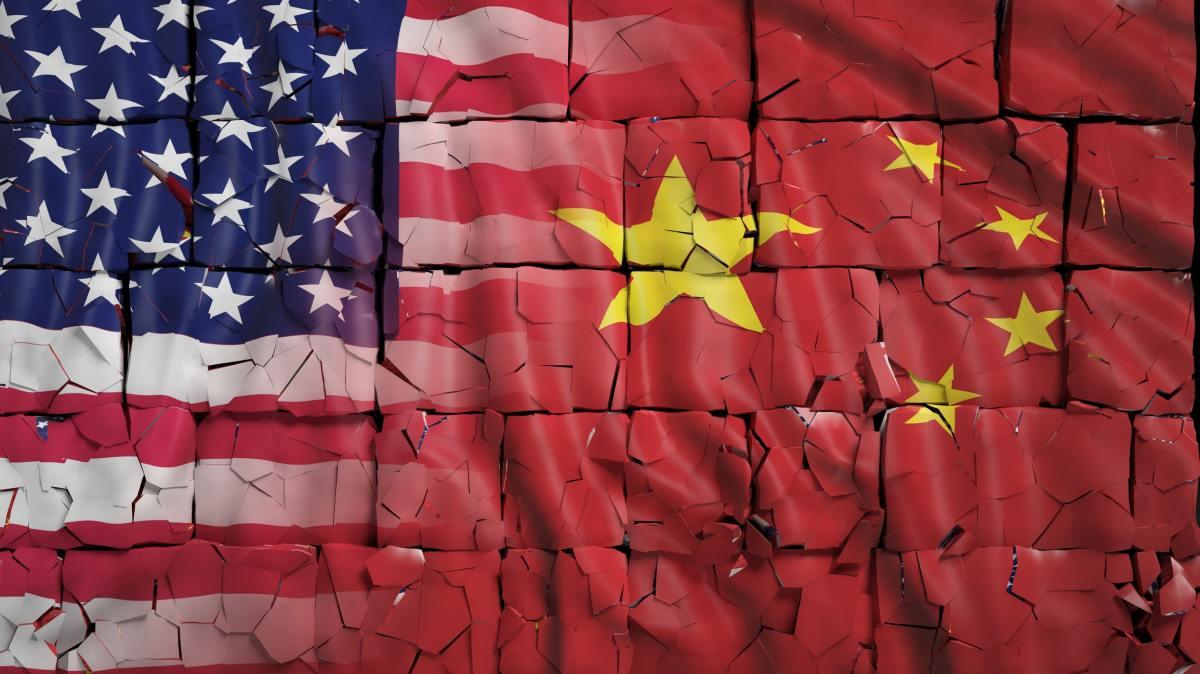
Hackers sponsored by foreign governments have chipped away at the United States’ global economic advantage through a steady campaign of intellectual property theft, according to a top National Security Agency official.
“It pains me to see the core of how we’ve defined ourselves over the last century” – in terms of innovation and intellectual property – “be continuously pummeled by external nation-state and non-nation-state-sponsored malicious cyber activity,” NSA Deputy Director George Barnes said Tuesday at the Intelligence and National Security Summit in National Harbor, Md.
Rather than one, devastating cyberattack, Barnes said there has been a “slow drip” of “continual theft of intellectual property from our industries.”
Former NSA director Keith Alexander has repeatedly called the theft of U.S. intellectual property “the greatest transfer of wealth in history.” In a New York Times op-ed last year, Alexander and Dennis Blair, a former Director of National Intelligence, said such theft costs the U.S. $600 billion per year.
While Barnes did not name names in discussing that theft, Director of National Intelligence Dan Coats singled out China as a stealer of trade secrets in a speech at the same event.
“[W]e are all aware of Chinese continuing efforts through the use of cyber to exploit…activities that bolster their economy and their military assets,” Coats said at the security conference.
The U.S. intelligence community has in recent weeks ratcheted up its public warnings that intellectual property theft is a risk to national security. In July, the National Counterintelligence and Security Center released a report detailing persistent efforts by China, Iran, and Russia to steal U.S. trade secrets. NCSC Director William Evanina said then that China had not been honoring a 2015 agreement to refrain from economic espionage, pointing to multiple indictments of Chinese nationals in recent years.
In addition to concerns over intellectual property, U.S. officials have sought to warn companies about what they say are the broader national security risks of doing business with Chinese telecom companies Huawei and ZTE, and Russian antivirus vendor Kaspersky Lab. U.S. officials worry Beijing and Moscow could leverage those companies to spy on Americans, an allegation the companies deny.
For Barnes, the key to better defending U.S. trade secrets from hackers is to share threat information across “the public-private divide.”
“Our [threat] information is no good unless we can get it into the hands of critical infrastructure” as well as government personnel defending federal networks, he said.
More Scoops
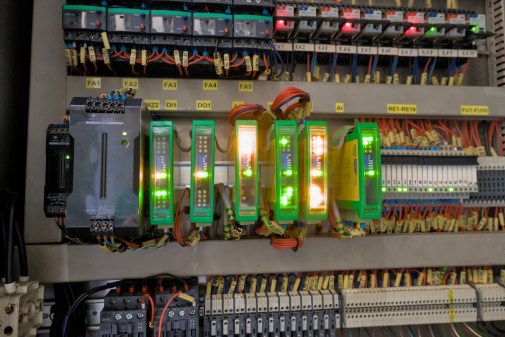
AI-fueled attacks pose ‘active threat’ to water, other sectors, U.S. agencies warn
The agencies said the hackers are taking aim at Siemens S7 Series programmable logic controllers in what could be a first.
U.S., South Korean government agencies caution to be on lookout for Gunra ransomware gang
Iranian hackers launching disruptive attacks at U.S. energy, water targets, feds warn
Latest Podcasts
Government
FBI officials say AI is bolstering adversaries, emphasizing need to focus on cyber basics, patching
Feds accuse China of ‘systematic’ distillation of U.S. AI models
CIA’s Michael Ellis says cyber intelligence is changing how the agency operates
The G7 tells industry to hurry up and prep for post-quantum encryption
Technology
Threats
Chinese espionage groups swarm to exploit triple-link chain of zero-days
Microsoft discloses two actively exploited zero-days among 974 vulnerabilities
Russian national extradited to US for alleged involvement in bank-account takeover scheme
Attackers exploit zero-days in consistently besieged SonicWall product
Policy
Whistleblower says USPS deploying new, ‘untested’ IT systems governing mail-in ballots
‘Watershed 250’ test program in Texas looks to private sector for water cybersecurity help
Former sexual abuse victims say Grok used their images, videos to train deepfake capabilities
Cyber threats nudge Trump to sign executive order on foreign equipment in U.S. energy infrastructure
Text extracted automatically; images, tables and formatting may be missing. Original: https://cyberscoop.com/george-barnes-nsa-us-china-ip-theft/