House intel bill includes provisions on state and local threat intelligence, election security, AI
Full article1,063 words · extracted from cyberscoop.com · click to collapse
Get our latest cybersecurity news first on Google.
The House Intelligence Committee advanced its fiscal 2027 authorization legislation Monday.
Listen to this article
0:00
Learn more.
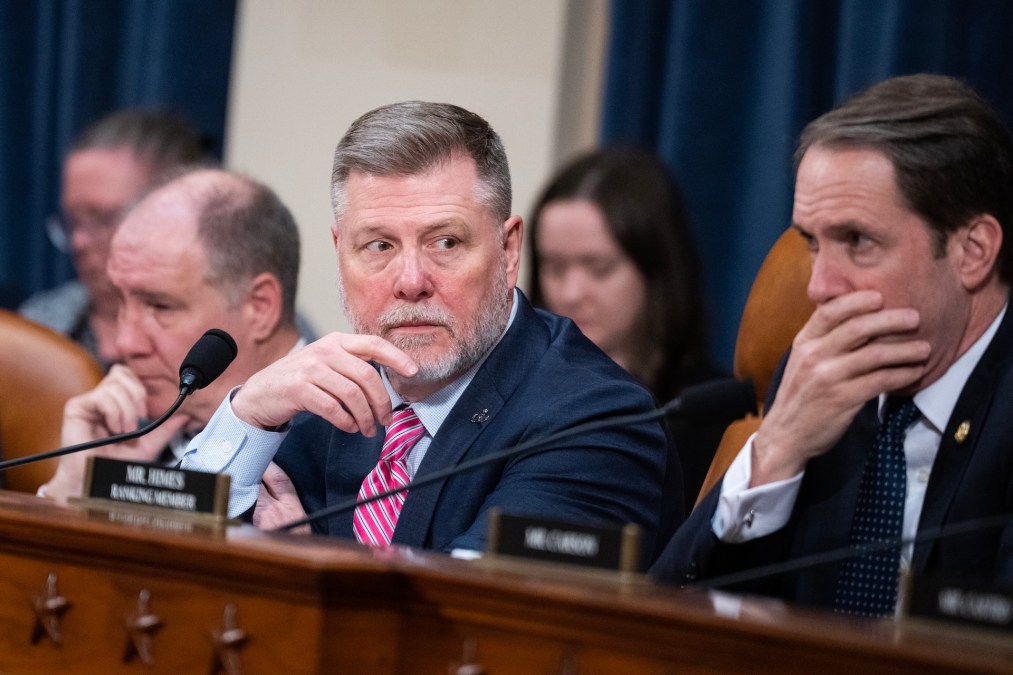
An annual spy policy bill would authorize a cyberthreat intelligence sharing pilot program for state and local governments, and order an outside assessment of how intelligence agencies are currently sharing that information with those jurisdictions.
The House Intelligence Committee approved fiscal 2027 intelligence authorization legislation Monday that also includes provisions on election security and that are meant to boost intelligence community (IC) usage of artificial intelligence for cyber and other purposes.
The measure’s language on state and local information sharing come amid widespread frustration with Trump administration cutbacks on such aid from the federal government, with the president taking explicit action to shift more responsibility for cyber defenses to the local level.
Under the pilot program, the Office of the Director of National Intelligence (ODNI) would pick one state to receive monthly briefings from the ODNI, Department of Homeland Security, FBI and others to receive monthly briefings on “timely, specific, and actionable information regarding cyber threats” in unclassified form. After a year, the ODNI would then provide a report on the viability of a wider briefing program for state and local governments.
The bill requires the ODNI to produce a strategy on information sharing with states and local areas, and would require the Government Accountability Office to conduct an assessment of the state of such sharing now, including a summary of relevant agencies’ current efforts, how the agencies deconflict those efforts and what kind of obstacles security clearances pose to improving information sharing.
Trump’s pick to serve as DNI, Jay Clayton, emphasized his desire to focus on cyber threat information sharing as part of his Senate vetting last week, but some in the GOP are also pushing to significantly reduce the size of his office.
National Cyber Director Sean Cairncross has also talked about creating pilot programs for cyber threat information sharing with state and local governments, but there’s been little movement on that initiative.
During committee deliberation, panel Democrats won adoption of a trio of election security amendments.
An amendment from the panel’s top Democrat, Rep. Jim Himes of Connecticut, would require the intelligence community to publish an unclassified assessment of foreign intelligence threats to the 2026 midterms. Rep. Jason Crow of Colorado’s amendment would partially withhold funding for the ODNI until Congress gets overdue reports it had required on the 2024 and 2026 elections. And Rep. Chrissy Houlahan of Pennsylvania’s amendment would “protect analysts from retribution by IC leadership for working on intelligence products related to foreign influence in US elections,” according to a news release.
The Democrats’ push arrives shortly after President Donald Trump delivered a primetime address seeking to bolster his long-debunked claims that the 2020 election was stolen from him.
According to a Republican summary of the bill, it includes provisions for “significantly increasing funding for expanded access and use of frontier AI models for intelligence and cyber missions,” to codify and expand the role of the Artificial Intelligence Security Center at the National Security Agency and strengthen information sharing on AI threats.
“This year’s [bill] balances strong transparency and accountability measures while equipping the IC with the resources needed to combat the ever-evolving threats from our adversaries around the world, with a particularly strong focus on the global AI race,” said House Intelligence Chairman Rick Crawford, R-Ark.
Another assessment that the bill orders would come from the Office of Intelligence and Counterintelligence of the Department of Energy on foreign cyberthreats to critical energy infrastructure, including their intent and risks.
The trend in Congress is for lawmakers to incorporate the annual intelligence authorization bill, or some of its provisions, into the annual National Defense Authorization Act, which often reaches the president’s desk at the end of each calendar year.
More Scoops

National cyber director lays out White House plans to secure AI without writing new rules
The Trump administration executive order on artificial intelligence tried to strike the balance between responsible use, security and mutual benefit, all with an eye toward not making…

Dems press DNI nominee Jay Clayton on election security questions, but leave dismayed

Open-source security is posing challenges governments can’t easily solve
Latest Podcasts
Government
FBI officials say AI is bolstering adversaries, emphasizing need to focus on cyber basics, patching
Feds accuse China of ‘systematic’ distillation of U.S. AI models
CIA’s Michael Ellis says cyber intelligence is changing how the agency operates
The G7 tells industry to hurry up and prep for post-quantum encryption
Technology
Threats
Chinese espionage groups swarm to exploit triple-link chain of zero-days
Microsoft discloses two actively exploited zero-days among 974 vulnerabilities
Russian national extradited to US for alleged involvement in bank-account takeover scheme
Attackers exploit zero-days in consistently besieged SonicWall product
Policy
Whistleblower says USPS deploying new, ‘untested’ IT systems governing mail-in ballots
‘Watershed 250’ test program in Texas looks to private sector for water cybersecurity help
Former sexual abuse victims say Grok used their images, videos to train deepfake capabilities
Cyber threats nudge Trump to sign executive order on foreign equipment in U.S. energy infrastructure
Text extracted automatically; images, tables and formatting may be missing. Original: https://cyberscoop.com/house-intel-bill-includes-provisions-on-state-and-local-threat-intelligence-election-security-ai/