US government launches 'strike force' to combat Chinese and Russian technology threats
Full article700 words · extracted from cyberscoop.com · click to collapse
Get our latest cybersecurity news first on Google.
Deputy Attorney General Lisa Monaco said the Disruptive Technology Strike Force will use intelligence and analytics to target illicit actors.
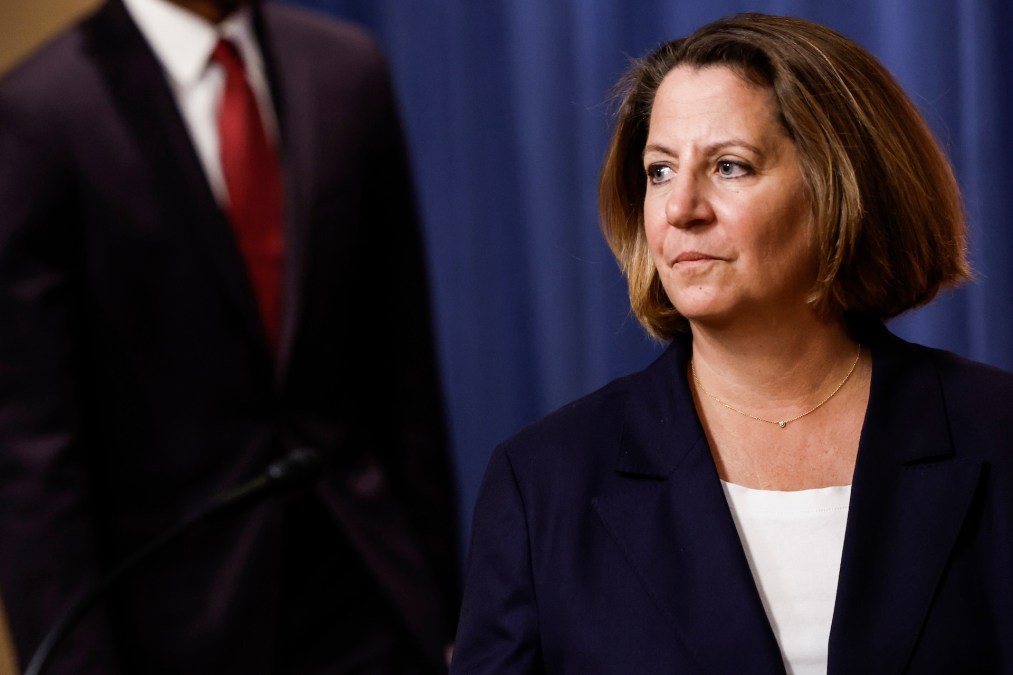
The U.S. government is stepping up its effort to combat threats from foreign technology investments, data acquisition and cyberattacks with a new collaboration between the Departments of Justice and Commerce, Deputy Attorney General Lisa Monaco said Thursday.
Speaking at the Chatham House in London as part of a conversation on disruptive technologies by nation states and malign actors, Monaco announced the “Disruptive Technology Strike Force,” to fight the ability of autocrats seeking “tactical advantage through the acquisition, use, and abuse of disruptive technology, innovations that are fueling the next generation of military and national security capabilities.”
The U.S. government has traditionally used the Committee on Foreign Investment in the U.S. (CFIUS) to screen foreign investment in U.S. companies, and DOJ has used that committee to address the exploitation of American assets and technology, but it’s not enough, Monaco said.
“But CFIUS began nearly 50 years ago in an era of brick-and-mortar transactions,” Monaco said. “But today, the greatest risks come not from investment in our physical assets, but from transactions where datasets, software, and algorithms are the assets.”
The strike force will “use intelligence and data analytics to target illicit actors, we will enhance our public-private partnerships to harden supply chains, and we will identify early warning of threats to our critical assets, like semiconductors,” Monaco said. “Our goal is simple but essential — to strike back against adversaries trying to siphon off our best technology.”
The effort is a continuation of the work the government has done to be more aggressive in confronting state-aligned threats. In April 2022, for instance, the U.S. and British governments proactively disrupted a Russian military-controlled botnet known as Cyclops Blink. The two governments have also been proactive in attacking ransomware infrastructure, such as last month’s operation that took down servers connected to the Hive ransomware group.
More Scoops

House GOP leaders seek government probe, restrictions on Chinese-made tech
They cited past cyberattacks from Beijing as evidence of the threats posed by Chinese tech in areas like AI or energy generation.

Google previews cyber ‘disruption unit’ as U.S. government, industry weigh going heavier on offense

Treasury sanctions Chinese cyber company, employee for 2020 global firewall attack
Latest Podcasts
Government
FBI officials say AI is bolstering adversaries, emphasizing need to focus on cyber basics, patching
CIA’s Michael Ellis says cyber intelligence is changing how the agency operates
The G7 tells industry to hurry up and prep for post-quantum encryption
Jail time for Maine child in 764 marks turning point in federal law enforcement
Technology
Threats
Policy
Whistleblower says USPS deploying new, ‘untested’ IT systems governing mail-in ballots
‘Watershed 250’ test program in Texas looks to private sector for water cybersecurity help
Former sexual abuse victims say Grok used their images, videos to train deepfake capabilities
Cyber threats nudge Trump to sign executive order on foreign equipment in U.S. energy infrastructure
Text extracted automatically; images, tables and formatting may be missing. Original: https://cyberscoop.com/justice-department-commerce-strike-force-cfius-china-russia/