Ex-NSA employees criticize Mike Rogers' role with Israeli venture firm
Full article1,279 words · extracted from cyberscoop.com · click to collapse
Get our latest cybersecurity news first on Google.
Ex-NSA employees have criticized Rogers' move to a company founded by former Israeli military hackers.
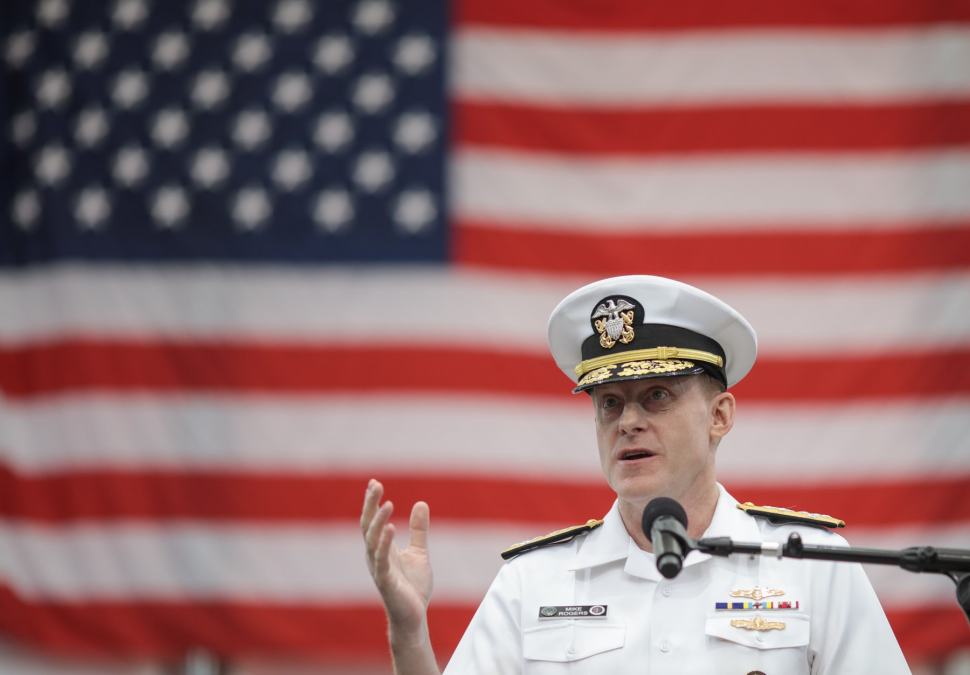
Some former National Security Agency officials have strongly criticized ex-NSA Director Adm. Michael Rogers’ decision to join the advisory board of a venture capital firm that is closely linked with an Israeli intelligence agency.
The company, Team8, announced Rogers’ position last week. Founded by former members of the elite Israeli army intelligence group known as Unit 8200, Team8 researches cybersecurity market demand, raises investments from big tech companies, and creates startups based on those demand signals. It also describes itself as a think tank, and does its own threat research.
Rogers, who headed NSA and U.S. Cyber Command for four years before stepping down this past May, will advise companies in Team8’s portfolio as well as companies under development. The retired admiral will be “instrumental in helping strategize” Team8’s expansion in the United States, the firm said in a statement last week.
Rogers’ decision to join Team8 irked Robert Lee, a former Air Force officer and former NSA employee. It “bothers me on a deep level” when former senior U.S. government officials profit from their experience to “work with foreign intel backed companies,” Lee tweeted.
Mark Hertling, former commanding general of U.S. Army Europe, seconded Lee’s comment by tweeting, “Me too.”
I know no good will come from me saying this. But I feel compelled to say that former senior govt officials especially the head of our most significant intelligence agency profiting from that experience to work with foreign intel backed companies bothers me on a deep level. https://t.co/rMJ9UKHgnZ
— Robert M. Lee (@RobertMLee) October 19, 2018
Lee elaborated on his criticism in an exchange with CyberScoop.
“I do not question the ethics and loyalty of military and intelligence professionals that leave after a career of service,” said Lee, founder of cybersecurity company Dragos. “However, there are some that had such a high level of trust bestowed on them by government and civilian partners – and have the ability to impact morale of the entire workforce of the agencies that they worked at – that they must be careful about their post-service career choices.”
Rogers’ predecessors as NSA director, retired generals Keith Alexander and Michael Hayden, have also gone on to well-paying jobs in the private sector. In Alexander’s case, he sparked controversy for initially involving the then-NSA CTO with IronNet Cybersecurity, the company Alexander founded. Nonetheless, Team8’s direct connection to a foreign intelligence agency has touched a nerve with former U.S. intelligence hands.
“There is no clear line,” Lee told CyberScoop, but the former director of “one of our most critical intelligence agencies joining a foreign company headed by the ex-head of foreign intelligence agency crosses whatever line exists, in my opinion.”
Jake Williams, a veteran of NSA’s Tailored Access Operations hacking unit, also criticized Rogers’ new position.
“Rogers is not being brought into this role because of his technical experience,” Williams asserted in an email to CyberScoop. “It’s purely because of his knowledge of classified operations and his ability to influence many in the U.S. government and private sector contractors.”
Through a spokesperson, Rogers declined to respond to the criticism.
Not all of the public reaction from former U.S. intelligence personnel was negative. Bob Gourley, a former CTO of the Defense Intelligence Agency, defended Rogers’ move to Team8 by arguing that “all good companies from open societies should have access to talent.”
Another view: Why should cyber be different from any other domain? Should Airbus, BAE, Deutsch Bank all be off limits for former General Officers? I think all good companies from open societies should have access to talent.
— Bob Gourley (@bobgourley) October 19, 2018
‘A rare and valued opportunity’
Collaboration between Israel and the United States has for years extended to cyberspace. The governments’ most famous joint work was reportedly in developing Stuxnet, the sophisticated computer worm that hit an Iranian uranium-enrichment facility in 2009. Hackers used by Washington and Tel Aviv are in high demand, and many eventually leave their government roles to join the executive staff of prominent cybersecurity companies.
After taking the helm of NSA and Cyber Command in 2014, Rogers sought to build stronger cybersecurity ties with Unit 8200 on a visit to Israel in March 2016, Israeli newspaper Haaretz reported at the time. In announcing his new role with Team8, Rogers drew upon his familiarity with the firm’s ties to Unit 8200, saying that the position is “a rare and valued opportunity.”
Team8 looks poised to add to an already cash-flush industry. According to its website, the firm has drawn investment backing from the likes of Cisco, Microsoft, and Innovation Endeavors, the investment firm cofounded by former Google CEO Eric Schmidt.
Team8 CEO Nadav Zafrir, former commander of Unit 8200, said Rogers would be key to the firm’s work.
“Mike will be an invaluable asset to Team8’s company-building model, providing a fountain of knowledge for our existing portfolio companies, for the companies in development, and to help identify technology gaps in the marketplace on which future companies could be built,” Zafrir said.
In addition to its investment ventures, Team8 has a cyberthreat research lab headed by the former CTO of Unit 8200’s cyber division. The firm’s website also advertises multi-day briefings, including tech demonstrations, for C-Suite executives in New York City and Tel Aviv.
More Scoops
AI-fueled attacks pose ‘active threat’ to water, other sectors, U.S. agencies warn
The agencies said the hackers are taking aim at Siemens S7 Series programmable logic controllers in what could be a first.

Former NSA chiefs worry American offensive edge in cybersecurity is slipping
While White House demands deterrence, Trump shrugs
Latest Podcasts
Government
FBI officials say AI is bolstering adversaries, emphasizing need to focus on cyber basics, patching
Feds accuse China of ‘systematic’ distillation of U.S. AI models
CIA’s Michael Ellis says cyber intelligence is changing how the agency operates
Jail time for Maine child in 764 marks turning point in federal law enforcement
Technology
FCC proposes public scorecard to rate telecoms on anti-robocall efforts
Pegasus, NoviSpy variant spyware found on devices of Serbian activists
The Collective Cyber Defense letter wrote your next vendor questionnaire
Former sexual abuse victims say Grok used their images, videos to train deepfake capabilities
Threats
Chinese espionage groups swarm to exploit triple-link chain of zero-days
Microsoft discloses two actively exploited zero-days among 974 vulnerabilities
Russian national extradited to US for alleged involvement in bank-account takeover scheme
Attackers exploit zero-days in consistently besieged SonicWall product
Policy
Whistleblower says USPS deploying new, ‘untested’ IT systems governing mail-in ballots
‘Watershed 250’ test program in Texas looks to private sector for water cybersecurity help
Cyber threats nudge Trump to sign executive order on foreign equipment in U.S. energy infrastructure
Election official says Tina Peters would be consultant, won’t have access to election systems
Text extracted automatically; images, tables and formatting may be missing. Original: https://cyberscoop.com/mike-rogers-team8-nsa-board-criticism-unit-8200/