Economic cyber-espionage is here to stay, U.S. counterintelligence report says
Full article831 words · extracted from cyberscoop.com · click to collapse
Get our latest cybersecurity news first on Google.
The report from ODNI's counterintelligence agency also raises concerns about the software supply chain as an attack vector.
A new report from a U.S. counterintelligence agency details persistent efforts by China, Iran, and Russia to steal U.S. trade secrets, warns that those campaigns are here to stay and raises concerns about the software supply chain as a vector for economic espionage.
China, Iran, and Russia are “three of the most capable and active cyber actors tied to economic espionage,” and they will “remain aggressive and capable collectors of sensitive U.S. economic information and technologies, particularly in cyberspace,” states the report released Thursday by the National Counterintelligence and Security Center (NCSC).
Last year was a “watershed” year in public reporting of big software supply-chain operations, with seven incidents reported compared to just four between 2014 and 2016, according to the NCSC, which is part of the Office of the Director of National Intelligence. The counterintelligence agency cites the seminal NotPetya attack, which U.S. officials blamed on Moscow, and the CCleaner backdoor, which infected 2.2 million customers, as evidence.
“Software supply chain infiltration already threatens the critical infrastructure sector and is poised to threaten other sectors,” the report states.
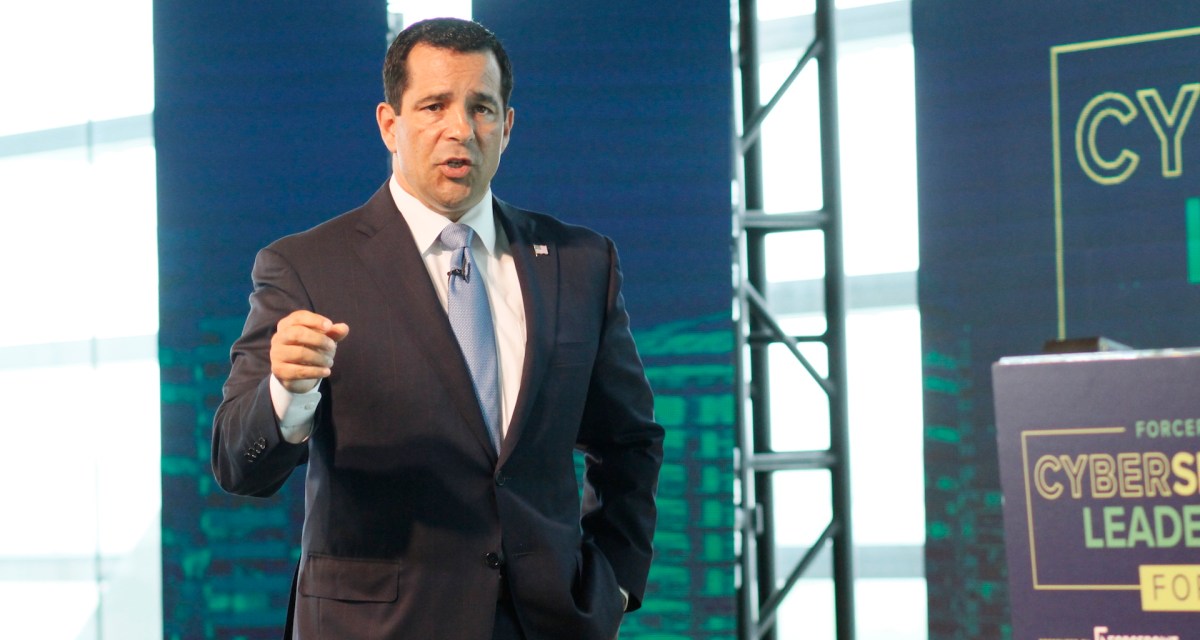
At a press briefing Thursday, NCSC Director William Evanina drove the point home by saying, “We are not prepared as a nation to deal with the supply chain threat holistically.”
Evanina, the top U.S. counterintelligence official, said that China had not been honoring a 2015 agreement between then-President Barack Obama and Chinese President Xi Jinping to refrain from economic cyber-espionage. He pointed to multiple Justice Department indictments of Chinese nationals in the last few years for allegedly stealing U.S. intellectual property.
The Chinese, Iranian, and Russian governments have in the past denied accusations that they use cyberspace to carry out theft from the private sector. For their part, U.S. officials have long contended that, unlike its adversaries, the United States does not conduct such operations.
The 20-page report, which offers a snapshot of the U.S. intelligence community’s views on economic espionage, comes as American lawmakers rail against the national security risk posed by foreign tech companies linked with adversarial governments.
Legislators have pushed, with varying success, to require that U.S. supply chains be rid of Moscow-based Kaspersky Lab and Chinese telecoms Huawei and ZTE. The Department of Homeland Security last year required all civilian agencies to remove Kaspersky products from their networks. However, a measure that would have reinstated a ban on ZTE from buying U.S. components was left out of Congress’s annual defense policy bill.
Of the three companies, the NCSC report only mentions Kaspersky by name. But its message is clear: “These companies provide valuable services that often require access to the physical and logical control points of the computers and networks they support.”
At the briefing, Evanina called out Huawei, ZTE, and Kaspersky, describing them as purveyors of access to U.S. supply chains.
To help address the spying concerns, Kaspersky announced in May that it was moving some of its operations to Switzerland. In an interview last month with CyberScoop, Evanina dismissed the move as having no effect on how the U.S. government approaches the alleged threat from the Russian antivirus vendor.
Russia has in recent years “dramatically increased its demand for source code reviews for foreign technology being sold inside the country,” according to the NCSC report.
The NCSC report also raises concerns about popular technological advances like artificial intelligence and the Internet of Things, which the agency worries “will introduce new vulnerabilities to U.S. networks for which the cybersecurity community remains largely unprepared.”
Latest Podcasts
Government
FBI officials say AI is bolstering adversaries, emphasizing need to focus on cyber basics, patching
Feds accuse China of ‘systematic’ distillation of U.S. AI models
CIA’s Michael Ellis says cyber intelligence is changing how the agency operates
The G7 tells industry to hurry up and prep for post-quantum encryption
Technology
Threats
Microsoft discloses two actively exploited zero-days among 974 vulnerabilities
Russian national extradited to US for alleged involvement in bank-account takeover scheme
Attackers exploit zero-days in consistently besieged SonicWall product
Jail time for Maine child in 764 marks turning point in federal law enforcement
Policy
Whistleblower says USPS deploying new, ‘untested’ IT systems governing mail-in ballots
‘Watershed 250’ test program in Texas looks to private sector for water cybersecurity help
Former sexual abuse victims say Grok used their images, videos to train deepfake capabilities
Election official says Tina Peters would be consultant, won’t have access to election systems
Text extracted automatically; images, tables and formatting may be missing. Original: https://cyberscoop.com/economic-cyber-espionage-stay-u-s-counterintelligence-report-says/