NSF to dole out $76M in cybersecurity research grants
Full article644 words · extracted from cyberscoop.com · click to collapse
Get our latest cybersecurity news first on Google.
Among the projects that will be bolstered by $76 million in research grants from the National Science Foundation: academic cybersecurity programs aimed at "human-centered" security for the Internet of Things, and computer chips that prove their own trustworthiness.
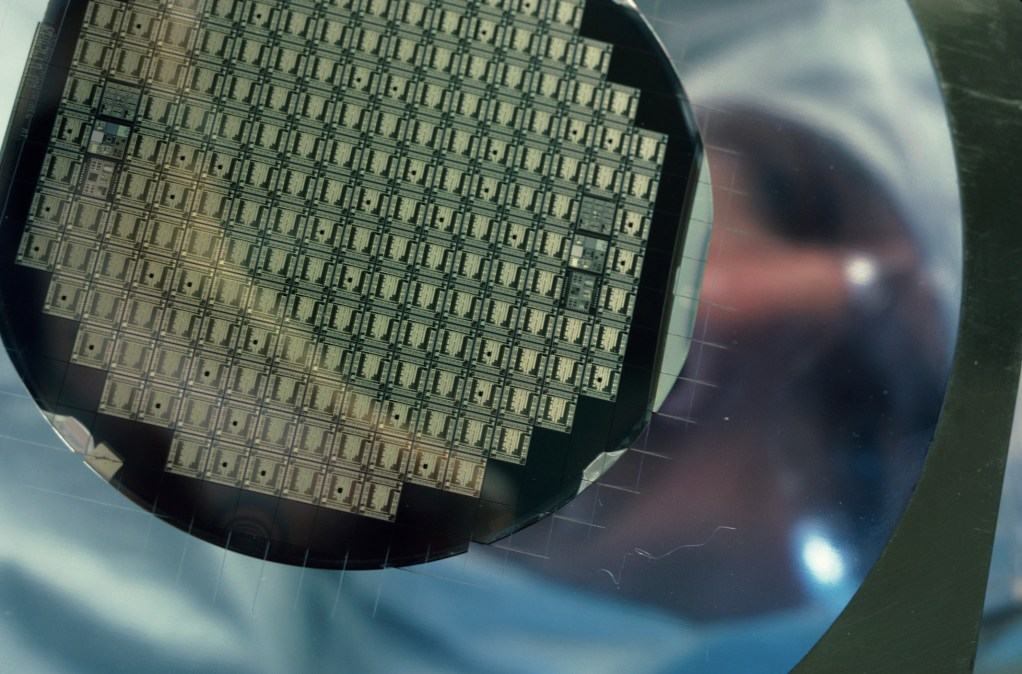
The National Science Foundation is pumping $76 million in research grants into academic cybersecurity programs aimed at “human-centered” security for the Internet of Things and computer chips that prove their own trustworthiness, among other projects.
In a recent news release, the NSF announced the grants would be funneled through its Secure and Trustworthy Cyberspace program — part of the portfolio of approximately $160 million invested in cybersecurity research across the agency this year.
The 241 grants support projects researching hardware, software, human incentives and behaviors, and the convergence of the cyber and physical worlds across 36 states and 129 institutions.
The three largest new projects, each supported by $3 million grants, will investigate: emerging areas of interest: the relationship between the Internet of Things and humans, the development of verifiably secure hardware, and cryptographic methods to improve privacy. They include:
- Living in the Internet of Things. “Human centered” security for the Internet of Things. At Indiana University and Washington State University.
- Verifiable Hardware: Chips that Prove their Own Correctness. At the University of Virginia, New York University, the University of California-San Diego, Yale University and CUNY’s City College.
- Computing Over Distributed Sensitive Data. At Harvard University and the University of Buffalo.
“No solution for securing cyberspace is complete without the integration of research that examines how people — from the users of internet commerce to the attackers who endanger networks — behave in the complicated systems that constitute the internet,” said Fay Lomax Cook, NSF assistant director for Social, Behavioral & Economic Sciences. “Technology and behavior are intrinsically linked in the world of cybersecurity, and NSF’s support for interdisciplinary research reflects that.”
“Examining the fundamentals of security and privacy from a multidisciplinary, socio-technical perspective can lead to fundamentally new ways to design, build and operate cyber systems, protect existing infrastructure, and motivate and educate individuals about cybersecurity,” added Jim Kurose, NSF assistant director for Computer and Information Science and Engineering.
NSF says the grant program is “inspired by and aligned with” two strategic plans for research that the Obama administration released in 2016: the Federal Cybersecurity Research and Development Strategic Plan and the National Privacy Research Strategy. “Both are dedicated to protecting and preserving the growing social and economic benefits of cyber systems while ensuring security and privacy,” states the release.
Latest Podcasts
Government
FBI officials say AI is bolstering adversaries, emphasizing need to focus on cyber basics, patching
Feds accuse China of ‘systematic’ distillation of U.S. AI models
CIA’s Michael Ellis says cyber intelligence is changing how the agency operates
Jail time for Maine child in 764 marks turning point in federal law enforcement
Technology
Threats
Chinese espionage groups swarm to exploit triple-link chain of zero-days
Microsoft discloses two actively exploited zero-days among 974 vulnerabilities
Russian national extradited to US for alleged involvement in bank-account takeover scheme
Attackers exploit zero-days in consistently besieged SonicWall product
Policy
Whistleblower says USPS deploying new, ‘untested’ IT systems governing mail-in ballots
‘Watershed 250’ test program in Texas looks to private sector for water cybersecurity help
Former sexual abuse victims say Grok used their images, videos to train deepfake capabilities
Cyber threats nudge Trump to sign executive order on foreign equipment in U.S. energy infrastructure
Text extracted automatically; images, tables and formatting may be missing. Original: https://cyberscoop.com/cybersecurity-research-nsf/