Trump's pick for Homeland Security adviser is a cybersecurity expert
Full article1,145 words · extracted from cyberscoop.com · click to collapse
Get our latest cybersecurity news first on Google.
President-elect Donald Trump has named CDS Consulting CEO Thomas Bossert, a former deputy national security adviser to President George W. Bush, as a homeland security adviser in the White House. Currently a fellow at the Atlantic Council’s Cyber Statecraft Initiative, Bossert is a veteran policy maker for cybersecurity and counterterrorism initiatives.
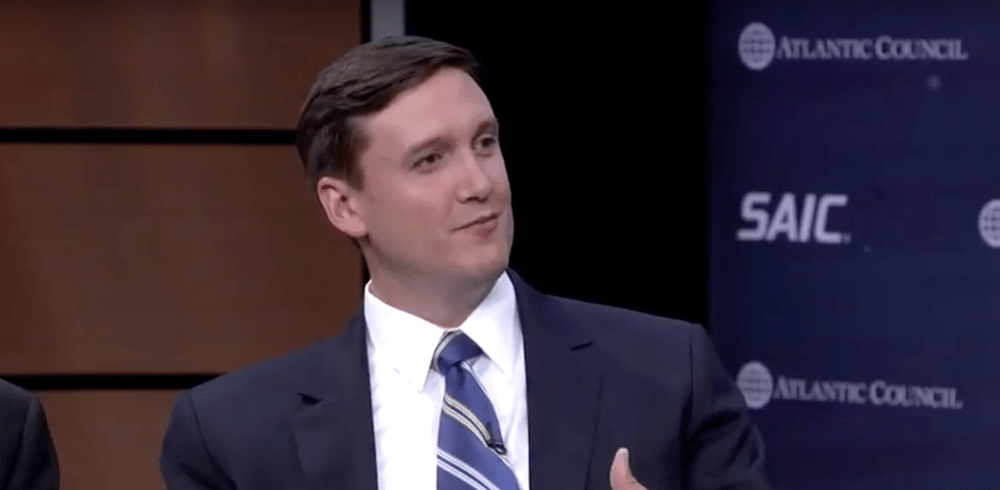
President-elect Donald Trump has named Thomas Bossert, a former deputy national security adviser to President George W. Bush, as a homeland security adviser. Currently the CEO of CDS Consulting and a fellow at the Atlantic Council’s Cyber Statecraft Initiative, Bossert is a veteran policymaker for cybersecurity and counterterrorism initiatives.
In a statement, Bossert emphasized that “[the U.S.] must work toward [a] cyber doctrine that reflects the wisdom of free markets, private competition and the important but limited role of government in establishing and enforcing the rule of law, honoring the rights of personal property, the benefits of free and fair trade, and the fundamental principles of liberty.”
Bossert’s position as assistant to the president for homeland security and counterterrorism will be “elevated” and given an “independent status” from the president’s larger security advisory group for the incoming administration, according to Trump’s White House transition team. In the past, the aide has acted as a liaison between the White House and foreign leaders in the transnational war against terrorism.
While working in the Bush administration, Bossert also served as the White House’s director of infrastructure protection policy — a leadership position that helps organizes, across multiple federal agencies, the security of U.S. critical infrastructure, including major transit and communication systems.
“Tom brings enormous depth and breadth of knowledge and experience to protecting the homeland to our senior White House team,” Trump said in a statement. “He has a handle on the complexity of homeland security, counterterrorism, and cybersecurity challenges. He will be an invaluable asset to our Administration.”
Bossert will largely focus on domestic and transnational security issues while retired Lt. Gen. Michael Flynn, Trump’s pick for national security adviser, focuses on international security challenges.
The appointment comes at time when the Obama administration is reportedly struggling to cement a response strategy to counter Russia’s aggression in cyberspace, which spans hacks into multiple U.S. political organizations and businesses.
“Cyber is an interesting issue when you couple it with, and I would argue you almost always couple it with, some other ongoing nation-state tension,” Bossert said during a 2013 panel discussion at the D.C.-based Atlantic Council. “We are now trying to put into context these cyberattacks against our greater strategic objectives … I think it would be a mistake to consider denial of service attacks, which the financial sector admits is a mass disruption as opposed to a mass destruction, as something that would tip us into war. I think it’s important, at this point, to have a steady hand on the tail and not necessarily rush into some counterattack but the pressure will be mounting.”
On Tuesday, Bossert’s hiring received praised from Dmitri Alperovitch, CTO and co-founder of cybersecurity firm CrowdStrike — a company perhaps best known for originally attributing the DNC data breach to Russian intelligence forces. Bossert spoke about attribution in 2013.
“Attribution tends to be a focus of concern for people because they want to hold someone accountable, but there is another reason for attribution. If it is a nation state, the federal government has a different responsibility. It is fundamental. It is constitutional to the protection of the country,” Bossert said during the panel discussion. “If it is a private actor, we have a slightly different responsibility. We tend to treat these things as law enforcement matters and so forth … cyber is a distributed problem.”
Bossert’s apparent hesitation to rely on offensive cybersecurity methods as a primary deterrence strategy runs inline with opinions held by current, unnamed senior White House officials cited by The Washington Post and The New York Times.
“There are a number of things we can do defensively, but offensively the government is in the prickliest of situations. And defensively we are perhaps in the least powerful position, with private industry taking the lead,” Bossert previously said.
More Scoops

‘Watershed 250’ test program in Texas looks to private sector for water cybersecurity help
The six-month program will be overseen by the Office of the National Cyber Director and Texas Cyber Command to “find out what works.”
SCOTUS tosses one of two injunctions against Trump USPS mail-in ballot rules
A bold new strategy or a dangerous precedent? Experts are divided on Trump’s memo.
Latest Podcasts
Government
FBI officials say AI is bolstering adversaries, emphasizing need to focus on cyber basics, patching
Feds accuse China of ‘systematic’ distillation of U.S. AI models
CIA’s Michael Ellis says cyber intelligence is changing how the agency operates
The G7 tells industry to hurry up and prep for post-quantum encryption
Technology
Threats
Chinese espionage groups swarm to exploit triple-link chain of zero-days
Microsoft discloses two actively exploited zero-days among 974 vulnerabilities
Russian national extradited to US for alleged involvement in bank-account takeover scheme
Attackers exploit zero-days in consistently besieged SonicWall product
Policy
Whistleblower says USPS deploying new, ‘untested’ IT systems governing mail-in ballots
Former sexual abuse victims say Grok used their images, videos to train deepfake capabilities
Cyber threats nudge Trump to sign executive order on foreign equipment in U.S. energy infrastructure
Election official says Tina Peters would be consultant, won’t have access to election systems
Text extracted automatically; images, tables and formatting may be missing. Original: https://cyberscoop.com/trumps-pick-homeland-security-adviser-cybersecurity-expert/