Security researchers slam Voatz brief to the Supreme Court on anti
Full article822 words · extracted from cyberscoop.com · click to collapse
Get our latest cybersecurity news first on Google.
Much is at stake when the Supreme Court considers the Computer Fraud and Abuse Act.
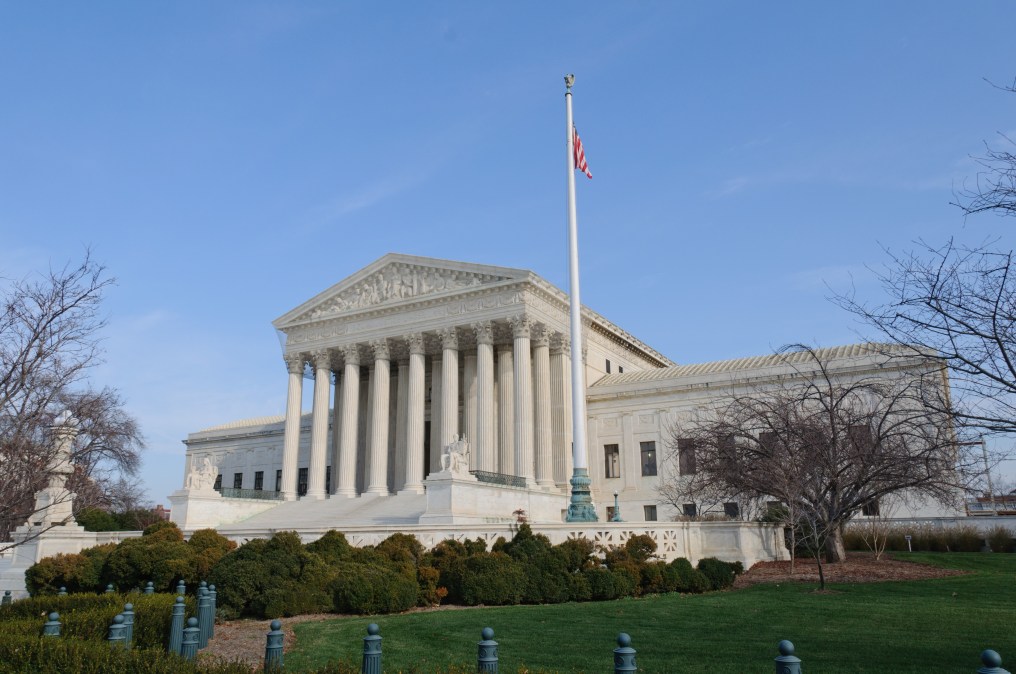
A group of high-profile cybersecurity specialists doesn’t want mobile voting firm Voatz to have the last word before the Supreme Court takes up a case with major implications for computer research.
The security practitioners, including computer scientists and vulnerability disclosure experts, on Monday criticized Voatz’s argument that a federal anti-hacking law should only authorize researchers with clear permission to probe computer systems for vulnerabilities. An amicus brief filed by Voatz earlier this month, the security specialists charged, “fundamentally misrepresents widely accepted practices in security research and vulnerability disclosure.”
At issue is the Computer Fraud and Abuse Act (CFAA), a more than 30-year-old law that legal experts say could be abused to target good-faith researchers who break systems while trying to make them more secure. The Supreme Court is set to consider whether corporate terms of service can be considered an inviolable boundary under the CFAA when it resumes in October.
Legal experts and technologists see the decision as a chance, after decades of ambiguity, to clarify just what well-meaning security researchers are allowed to do in probing third-party systems.
“We benefit from security research in nearly every aspect of our lives,” the letter Monday states. “From crucial work exposing vulnerabilities in technologies ranging from election systems to medical devices and automobiles, it is clear security research has tangibly improved the safety and security of systems we depend upon. It is not a given that this vital security work will continue. A broad interpretation of the CFAA would magnify existing chilling effects, even when there exists a societal obligation to perform such research.”
News that the CFAA was on the Supreme Court docket prompted famous white-hat hackers like Peiter “Mudge” Zatko to urge the court to codify protections for researchers. Voatz, whose voting app has been used in a smattering of U.S. counties in elections since 2018, also felt compelled to weigh in on the CFAA. The firm argued that “no narrowing” of the law was needed to protect researchers.
In their open letter Monday, security specialists fired back, charging that Voatz’s amicus brief refers to “independent good-faith security research as a threat to cybersecurity and glosses over harmful effects to security research from an overbroad CFAA.”
At stake is transparent research into critical systems such as voting software and medical devices, said the letter’s signatories, which included vulnerability disclosure firms Bugcrowd and HackerOne, the cryptologist and election security expert Matt Blaze and numerous other technologists. In March, HackerOne kicked Voatz off its platform, citing the firm’s hostility to researchers.
More and more corporations — and even government agencies — are embracing vulnerability disclosure policies that, in principle, protect researchers from retaliation for probing computer systems. But security specialists say those policies can be abused, and point to Voatz’s own record of clashing with security researchers an example. A narrower interpretation of the CFAA, which doesn’t criminalize research, is a safeguard against that abuse, they say.
A Voatz spokesperson said the firm filed its amicus brief in objection to accusations in a different court filing from security researchers that the firm had reported a student researcher to the FBI.
“We’re not advocating to limit anyone’s freedom – we’re saying it’s difficult to distinguish between good and bad faith attacks in the midst of a live election,” the Voatz spokesperson added. “For everyone’s sake, it’s better to work collaboratively with the organization as bad actors disguise themselves as good actors on a regular basis.”
UPDATE, 4:20 p.m. EDT: This story has been updated with a statement from Voatz.
Latest Podcasts
Government
FBI officials say AI is bolstering adversaries, emphasizing need to focus on cyber basics, patching
Feds accuse China of ‘systematic’ distillation of U.S. AI models
CIA’s Michael Ellis says cyber intelligence is changing how the agency operates
The G7 tells industry to hurry up and prep for post-quantum encryption
Technology
Threats
Chinese espionage groups swarm to exploit triple-link chain of zero-days
Russian national extradited to US for alleged involvement in bank-account takeover scheme
Attackers exploit zero-days in consistently besieged SonicWall product
Jail time for Maine child in 764 marks turning point in federal law enforcement
Policy
Whistleblower says USPS deploying new, ‘untested’ IT systems governing mail-in ballots
‘Watershed 250’ test program in Texas looks to private sector for water cybersecurity help
Former sexual abuse victims say Grok used their images, videos to train deepfake capabilities
Cyber threats nudge Trump to sign executive order on foreign equipment in U.S. energy infrastructure
Text extracted automatically; images, tables and formatting may be missing. Original: https://cyberscoop.com/voatz-supreme-court-cfaa-security-research/