Privacy fights over expiring surveillance law loom after House hearing
Full article1,090 words · extracted from cyberscoop.com · click to collapse
Get our latest cybersecurity news first on Google.
At issue are warrant requirements sought by Judiciary Committee members and other gripes they have about the most recent Section 702 legislation.
Listen to this article
0:00
Learn more.
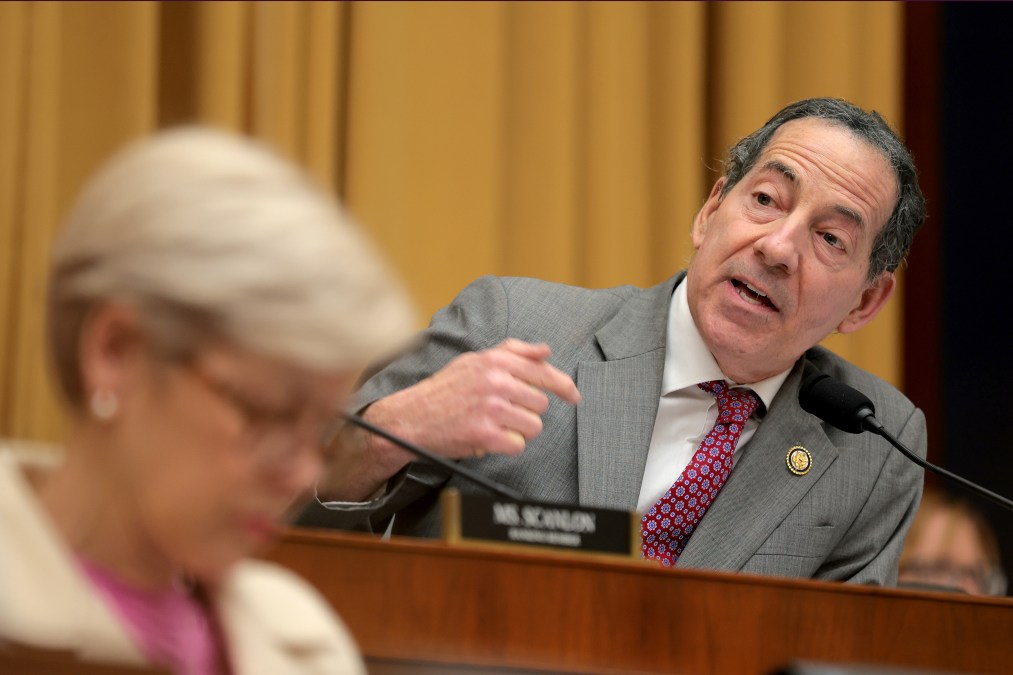
Lawmakers on the House Judiciary Committee say privacy protections under a bill Congress passed to re-up a major surveillance law aren’t strong enough, and are gearing up for additional changes for when the legislation is set to expire next year.
Legislative battles over Section 702 of the Foreign Intelligence Surveillance Act (FISA) — under which feds can warrantlessly search a database using U.S. individuals’ personal information to obtain communications from people in the United States if they’re texting, emailing or calling overseas surveillance targets — are historically bruising because of a push-and-pull between civil liberties and national security. A hearing Tuesday suggested that big fights loom again before expiration next April of the most recent legislation on the topic.
Lawmakers on both sides of the aisle had gripes at Tuesday’s hearing about that 2024 law, the Reforming Intelligence and Securing America Act (RISAA). The gripes included its exclusion of a warrant requirement for those U.S. person searches and an expansion of the definition of what kind of companies must comply with government information demands. Democrats also said the Trump administration’s personnel cuts have hampered oversight of the Section 702 program.
The House Judiciary Committee advanced a competing proposal in 2024 that would have included the warrant requirement, but an attempt to win its adoption fell on a tie vote of 212-212 on the House floor.
“We need to make sure we win this time,” House Judiciary Chairman Jim Jordan, R-Ohio, said at Tuesday’s hearing of the Subcommittee on Crime and Federal Government Surveillance, citing past abuses of U.S. person searches.
One issue for those favoring a warrant requirement could be the stance of the Trump administration, with Republicans controlling Congress. Trump has disrupted efforts to renew Section 702 before, but his FBI director, Kash Patel, said at his nomination hearing that he opposed such a requirement.
“Having a warrant requirement to go through that information in real time is just not comportive with the requirement to protect American citizenry,” he said. Jordan said the last proposal for a warrant requirement included exceptions for emergencies and other circumstances, and would again next time.
During 2024 debate, then-Senate Intelligence Committee Chairman Mark Warner, D-Va., opposed cutting out provisions of the legislation that changed the definition of “electronic communications service providers” in a way that critics said could lead to a vast surveillance expansion, but that national security officials in the Biden administration said was narrowly tailored. Warner said later that he would favor “fixing” that — but it didn’t make it into the final version of last year’s annual intelligence policy bill.
Republicans are more inclined to trust the Trump administration than the Biden administration on handling Section 702 issues like that. “We think the new leadership at the FBI is going to be better when it comes to respecting people’s constitutional rights,” said Rep. Tom Tiffany, R-Wis. “Should Congress just move on from this issue or should it act?”
Answered James Czerniawski, senior policy analyst for technology and innovation at the conservative advocacy group Americans for Prosperity: “I would not want to leave it up for interpretation for potential abuse under a future administration.”
Democrats, though, said the Trump administration has weakened oversight mechanisms under the 2024 legislation by removing the person who was supervising mandatory monthly audit reports of U.S. person queries and freezing the hiring of personnel needed to produce those reports.
“There’s nobody left to audit warrantless searches, much less provide the mandatory report to Congress,” said Maryland Rep. Jamie Raskin, the top Democrat on the Judiciary Committee.
Raskin also said the administration weakened oversight by jettisoning Democratic members of the Privacy and Civil Liberties Oversight Board (the subject of a legal challenge) — making it impossible for the board to act, without the ability to have a quorum — and getting rid of leaders at the National Security Agency.
More Scoops
The surveillance law Congress can’t quit — and can’t explain
Congress overhauled Section 702 in 2024 with 56 changes. Now, as the law nears expiration, supporters and critics can’t even agree on what the numbers show.
Lawmakers wonder when Trump administration will weigh on soon-expired surveillance powers
Warrant requirements, Democratic worries could factor into spy law renewal debate
Latest Podcasts
Government
FBI officials say AI is bolstering adversaries, emphasizing need to focus on cyber basics, patching
Feds accuse China of ‘systematic’ distillation of U.S. AI models
CIA’s Michael Ellis says cyber intelligence is changing how the agency operates
The G7 tells industry to hurry up and prep for post-quantum encryption
Technology
Threats
Chinese espionage groups swarm to exploit triple-link chain of zero-days
Microsoft discloses two actively exploited zero-days among 974 vulnerabilities
Russian national extradited to US for alleged involvement in bank-account takeover scheme
Attackers exploit zero-days in consistently besieged SonicWall product
Policy
Whistleblower says USPS deploying new, ‘untested’ IT systems governing mail-in ballots
‘Watershed 250’ test program in Texas looks to private sector for water cybersecurity help
Former sexual abuse victims say Grok used their images, videos to train deepfake capabilities
Cyber threats nudge Trump to sign executive order on foreign equipment in U.S. energy infrastructure
Text extracted automatically; images, tables and formatting may be missing. Original: https://cyberscoop.com/house-judiciary-committee-privacy-protections-fisa-section-702-reform-2024/