United Nations backs blockchain-powered permanent identity tool for refugees
Full article595 words · extracted from cyberscoop.com · click to collapse
Get our latest cybersecurity news first on Google.
The United Nation's ID2020 project involves an expanding public-private partnership.
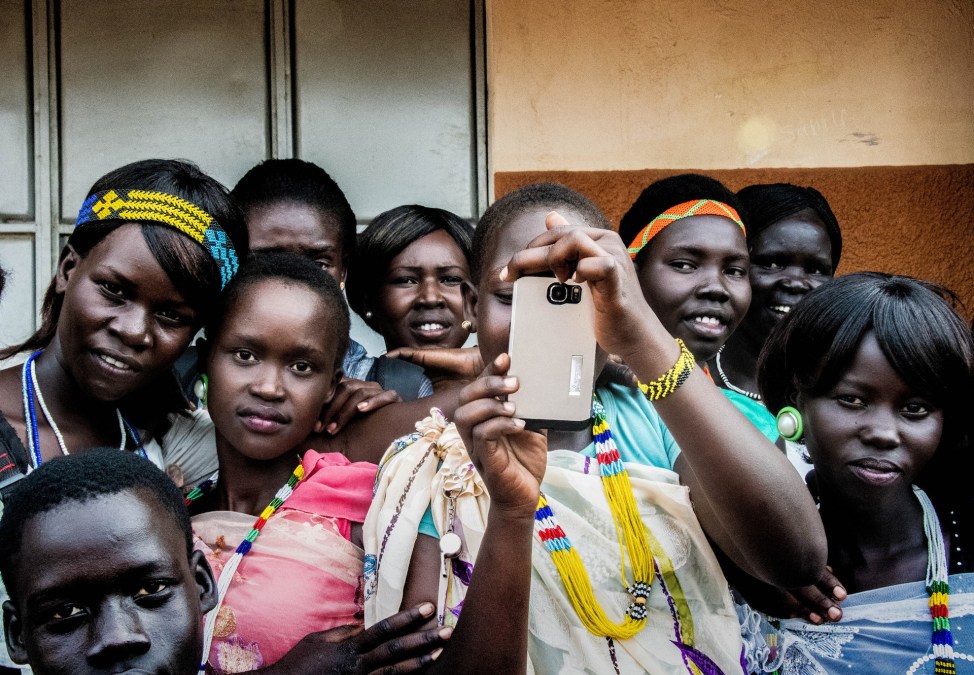
A U.N.-backed project built by Accenture and Microsoft aims to provide a permanent digital ID to 1.1 billion people around the globe who have no official identity, including many of the world’s refugees.
The project, ID2020, on Monday unveiled a new blockchain-supported network designed to build a permanent and legal identity using biometric data on a person’s phone.
Lacking access to identity excludes people from voting, health care, banking, housing and a wide range of modern rights. The new tool was unveiled at U.N. headquarters in New York on Monday during the second ID2020 summit, a “ID2020 is a public-private partnership dedicated to solving the challenges of identity” for individuals including the world’s 22 million refugees.
The blockchain is a reliable, decentralized database that was first used publicly to track the bitcoin cryptocurrency. The method — also known as distributed ledger technology — is increasingly being explored to securely track data outside of currency. Biometrics are measurable human signatures like iris, fingerprint, DNA, heartbeat or gait that can all be used to varying degrees to identify an individual.
“Approximately one-sixth of the world’s population cannot participate in cultural, political, economic and social life because they lack the most basic information: documented proof of their existence,” Accenture explained in a news release. “Establishing identity is critical to accessing a wide range of activities, including education, healthcare, voting, banking, mobile communications, housing, and family and childcare benefits.”
The U.N.’s long history with biometrics features some successes but also has raised significant questions on privacy and security. Blockchain technology would add reliability and security, the proponents of ID2020 say.
The newly prototyped system, designed by Accenture and built on infrastructure using Microsoft Azure cloud computing, is meant to give people persistent access to personally identifiable information stored “off-chain.” For example, fleeing refugees will be able to prove who they are and then gain the benefits and rights that come with a permanent identity.
One benefit is that a wide range of organizations can be involved because blockchain technology is so flexible. The goal now, according to the developers, is to bring in other companies and organizations to join the effort.
Latest Podcasts
Government
FBI officials say AI is bolstering adversaries, emphasizing need to focus on cyber basics, patching
Feds accuse China of ‘systematic’ distillation of U.S. AI models
CIA’s Michael Ellis says cyber intelligence is changing how the agency operates
The G7 tells industry to hurry up and prep for post-quantum encryption
Technology
Threats
Chinese espionage groups swarm to exploit triple-link chain of zero-days
Microsoft discloses two actively exploited zero-days among 974 vulnerabilities
Russian national extradited to US for alleged involvement in bank-account takeover scheme
Attackers exploit zero-days in consistently besieged SonicWall product
Policy
Whistleblower says USPS deploying new, ‘untested’ IT systems governing mail-in ballots
‘Watershed 250’ test program in Texas looks to private sector for water cybersecurity help
Former sexual abuse victims say Grok used their images, videos to train deepfake capabilities
Cyber threats nudge Trump to sign executive order on foreign equipment in U.S. energy infrastructure
Text extracted automatically; images, tables and formatting may be missing. Original: https://cyberscoop.com/united-nations-backs-blockchain-powered-permanent-identity-tool-for-refugees/