Classified data key to new acquisition approach, Federal CISO says
Full article626 words · extracted from cyberscoop.com · click to collapse
Get our latest cybersecurity news first on Google.
The new regime contrasts from previous “Whac-A-Mole” approaches that were confined to the unclassified space, Grant Schneider said.
The strength of a new federal acquisition council on supply-chain security lies in its ability to directly involve classified information in agencies’ decisions to buy products and services, according to a senior White House official.
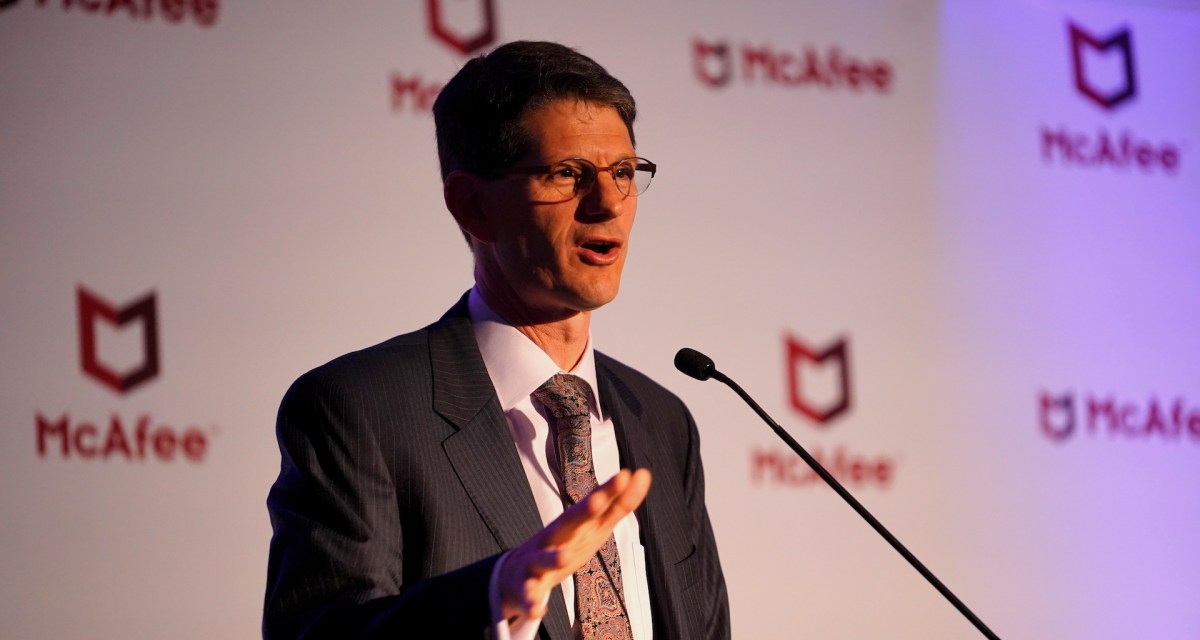
The new regime contrasts from previous “Whac-A-Mole” approaches that were confined to the unclassified space, Federal Chief Information Officer Grant Schneider said Thursday at the 2019 Security Through Innovation Summit, presented by McAfee. He chairs the nascent interagency Federal Acquisition Security Council, which was established by a law signed by President Donald Trump in December. The law allows classified information to be used to support risk assessments while assuring the intelligence community that data is protected, Schneider added.
“The Binding Operational Directive on Kaspersky was completely through open-source [information],” Schneider said, referring to a 2017 federal order that, due to security concerns, banned civilian agencies from using products made by Moscow-based Kaspersky Lab. “If we had written a Binding Operational Directive on Kaspersky using classified information, we might have done it several years ago.”
U.S. officials have long argued that Russian authorities could leverage local laws to access Kaspersky Lab data for intelligence operations – a charge that the antivirus maker denies.
But federal officials’ supply chain concerns run far deeper than one particular country or product. They worry about maintaining visibility into the vast ecosystem of gear bought by agencies and companies in the face of offshoring and ever-greater network connectivity.
Those concerns have spawned multiple policy initiatives in the last year, including the acquisition council and a separate Department of Homeland Security-run task force that trades threat information with industry.
Examples of sophisticated breaches of global tech vendors have only added urgency to those policy efforts.
Schneider, a former CIO of the Defense Intelligence Agency, made clear how high the supply chain is on his list of security concerns.
“My bigger concern that keeps me up at night is ‘is there going to be a trusted supply chain in the future?’ he said.
One important task for the new acquisition council is developing criteria for making recommendations on equipment, products and services that “we shouldn’t allow to do business with the federal government,” Schneider added. The body will have its first meeting at the end of the month, he said.
Latest Podcasts
Government
FBI officials say AI is bolstering adversaries, emphasizing need to focus on cyber basics, patching
Feds accuse China of ‘systematic’ distillation of U.S. AI models
CIA’s Michael Ellis says cyber intelligence is changing how the agency operates
The G7 tells industry to hurry up and prep for post-quantum encryption
Technology
Threats
Chinese espionage groups swarm to exploit triple-link chain of zero-days
Microsoft discloses two actively exploited zero-days among 974 vulnerabilities
Russian national extradited to US for alleged involvement in bank-account takeover scheme
Attackers exploit zero-days in consistently besieged SonicWall product
Policy
‘Watershed 250’ test program in Texas looks to private sector for water cybersecurity help
Former sexual abuse victims say Grok used their images, videos to train deepfake capabilities
Cyber threats nudge Trump to sign executive order on foreign equipment in U.S. energy infrastructure
Election official says Tina Peters would be consultant, won’t have access to election systems
Text extracted automatically; images, tables and formatting may be missing. Original: https://cyberscoop.com/classified-data-supply-chain-grant-schneider/