FCC removes 1,200 voice providers from telephone networks in major robocall crackdown
Full article963 words · extracted from cyberscoop.com · click to collapse
Get our latest cybersecurity news first on Google.
Attorneys general across the country are also taking action in a program dubbed “Operation Robocall Roundup.”
Listen to this article
0:00
Learn more.
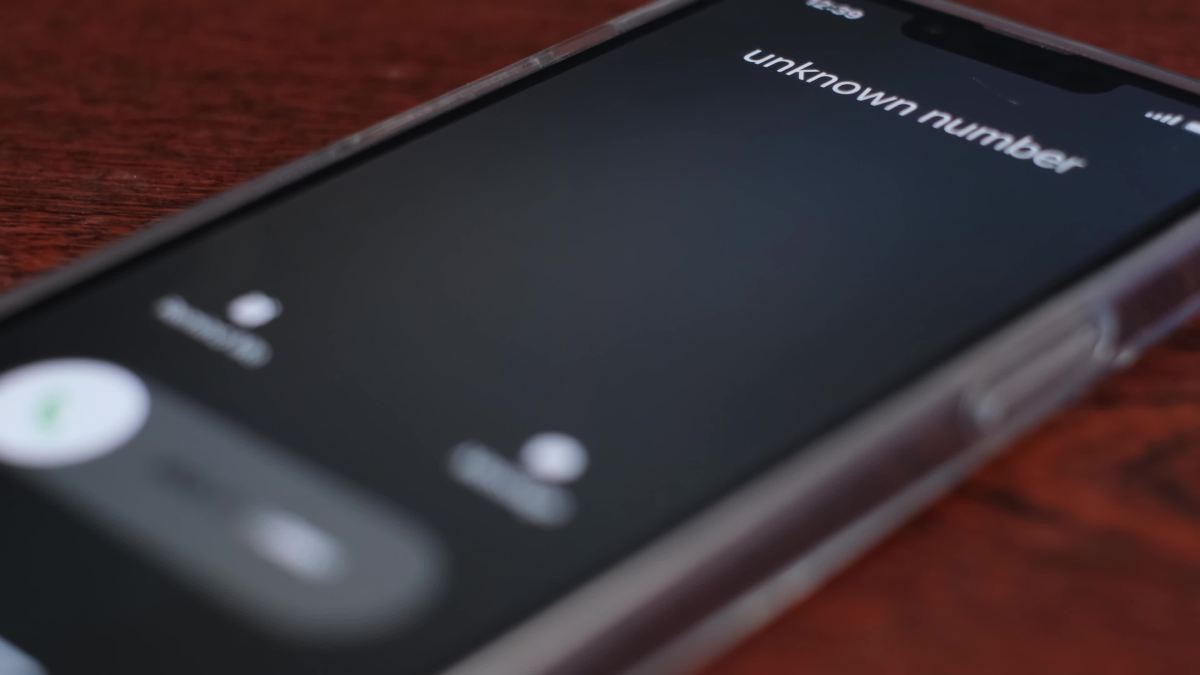
The Federal Communications Commission announced Monday it has blocked more than 1,200 voice service providers from having access to the country’s phone network for failing to comply with anti-robocall regulations, marking the agency’s largest enforcement action against companies that facilitate illegal automated calls.
The providers were disconnected after violating FCC rules requiring accurate certifications in the agency’s Robocall Mitigation Database, a system designed to track compliance with caller authentication protocols. The action affects approximately half of the 2,411 companies that received compliance warnings in December 2024.
“Robocalls are an all-too-common frustration — and threat — to Americans (sic) households,” FCC Chairman Brendan Carr said in a release. “The FCC is doing everything in its power to fight back against these malicious and illegal calls. Providers that fail to do their duty when it comes to stopping these calls have no place in our networks. We’re taking action and we will continue to do so.”
The removal follows a preliminary warning issued to 185 companies, along with further action from attorneys general dubbed “Operation Robocall Roundup,” which among other things, included sending warning letters to 37 voice providers demanding compliance with federal requirements.
The removals center on the STIR/SHAKEN protocol system, a caller authentication framework that requires telecommunications carriers to verify caller identity before routing calls through networks. The system addresses a core challenge in robocall prevention: tracing calls that traverse multiple carrier networks before reaching consumers.
Providers must certify STIR/SHAKEN implementation on all internet protocol-based network portions and submit robocall mitigation plans to maintain database access. Companies removed can only rejoin with express approval from FCC enforcement bureaus.
The FCC has invested approximately $250 million in STIR/SHAKEN implementation since the system’s 2020 launch, but significant gaps remain. The authentication system functions only on modern Voice Over Internet Protocol (VoIP) networks, leaving older telephone infrastructure vulnerable.
The enforcement action reflects the government’s struggle in defeating the scourge of robocalls. Earlier this year, Federal Trade Commission Chair Andrew Ferguson told Congress that his agency received more than 2 million complaints about unwanted calls in fiscal year 2024, with 1.1 million specifically concerning robocalls.
The FTC has also contacted 31 Voice Over Internet Protocol providers believed responsible for more than 450 distinct robocalling campaigns. Ferguson indicated in testimony that earlier communications resulted in behavioral changes and reduced activity from most contacted providers.
During May congressional testimony, Carr described robocalling as “probably the number one issue” raised by consumers, calling the problem “exceptionally frustrating.” He noted that robocallers have demonstrated adaptability to previous mitigation efforts, often shifting tactics when one avenue is blocked.
Recent actions have established significant penalties for non-compliance. Lingo Telecom, a Texas-based provider, received a $1 million fine for authenticating AI-generated robocalls that targeted New Hampshire primary voters with fake Joe Biden messages. The incident prompted new FCC rules in January tightening STIR/SHAKEN reporting requirements.
While the focus of the action is on bad actors inside the U.S., international robcall operations present ongoing challenges. Many illegal calls originate from overseas locations where U.S. agencies lack direct authority, complicating efforts to pursue bad actors at their source.
You can read the full list of blocked providers here.
More Scoops
FCC pushes new rules to crack down on robocallers, foreign call centers
Two measures aim to make it harder for robocallers to obtain valid U.S. phone numbers and pressure companies to onshore call center services.
Critics call FCC router rule a ‘big swing’ that could create more supply chain uncertainty

FCC finalizes new penalties for robocall violators
Latest Podcasts
Government
FBI officials say AI is bolstering adversaries, emphasizing need to focus on cyber basics, patching
Feds accuse China of ‘systematic’ distillation of U.S. AI models
CIA’s Michael Ellis says cyber intelligence is changing how the agency operates
The G7 tells industry to hurry up and prep for post-quantum encryption
Technology
Threats
Chinese espionage groups swarm to exploit triple-link chain of zero-days
Microsoft discloses two actively exploited zero-days among 974 vulnerabilities
Russian national extradited to US for alleged involvement in bank-account takeover scheme
Attackers exploit zero-days in consistently besieged SonicWall product
Policy
Whistleblower says USPS deploying new, ‘untested’ IT systems governing mail-in ballots
‘Watershed 250’ test program in Texas looks to private sector for water cybersecurity help
Former sexual abuse victims say Grok used their images, videos to train deepfake capabilities
Cyber threats nudge Trump to sign executive order on foreign equipment in U.S. energy infrastructure
Text extracted automatically; images, tables and formatting may be missing. Original: https://cyberscoop.com/fcc-robocall-action-operation-robocall-roundup/