Rick Perry: U.S. must use technology prowess to defend power grid
Full article732 words · extracted from cyberscoop.com · click to collapse
Get our latest cybersecurity news first on Google.
The United States must harness its technical know-how to defend energy infrastructure from advanced hacking, Energy Secretary Rick Perry said Monday, touting his department’s investments in cybersecurity research and development.
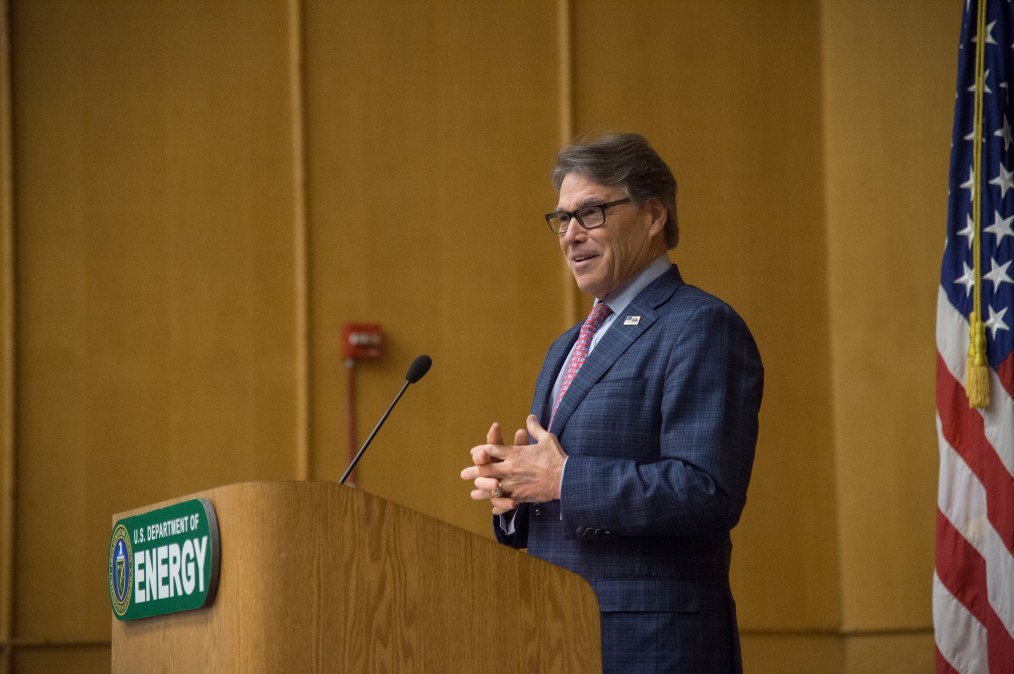
The United States must harness its technical know-how to defend energy infrastructure from advanced hacking, Energy Secretary Rick Perry said Monday, touting his department’s investments in cybersecurity research and development.
Cyberattacks have gotten easier to carry out and their sophistication, scale and frequency have increased, Perry said in a speech at a Department of Energy conference in Austin.
“The sustained and growing threat of cyberattacks to our energy infrastructure requires us to think differently, to act proactively,” the former Texas governor said. That means investing in new technologies to fortify the grid against hackers whose toolkits are only expanding, according to Perry.
DOE in April announced $25 million in funding for research and development to boost cybersecurity in energy delivery systems. Last September, the department awarded $50 million through its national laboratories to improve energy-sector resiliency, including about $20 million in cybersecurity projects.
With the unveiling of a new cybersecurity strategy last month, DOE has been vocal about its efforts to strengthen the grid’s defenses. That strategy seeks to curb the risk of power-supply disruptions resulting from cyberspace incidents, and will serve as a roadmap for a new DOE cybersecurity office.
The energy sector drills regularly for cyberattacks and shares threat information through the Electricity Information Sharing and Analysist Center. However, Perry said, more can be done to stay ahead of hackers that have probed the sector’s weak links for vulnerabilities.
“From hostile regimes, to terrorist groups, to cybercriminals, we face a host of bad actors eager to exploit our vulnerabilities and disrupt, or even destroy, our energy assets,” Perry said.
The Department of Homeland Security warned in March that Russian government hackers had targeted the energy sector, among others, in a two-year campaign that collected information on industrial control systems used in the sector.
“We know that attacks are coming, and we can never let down our guard,” Perry cautioned.
A report that DHS and DOE released last week found that the United States is, on the whole, well prepared to handle power-supply disruptions that could result from cyberattacks. There are, however, gaps in “situational awareness” of cyberthreats and incident response that the sector needs to work out, the report said.
More Scoops
AI-fueled attacks pose ‘active threat’ to water, other sectors, U.S. agencies warn
The agencies said the hackers are taking aim at Siemens S7 Series programmable logic controllers in what could be a first.
Iranian attacks on US critical infrastructure puts 3,900 devices in crosshairs

Iranian hackers launching disruptive attacks at U.S. energy, water targets, feds warn
Latest Podcasts
Government
FBI officials say AI is bolstering adversaries, emphasizing need to focus on cyber basics, patching
Feds accuse China of ‘systematic’ distillation of U.S. AI models
CIA’s Michael Ellis says cyber intelligence is changing how the agency operates
The G7 tells industry to hurry up and prep for post-quantum encryption
Technology
Threats
Chinese espionage groups swarm to exploit triple-link chain of zero-days
Microsoft discloses two actively exploited zero-days among 974 vulnerabilities
Russian national extradited to US for alleged involvement in bank-account takeover scheme
Attackers exploit zero-days in consistently besieged SonicWall product
Policy
Whistleblower says USPS deploying new, ‘untested’ IT systems governing mail-in ballots
‘Watershed 250’ test program in Texas looks to private sector for water cybersecurity help
Former sexual abuse victims say Grok used their images, videos to train deepfake capabilities
Cyber threats nudge Trump to sign executive order on foreign equipment in U.S. energy infrastructure
Text extracted automatically; images, tables and formatting may be missing. Original: https://cyberscoop.com/rick-perry-electrical-grid-cybersecurity-doe/