FBI director says he's 'extremely concerned' about China's ability to weaponize TikTok
Full article654 words · extracted from cyberscoop.com · click to collapse
Get our latest cybersecurity news first on Google.
Christopher Wray said China could control TikTok's algorithm to support anti-American information operations, posing a serious risk.
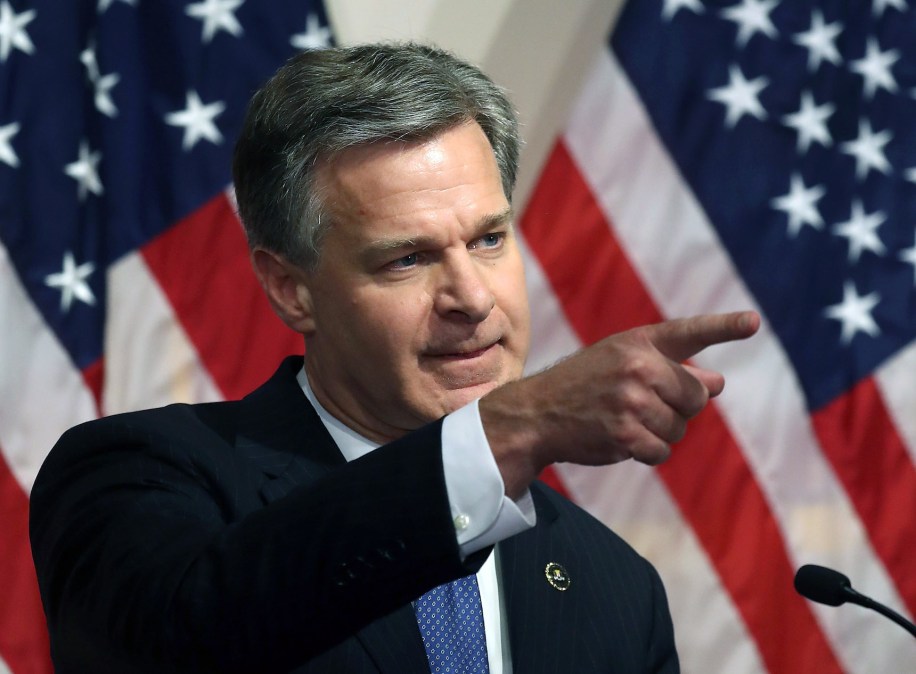
FBI Director Christopher Wray told Congress on Tuesday he is “extremely concerned” that Beijing could weaponize data collected through TikTok, the wildly popular app owned by the Chinese company ByteDance.
Wray said during a House Homeland Security Committee hearing on worldwide threats that application programming interfaces, or APIs, that ByteDance embeds in TikTok are a national security concern since Beijing could use them to “control data collection of millions of users or control the recommendation algorithm, which can be used for influence operations.”
In his opening remarks, Wray noted that while America faces cyberthreats from a variety of nations, “China’s fast hacking program is the world’s largest, and they have stolen more of Americans’ personal and business data than every other nation combined.”
Wray said the FBI has seen a surge in cybersecurity cases and as the numbers have increased so too has the complexity of the investigations. “We’re investigating over 100 different ransomware variants and each one of those with scores of victims as well as a whole host of other novel threats posed by both cybercriminals and nation-states alike.”
He said that APIs in TikTok could be harnessed by China to control software on millions of devices, meaning the Chinese government could conceivably technically compromise Americans’ personal devices.
Because Chinese companies are forced to “basically do whatever the Chinese government wants to do in terms of sharing information or serving as a tool of the Chinese government … that’s plenty of reason by itself to be extremely concerned” about TikTok and the larger threat posed by Chinese cyber aggression, he said.
Chinese cyber operations threaten the economic and national security of all Americans, according to Rep. John Katko, D-NY, the committee’s ranking member and a longtime advocate for cybersecurity issues in Congress. He told the committee that ransomware attacks cost businesses an estimated $1.2 billion last year.
Department of Homeland Security Secretary Alejandro Mayorkas and National Counterterrorism Center Director Christine Abizaid also testified on Tuesday.
Mayorkas said ransomware attacks targeting hospitals, pipelines, electric grids and water treatment plants have become commonplace.
Such operations “exploit the integrated global cyber ecosystem to sow discord, undermine democracy and erode trust in our institutions,” Mayorkas said. “In particular, China is using its technology to tilt the global playing field to its benefit.”
Latest Podcasts
Government
FBI officials say AI is bolstering adversaries, emphasizing need to focus on cyber basics, patching
Feds accuse China of ‘systematic’ distillation of U.S. AI models
CIA’s Michael Ellis says cyber intelligence is changing how the agency operates
The G7 tells industry to hurry up and prep for post-quantum encryption
Technology
Threats
Microsoft discloses two actively exploited zero-days among 974 vulnerabilities
Russian national extradited to US for alleged involvement in bank-account takeover scheme
Attackers exploit zero-days in consistently besieged SonicWall product
Jail time for Maine child in 764 marks turning point in federal law enforcement
Policy
Whistleblower says USPS deploying new, ‘untested’ IT systems governing mail-in ballots
‘Watershed 250’ test program in Texas looks to private sector for water cybersecurity help
Former sexual abuse victims say Grok used their images, videos to train deepfake capabilities
Cyber threats nudge Trump to sign executive order on foreign equipment in U.S. energy infrastructure
Text extracted automatically; images, tables and formatting may be missing. Original: https://cyberscoop.com/fbi-wray-tells-congress-extremely-concerned-tiktok/