U.S. Secretary of Defense urges NATO allies to block Chinese
Full article973 words · extracted from cyberscoop.com · click to collapse
Get our latest cybersecurity news first on Google.
An administration effort to convince European allies to blacklist Huawei largely has fallen on deaf ears.

U.S. Secretary of Defense Mark Esper is calling on allies in the North Atlantic Treaty Organization to bar Chinese companies from developing 5G networks there, reiterating an American argument that largely has failed to convince European countries to blacklist telecommunication firms with ties to Beijing.
Esper, in a speech Thursday at the Cybersecurity and Infrastructure Security Agency summit in Maryland, said “every Chinese company has the potential to be an accomplice in Beijing’s state-sponsored campaign to steal technology.” His remarks came amid a standoff between Washington and Beijing in which the Chinese telecom Huawei has become the subject of geopolitical scrutiny while it also lobbies nations around the world to help build 5G wireless networks.
Esper in his speech warned NATO allies that using 5G networks developed by Chinese companies “jeopardizes military interoperability and intelligence sharing opportunities.”
“The U.S. military does not fight alone,” he said. “Just like the other warfighting domains our cyber capabilities are enhanced by a strong network of allies and partners. Our ability to share information and operate on common communications networks serves as a force multiplier — but it also comes with increased risk.”
China’s national intelligence law empowers the government to use its citizens and companies for intelligence-gathering purposes. The U.S. government earlier this year threatened to curb intelligence-sharing agreements with the U.K. if it allows Huawei to build its 5G networks. Huawei technology has a number of basic vulnerabilities that leave it open to exploitation, according to a U.K. government-based audit. U.S. intelligence officials and lawmakers also have warned Huawei shares close ties with the Chinese government, asserting it aims to both sabotage international competition and to conduct cyber-espionage in support of Beijing.
Huawei consistently has denied such allegations.
The White House in May issued an executive order aimed at tamping down any efforts by U.S. companies to use telecommunications technology “owned by, controlled by, or subject to the jurisdiction or direction” of foreign adversaries.
The U.S. effort to rouse allies to ban Huawei has not been particularly successful. Even countries that currently participate in intelligence-sharing agreements with the U.S. are not convinced. Earlier this year a committee of U.K. parliament declined to ban Huawei, for example. Neither did the European Union.
Chipping away at U.S. military dominance
Esper also noted that while the U.S. military has had an overwhelming presence in traditional war-fighting domains, like land, sea and air, American officials still are trying to understand what kind of behavior is acceptable in cyberspace.
“[O]nly in the past decade or so have we started to figure out what fighting in cyberspace looks like,” Esper said. “Our adversaries see cyberwar as a way to take on the U.S. and impose costs without confronting our traditional strengths.”
The secretary went on to cite rivals stealing information about traditional U.S. military technology and procedures as an area of concern. Earlier this year, the Pentagon in particular flagged aggressive Chinese cyber-espionage efforts that could inform China of U.S. military networks and undermine the security of the Department of Defense, the defense industrial base, and other key sectors.
By hacking into Lockheed Martin in 2007, Chinese hackers gained access to blueprints of F-35 fighter jets’ electronic systems, a tactic Chinese hackers have replicated several times to pilfer off information about the U.S. military and its weapons systems.
“They are conducting long-term, strategically focused campaigns to steal sensitive DOD information to undermine our military advantage,” Esper said.
More Scoops
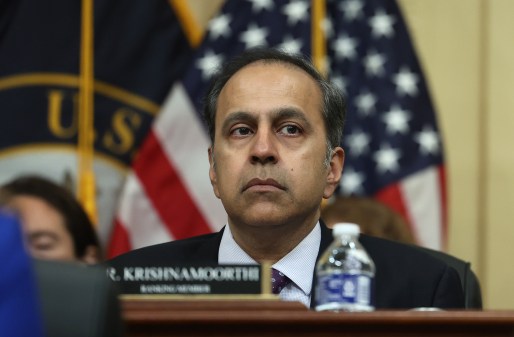
Congressional leaders want an executive branch strategy on China 6G, tech supply chain
In an exclusive, Rep. Raja Krishnamoorthi, D-Ill., told CyberScoop that policymakers must learn from past mistakes around 5G.

A house full of open windows: Why telecoms may never purge their networks of Salt Typhoon

Biden administration wants to avoid 5G mistakes in race to beat China on 6G
Latest Podcasts
Government
FBI officials say AI is bolstering adversaries, emphasizing need to focus on cyber basics, patching
Feds accuse China of ‘systematic’ distillation of U.S. AI models
CIA’s Michael Ellis says cyber intelligence is changing how the agency operates
The G7 tells industry to hurry up and prep for post-quantum encryption
Technology
Threats
Microsoft discloses two actively exploited zero-days among 974 vulnerabilities
Russian national extradited to US for alleged involvement in bank-account takeover scheme
Attackers exploit zero-days in consistently besieged SonicWall product
Jail time for Maine child in 764 marks turning point in federal law enforcement
Policy
Whistleblower says USPS deploying new, ‘untested’ IT systems governing mail-in ballots
‘Watershed 250’ test program in Texas looks to private sector for water cybersecurity help
Former sexual abuse victims say Grok used their images, videos to train deepfake capabilities
Cyber threats nudge Trump to sign executive order on foreign equipment in U.S. energy infrastructure
Text extracted automatically; images, tables and formatting may be missing. Original: https://cyberscoop.com/u-s-secretary-defense-urges-nato-allies-block-chinese-built-5g-tech/