Vault 7 suspect Joshua Schulte says pretrial conditions are 'worse than death'
Full article607 words · extracted from cyberscoop.com · click to collapse
Get our latest cybersecurity news first on Google.
Joshua Schulte has asked a federal judge to force the Bureau of Prisons to improve conditions at the Metropolitan Correction Center in New York.
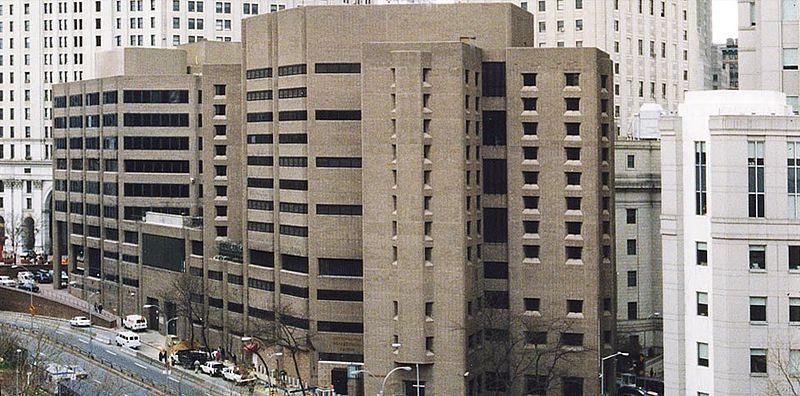
The former CIA employee charged with leaking details about agency hacking tools says he is being held under “barbaric and inhumane” conditions in a Manhattan federal facility as he awaits a second trial in the case.
Lawyers for Joshua Schulte filed a petition last week on his behalf asking a New York federal judge to force the Bureau of Prisons to improve conditions at the Metropolitan Correction Center (MCC). The 32-year-old software engineer has been in solitary confinement for more than two years, according to the documents. He is accused of providing the so-called Vault 7 files, which detailed the U.S. government’s offensive hacking capabilities, to WikiLeaks, which published the documents in 2017.
“It is barbaric and inhumane to lock human beings into boxes for years and years — it is a punishment worse than death and there is no wonder that MCC inmates would rather kill themselves than continue to live in absolute oppression,” Schulte writes in the petition for writ of habeus corpus to the U.S. District Court for the Southern District of New York. The document says Schulte has exhausted all of his options for administrative remedies to the conditions.
In March 2020 a jury found Schulte guilty of lying to the FBI and contempt of court, but were deadlocked on eight counts, including the illegal transmission of national defense information. The retrial is scheduled for June.
He also has been accused of using contraband cell phones to communicate with reporters from behind bars.
Schulte is being held pretrial under “Special Administrative Measures” typically reserved for terrorism suspects. He argues that the MCC has “imposed arbitrary punishment that the SAMs did not authorize,” including sleep deprivation, filthy cells and the denial of books and outdoor recreation.
Schulte worked for years as a member of a CIA unit at the agency’s Langley, Virginia, headquarters that designed hacking tools for spying on foreign targets via commercial technologies. Prosecutors say he had grown disaffected in his role and was feuding with other employees before leaking the classified documents.
Schulte’s lawyers argue that weak cybersecurity on CIA networks could have made those files accessible to other members of the hacking team, or outsiders.
Latest Podcasts
Government
FBI officials say AI is bolstering adversaries, emphasizing need to focus on cyber basics, patching
Feds accuse China of ‘systematic’ distillation of U.S. AI models
CIA’s Michael Ellis says cyber intelligence is changing how the agency operates
The G7 tells industry to hurry up and prep for post-quantum encryption
Technology
Threats
Microsoft discloses two actively exploited zero-days among 974 vulnerabilities
Russian national extradited to US for alleged involvement in bank-account takeover scheme
Attackers exploit zero-days in consistently besieged SonicWall product
Jail time for Maine child in 764 marks turning point in federal law enforcement
Policy
Whistleblower says USPS deploying new, ‘untested’ IT systems governing mail-in ballots
‘Watershed 250’ test program in Texas looks to private sector for water cybersecurity help
Former sexual abuse victims say Grok used their images, videos to train deepfake capabilities
Cyber threats nudge Trump to sign executive order on foreign equipment in U.S. energy infrastructure
Text extracted automatically; images, tables and formatting may be missing. Original: https://cyberscoop.com/joshua-schulte-solitary-confinement/