Intel officials expect more foreign influence efforts leading up to Election Day
Full article1,042 words · extracted from cyberscoop.com · click to collapse
Get our latest cybersecurity news first on Google.
U.S. officials said they expect Russia, Iran and China to increase the cadence of influence operations targeting voters over the final two months of this election cycle.
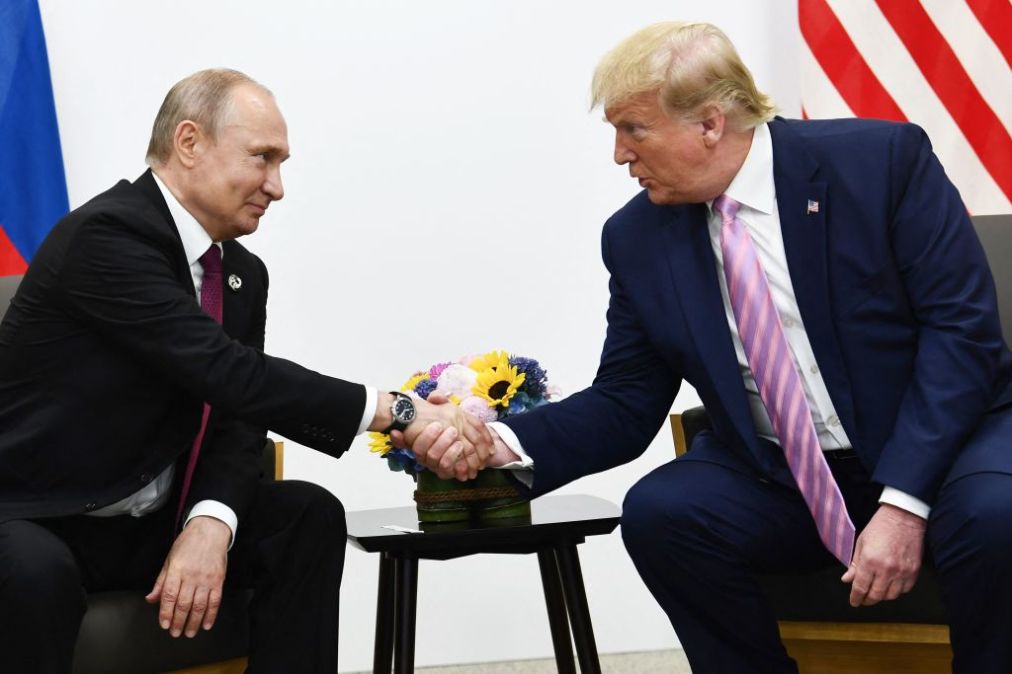
Intelligence community officials said Friday they expect Russia, Iran and China to increase the cadence of influence operations targeting U.S. voters over the final two months of the 2024 election cycle.
The assessment comes after a whirlwind month where U.S. officials accused Iran of engaging in a hack-and-leak operation targeting the presidential campaign of Donald Trump and JD Vance, and this week imposed indictments, seizures and economic sanctions on Russian government officials and members of state media organ RT for a $10 million scheme to covertly launder pro-Russian propaganda through the right-wing media outfit Tenet Media and popular conservative influencers.
But officials at the Office of the Director of National Intelligence told reporters Friday that they continue to view these activities as forms of election “influence” as opposed to direct attempts to interfere with or disrupt voting and election infrastructure. They emphasized that assessment could change in the final stages of the election.
“In particular, we are monitoring for any activities that could enable election interference, especially cyber or physical disruptions of election infrastructure,” an ODNI official said.
A second ODNI official said that election leads at multiple agencies now meet twice a week to review intelligence and evaluate the need for non-public and public notifications around emergent foreign influence campaigns.
They have also engaged in “an active cadence” of non-public notifications and briefings to members of Congress, political committees, and state and local officials. Briefings were also “offered” to both presidential campaigns, but the officials declined to say whether those offers were accepted.
According to officials, Moscow is increasingly leveraging third-party entities — including commercial public relations firms, state-run media organs and American influencers — to inject Russia-friendly narratives into the U.S. political bloodstream “while trying to mask the content in authentic Americans’ free speech.”
This week brought one of the clearest examples of those efforts, as the U.S. government charged and/or sanctioned nearly a dozen Russian nationals as part of a plot to use a fictitious investor in order to funnel millions of dollars to right-wing influencers in exchange for spreading pro-Russian narratives.
As part of the Foreign Agents Registration Act, individuals operating in the United States while working on behalf of or representing the interests of a foreign power must disclose their relationship and any payments to the Department of Justice.
Tenet Media was not directly named in the actions this week, but multiple conservative commentators listed as contributors have since publicly acknowledged that it is the company referenced in the indictments, while disavowing any knowledge that the Russian government was behind the payments.
Fallout has continued throughout the week. On Thursday, Tayler Hansen, who describes himself as a “field reporter” and was one of the six listed contributors by Tenet Media, posted on X that the company “has ended” and that he was seeking new employment.
Emails sent to Liam Donovan, who co-founded Tenet Media in 2022 with his wife Lauren Chen, to confirm the organization’s shuttering were not returned.
Tim Pool, one of the six conservative commentators advertised by Tenet Media, claimed on X that the FBI had contacted him for a “voluntary interview” and that he had accepted.
Sebastian Gorka, a right-wing commentator who briefly served as a White House adviser to Trump, claimed that Chen approached him in February 2023 to serve as one of the faces of Tenet Media.
While “the money looked great,” he said he ultimately turned down the offer when Chen couldn’t clearly explain who was paying for the work.
“Those caught up in Chen’s web should have known better. Seriously. Unless due diligence wasn’t important to them,” Gorka wrote.
More Scoops
House intel bill includes provisions on state and local threat intelligence, election security, AI
The House Intelligence Committee advanced its fiscal 2027 authorization legislation Monday.
CISA election, disinformation officials placed on administrative leave, sources say
DOJ disbands foreign influence task force, limits scope of FARA prosecutions
Latest Podcasts
Government
FBI officials say AI is bolstering adversaries, emphasizing need to focus on cyber basics, patching
Feds accuse China of ‘systematic’ distillation of U.S. AI models
CIA’s Michael Ellis says cyber intelligence is changing how the agency operates
The G7 tells industry to hurry up and prep for post-quantum encryption
Technology
Threats
Policy
‘Watershed 250’ test program in Texas looks to private sector for water cybersecurity help
Former sexual abuse victims say Grok used their images, videos to train deepfake capabilities
Cyber threats nudge Trump to sign executive order on foreign equipment in U.S. energy infrastructure
Election official says Tina Peters would be consultant, won’t have access to election systems
Text extracted automatically; images, tables and formatting may be missing. Original: https://cyberscoop.com/us-election-2024-information-operations-russia-china-iran-odni/