NSA director rebukes Beijing for 'weaponizing' disinformation in Hong Kong protests
Full article957 words · extracted from cyberscoop.com · click to collapse
Get our latest cybersecurity news first on Google.
Gen. Paul Nakasone says China's information warfare efforts are only meant to help the country exert authoritarian control.
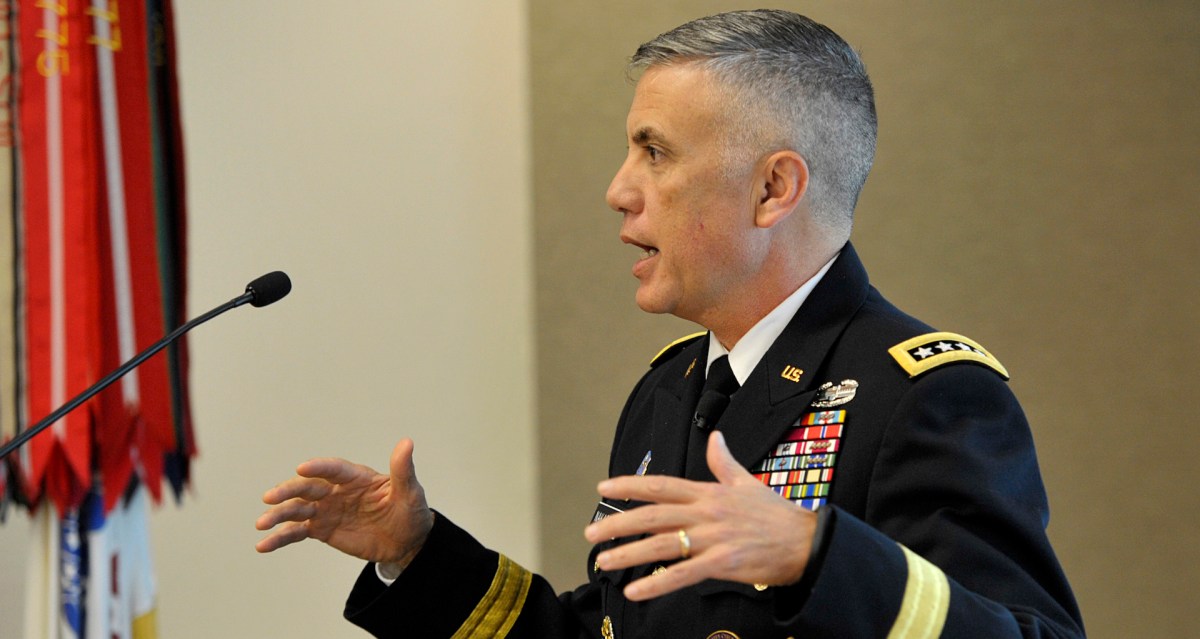
The National Security Agency’s director issued a rebuke Wednesday of the Chinese government’s recent efforts to spread disinformation online about protests in Hong Kong.
“The Chinese government has subverted pro-democratic demonstrators with fake social media posts, providing us a snapshot of how Beijing weaponizes information,” Gen. Paul Nakasone said while delivering remarks at FireEye’s Cyber Defense Summit in Washington, D.C.
As Hong Kong protesters have taken to the streets in recent months to protest proposals on Hong Kong’s extradition laws, China’s government has waged an information campaign on social media platforms to try shaping the narrative in favor of the police.
In one instance, Beijing’s state press arm bought ads on Twitter critical of the protests. Twitter then said there was “reliable evidence” that the Chinese government was behind nearly 1,000 Twitter accounts trying to insert political discord about the protests. That same month, Facebook ran a similar takedown of several pages, groups, and accounts that were denigrating to protesters, accusing them of spreading their own misinformation about the clashes.
Nakasone called out China for abusing technology below the level of armed conflict to exert more control over civilians.
“[China operates] below the level of armed conflict, so they are more and more emboldened to use cyber capabilities as an option,” Nakasone said.
There has been a newfound focus on the events unfolding in Hong Kong: In the past week, it came to light that President Donald Trump promised Chinese President Xi Jinping in June that the U.S. would not discuss the Hong Kong protests, according to CNN.
Chinese and Russian information operations
The NSA director pointed out that China and Russia both have been abusing social media platforms to spread information on issues related to their own policy goals.
“Chinese and Russian adversaries use the technologies that are meant to connect the world in order to exert more authoritarian control over populations,” said Nakasone, who leads U.S. Cyber Command in addition to the intelligence agency.
Nakasone commented that Russia has “waged an information war” against the U.S. in recent years, “often using U.S. infrastructure and technologies to sow and amplify divisions in society with an ultimate goal of eroding trust in democratic institutions.”
Just this week, the Senate Intelligence Committee released a report on Russia’s use of social media platforms, detailing how those efforts relied on racial tensions to sow discord.
And although much of the Kremlin-backed Russian information operations conducted in the months prior to the 2016 presidential elections relied on Twitter and Facebook, they also relied on Google to spread divisive content related to the election.
China has been following a similar playbook. Some information campaigns that have been targeting the Hong Kong protesters have used Google’s YouTube, according to research from Graphika.
More Scoops
Senators slam social media companies for failure to keep disinformation from going viral
Tech executives say they are working hard to fight disinformation, but lawmakers and critics say they simply aren't doing enough.
Abortion disinformation is growing and dangerously divisive, experts say
Facebook, Twitter, Google move to intercept Russian propaganda, disinformation about Ukraine
Latest Podcasts
Government
FBI officials say AI is bolstering adversaries, emphasizing need to focus on cyber basics, patching
Feds accuse China of ‘systematic’ distillation of U.S. AI models
CIA’s Michael Ellis says cyber intelligence is changing how the agency operates
The G7 tells industry to hurry up and prep for post-quantum encryption
Technology
Threats
Microsoft discloses two actively exploited zero-days among 974 vulnerabilities
Russian national extradited to US for alleged involvement in bank-account takeover scheme
Attackers exploit zero-days in consistently besieged SonicWall product
Jail time for Maine child in 764 marks turning point in federal law enforcement
Policy
Whistleblower says USPS deploying new, ‘untested’ IT systems governing mail-in ballots
‘Watershed 250’ test program in Texas looks to private sector for water cybersecurity help
Former sexual abuse victims say Grok used their images, videos to train deepfake capabilities
Cyber threats nudge Trump to sign executive order on foreign equipment in U.S. energy infrastructure
Text extracted automatically; images, tables and formatting may be missing. Original: https://cyberscoop.com/paul-nakasone-nsa-hong-kong-protests/