Google patches two Android zero-days, 120 defects total in September security update
Vulnerabilities mentionedAll →
| CVE | Vulnerability | CVSS | EPSS | Flags | Affected | Exposure | Published |
|---|---|---|---|---|---|---|---|
| CVE-2025-21450 | Cryptographic issue occurs due to use of insecure connection method while downloading. Cryptographic issue occurs due to use of insecure connection method while downloading. NVD description · AI analysis pending | 9.1 | <1% |
| — | ||
| CVE-2025-21483 | Memory corruption when the UE receives an RTP packet from the network, during the reassembly of NALUs. Memory corruption when the UE receives an RTP packet from the network, during the reassembly of NALUs. NVD description · AI analysis pending | 9.8 | <1% |
| — | ||
| CVE-2025-27034 | Memory corruption while selecting the PLMN from SOR failed list. Memory corruption while selecting the PLMN from SOR failed list. NVD description · AI analysis pending | 9.8 | <1% |
| — | ||
| CVE-2025-38352 | Actively Exploited TOCTOU Race Condition in Linux Kernel POSIX CPU Timers CVE-2025-38352 is a time-of-check to time-of-use (TOCTOU) race condition (CWE-367) in the Linux kernel's POSIX CPU timers subsystem: when an exiting non-auto-reaping task has passed exit_notify() and handles CPU timers from interrupt context, it can be reaped by its parent or debugger right after unlock_task_sighand(), so a concurrent posix_cpu_timer_del() cannot detect that the timer is firing (cpu_timer_task_rcu() and/or lock_task_sighand() fail). A local attacker with low privileges who can manipulate POSIX CPU timers on such a task can win this race window, with high impact to confidentiality, integrity, and availability (CVSS 3.1: 7.8, local vector, no user interaction). Any system running an affected Linux kernel is exposed, including Debian GNU/Linux deployments and Android devices built on the kernel; practical reachability is limited where CONFIG_POSIX_CPU_TIMERS_TASK_WORK=y routes timer handling through task work instead of IRQ context. The flaw was added to CISA's Known Exploited Vulnerabilities catalog on 2025-09-04 and Google shipped it as an actively exploited fix in the September 2025 Android security update; EPSS currently estimates a 1.3% probability of exploitation within 30 days (68th percentile), and a public proof-of-concept is available. Do: Apply updated kernel packages from your distribution (Debian and other vendors ship the upstream posix-cpu-timers fix) and install Google's September 2025 Android security patch on Android devices; CISA KEV listing requires federal agencies to apply vendor mitigations or discontinue use per BOD 22-01. Because exploitation requires local code execution, prioritize multi-tenant servers, build/CI hosts, and devices where untrusted users or apps run local code. A public proof-of-concept (github.com/farazsth98/chronomaly) is available for validation testing. | 7.8 | 1% | KEV PoC ×2 |
| massbillions of devices (the Linux kernel underpins roughly 3+ billion active Android devices and the majority of server/cloud workloads, though per-bug… | |
| CVE-2025-48539 | In SendPacketToPeer of acl_arbiter.cc, there is a possible out of bounds read due to a use after free. In SendPacketToPeer of acl_arbiter.cc, there is a possible out of bounds read due to a use after free. This could lead to remote (proximal/adjacent) code execution with no additional execution privileges needed. User interaction is not needed for exploitation. NVD description · AI analysis pending | 8.0 | <1% |
| — | ||
| CVE-2025-48543 | Use-After-Free in Android Runtime Enables Sandbox Escape and Local Privilege Escalation CVE-2025-48543 is a use-after-free (CWE-416) in the Android Runtime that exists in multiple code locations and allows an attacker who has already achieved code execution inside the Chrome sandbox to escape and attack the Android system_server process. The trigger requires only local access to the vulnerable component, with no additional execution privileges and no user interaction needed for exploitation. A successful attacker gains local escalation of privilege in the Android system server, making the bug especially useful as a privilege-escalation link in exploit chains against Android devices. Any Android device from Google's platform is in scope per CISA's listing (vendor: Google, product: Android, component: Android Runtime); specific affected version ranges are not enumerated in the source data. The flaw was added to CISA's Known Exploited Vulnerabilities catalog on 2025-09-04 and Google's related headlines indicate it is being actively exploited in the wild; EPSS currently estimates only a 0.5% probability of exploitation in the next 30 days, and ransomware use is listed as unknown. Do: Apply Google's Android security updates (September 2025 security bulletin patch level or later) as soon as they are available for your devices, since this flaw is listed in CISA's KEV and reported as exploited in the wild; per KEV required action, federal agencies must follow BOD 22-01 timelines or discontinue use if mitigations are unavailable. Use MDM/EDR tooling to verify device security patch levels, and note that because this is a sandbox-escape-to-system_server bug, it is most dangerous when chained with a browser/renderer exploit, so keeping Chrome/WebView current matters as well. | 8.8 | <1% | KEV |
| masson the order of billions of devices (Android runs on roughly 3 billion+ active devices worldwide, and the Android Runtime/system_server component is present on… |
Full article525 words · extracted from cyberscoop.com · click to collapse
Get our latest cybersecurity news first on Google.
The critical, actively exploited zero-day vulnerabilities affect the Linux kernel and Android runtime.
Listen to this article
0:00
Learn more.
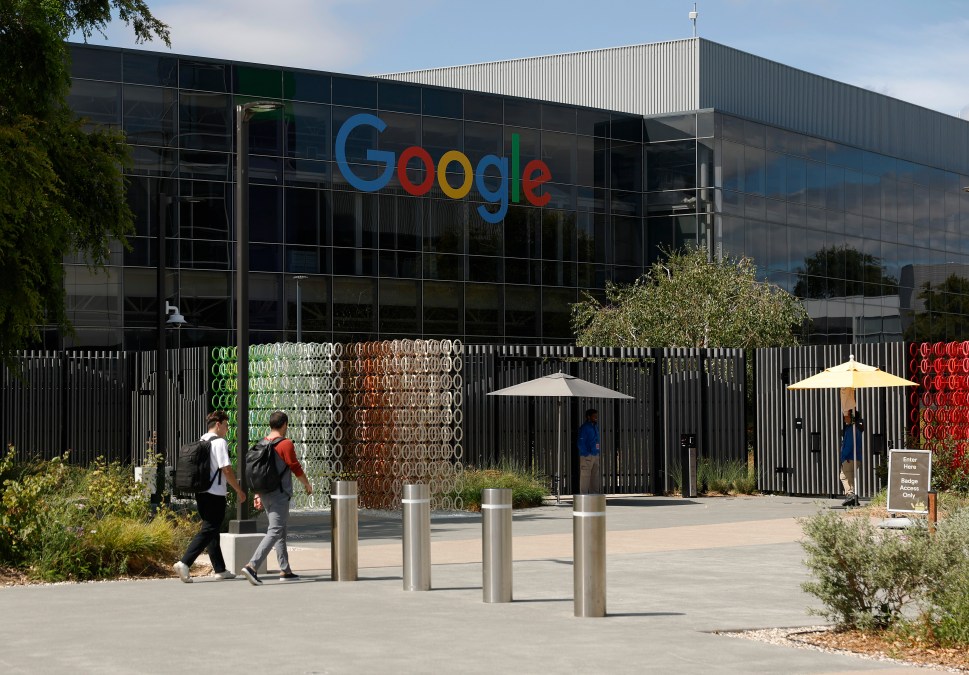
Google warned that two actively exploited zero-day vulnerabilities affecting Android devices have been patched in its September security update, which addresses 120 software defects total.
The zero-days — CVE-2025-38352 affecting the kernel and CVE-2025-48543 affecting Android Runtime — are both high-severity defects that don’t require user interaction for exploitation and could lead to escalation of privilege with no additional execution privileges needed. Google said there are indications that both of the vulnerabilities may be under limited, targeted exploitation.
Google hasn’t included an actively exploited defect in its monthly batch of patches since May. The total number of vulnerabilities disclosed this month is also the highest this year.
The Android security update contains two patch levels — 2025-09-01 and 2025-09-05 — allowing Android partners to address common vulnerabilities on different devices.
Third-party Android device manufacturers release security patches on their own schedule after they’ve customized operating system updates for their specific hardware.
The primary security update contains one critical vulnerability affecting the system component, CVE-2025-48539, which could lead to remote code execution. The first patch level also addresses 29 vulnerabilities in the framework, 28 in the system, one defect affecting Widevine DRM components and nine Google Play system updates.
The second patch includes fixes for three vulnerabilities affecting the kernel, three Arm components defects, 10 Imagination Technologies bugs and four vulnerabilities affecting MediaTek components. The update also addresses 32 vulnerabilities affecting Qualcomm components, including 27 closed-source components.
Three of the vulnerabilities affecting Qualcomm’s proprietary components — CVE-2025-21450, CVE-2025-21483 and CVE-2025-27034 — are designated as critical.
Google said source code patches for all vulnerabilities addressed in this month’s security update will be released to the Android Open Source Project repository by Thursday.
Latest Podcasts
Government
FBI officials say AI is bolstering adversaries, emphasizing need to focus on cyber basics, patching
Feds accuse China of ‘systematic’ distillation of U.S. AI models
CIA’s Michael Ellis says cyber intelligence is changing how the agency operates
Jail time for Maine child in 764 marks turning point in federal law enforcement
Technology
Threats
Policy
Whistleblower says USPS deploying new, ‘untested’ IT systems governing mail-in ballots
‘Watershed 250’ test program in Texas looks to private sector for water cybersecurity help
Former sexual abuse victims say Grok used their images, videos to train deepfake capabilities
Cyber threats nudge Trump to sign executive order on foreign equipment in U.S. energy infrastructure
Text extracted automatically; images, tables and formatting may be missing. Original: https://cyberscoop.com/android-security-update-september-2025/