Rep. Langevin: We need a DHS briefing to understand extent of DNS hijacking threat
Full article901 words · extracted from cyberscoop.com · click to collapse
Get our latest cybersecurity news first on Google.
“We need to understand the scope of this action and how many agencies were actually affected,” Rep. Jim Langevin, D-R.I., told CyberScoop.
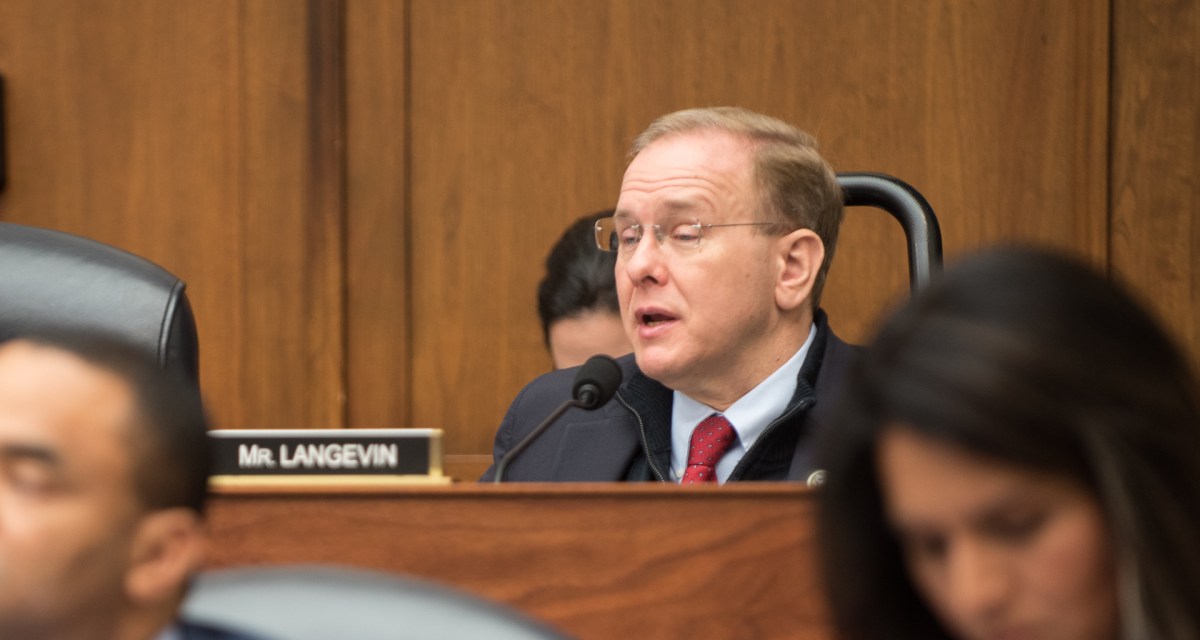
A key House Democrat wants the Department of Homeland Security to brief lawmakers “as soon as possible” on a new domain name system hacking threat to federal computer networks, and the emergency order the department issued in response.
DHS should brief members of the House Homeland Security Committee on the cyberthreat because “we need to understand the scope of this action and how many agencies were actually affected,” Rep. Jim Langevin, D-R.I., said in an interview Wednesday.
Langevin was reacting to a rare emergency directive that DHS issued Tuesday ordering civilian agencies to tighten security controls in the face of a suspected Iranian hacking campaign.
DHS issued the order out of concern that civilian agencies could be vulnerable to cyberattacks on platforms for managing domain name system (DNS) records, which help ensure that a computer user reaches an intended website. By manipulating DNS records, hackers could direct unwitting users to malicious websites. At least six civilian agencies have been affected by the recent malicious DNS activity, people familiar with the matter told CyberScoop.
“It’s a serious issue and obviously any efforts to tamper with the domain name system are very disturbing,” Langevin told CyberScoop. This is the first time DHS has issued an emergency order under a 2015 law granting the department that authority, he added.
“The ability of a malicious actor to redirect traffic is an avenue for…undermining confidence in the dot-gov system, and it can also be used as a conduit for advanced malware,” said Langevin, who credited DHS for issuing the emergency order.
The order gave agencies 10 business days to implement two-factor authentication and change passwords for accounts managing DNS records, among other updates. Langevin also said he worried the ongoing partial government shutdown would hinder agencies’ ability to carry out the directive.
“It’s far from clear who’s actually going to be on hand [at agencies] to implement these changes within the next 10 days,” the Rhode Island Democrat said. “And this needed to be done yesterday, not 10 days from now.”
In a series of tweets Wednesday evening, Chris Krebs, the senior DHS official who issued the emergency directive, explained the importance of mitigating the DNS threat and said the order was implementable, despite the partial government shutdown.
“Though we recognize that some agencies may have challenges implementing the directive during the ongoing partial government shutdown, we believe these actions are necessary, urgent, and implementable as most agencies are adequately staffed to take the necessary actions,” Krebs wrote.
Langevin, who was recently named chairman of the House Armed Services Committee panel that oversees cyber operations, also reflected on a longstanding challenge for policymakers: How do you deter foreign adversaries from laying siege to U.S computer networks?
Langevin said deterrence required a “whole-of-government approach,” including policy options like offensive operations, indictments, and sanctions. The congressman welcomed the “forward-leaning” approach advanced in the Pentagon’s latest cybersecurity strategy, which calls for “halt[ing] malicious cyber activity at its source.”
“I support [that approach], but with proper oversight and appropriate constraints,” Langevin said. “I don’t want this to be a furthering of the Wild West in cyberspace, but done the right way and within reason.”
UPDATE, 1/24, 8:10 a.m. EDT: This story has been updated with a statement from Chris Krebs, director of DHS’s Cybersecurity and Infrastructure Security Agency.
More Scoops

Open-source security is posing challenges governments can’t easily solve
A diffuse landscape, fruitful targets, companies not stepping up, AI’s influence and flagging U.S. government efforts all figure into a shifting threat.
CISA credential leak raises alarms, and Capitol Hill demands answers
Across party lines and industry, the verdict is the same: CISA is in trouble
Latest Podcasts
Government
FBI officials say AI is bolstering adversaries, emphasizing need to focus on cyber basics, patching
Feds accuse China of ‘systematic’ distillation of U.S. AI models
CIA’s Michael Ellis says cyber intelligence is changing how the agency operates
The G7 tells industry to hurry up and prep for post-quantum encryption
Technology
Threats
Chinese espionage groups swarm to exploit triple-link chain of zero-days
Microsoft discloses two actively exploited zero-days among 974 vulnerabilities
Russian national extradited to US for alleged involvement in bank-account takeover scheme
Attackers exploit zero-days in consistently besieged SonicWall product
Policy
‘Watershed 250’ test program in Texas looks to private sector for water cybersecurity help
Former sexual abuse victims say Grok used their images, videos to train deepfake capabilities
Cyber threats nudge Trump to sign executive order on foreign equipment in U.S. energy infrastructure
Election official says Tina Peters would be consultant, won’t have access to election systems
Text extracted automatically; images, tables and formatting may be missing. Original: https://cyberscoop.com/rep-langevin-need-dhs-briefing-understand-extent-dns-hijacking-threat/