China doesn’t want Trump re-elected; Russia is denigrating Biden, US intel official says
Full article1,013 words · extracted from cyberscoop.com · click to collapse
Get our latest cybersecurity news first on Google.
It's the most direct statement from the intelligence community yet on foreign adversaries' preferences.
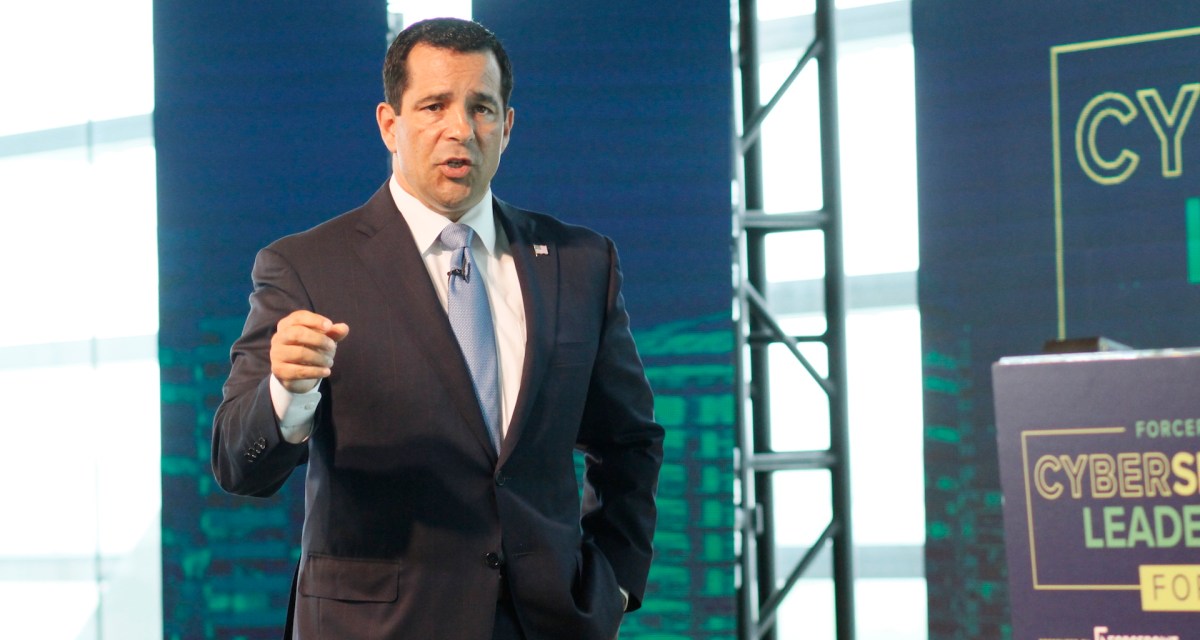
China prefers that President Donald Trump not win a second term, while Russia is working to denigrate presumptive Democratic nominee Joe Biden, a senior U.S. intelligence official said Friday in an unusually direct statement on election interference.
The Chinese government has “expanded its influence efforts” ahead of the U.S. presidential election in November, and grown increasingly critical of the Trump administration’s response to the coronavirus and its closure of the Chinese consulate in Houston, said William Evanina, head of the National Counterintelligence and Security Center.
Moscow, meanwhile, has used “a range of measures” to try to sully Biden’s candidacy, Evanina said, in line with Russia’s criticism of Biden when he was vice president. “Some Kremlin-linked actors are also seeking to boost President Trump’s candidacy on social media and Russian television,” Evanina said.
The Iranian government, for its part, has looked to undermine U.S. institutions and Trump, and sow divisions among Americans, the statement continued.
Some of the foreign activity aimed at U.S. politics has involved hacking. In June, a cybersecurity specialist at Google revealed that Chinese hackers had targeted the Biden campaign, while Iranian hackers had gone after Trump campaign officials. There was no evidence the hacking had been successful.
Evanina’s statement came with a general warning that foreign actors may “seek to compromise our election infrastructure for a range of possible purposes, such as interfering with the voting process, stealing sensitive data, or calling into question the validity of the election results.“ However, Evanina said, “it would be difficult for our adversaries to interfere with or manipulate voting results at scale.”
Russian intelligence officers conducted a sweeping intervention in the 2016 U.S. election, using hacked emails and disinformation to undermine Hillary Clinton’s candidacy. The Russian hackers also probed state IT systems across the country. In the years since, Department of Homeland Security and FBI officials have worked with election officials to bolster the security of their systems.
“The threat information shared today is serious and troubling, but Americans should rest assured that we are working to ensure our elections remain secure,” Chris Krebs, head of DHS’s Cybersecurity and Infrastructure Security Agency, said in a statement.
Senators call for more election security info to be made public
Friday’s announcement was blunter than a statement on election interference that Evanina made in July, which did not mention either Trump or Biden. Senior Democratic lawmakers blasted Evanina for not being more specific in that statement.
Sen. Mark Warner of Virginia, the top Democrat on the Senate Intelligence Committee, welcomed the additional details Evanina gave the public on Friday.
“Evanina’s statement highlights some of the serious and ongoing threats to our election from China, Russia, and Iran,” Warner said in a joint statement with Sen. Marco Rubio, R-Fla., the committee’s acting chairman. “Everyone — from the voting public, local officials, and members of Congress — needs to be aware of these threats.”
Intelligence officials have in recent weeks giving classified briefings to lawmakers on election interference threats.
“We believe more of the information that was made available in these briefings can, and at the appropriate time should, be shared with the voting public, and we encourage the intelligence community to do so in a manner that protects the sources and methods used to collect such information,” Rubio and Warner said.
Other senior Democratic lawmakers, however, were still not satisfied with Evanina’s statement. “Unfortunately, today’s statement still treats three actors of differing intent and capability as equal threats to our democratic elections,” said Speaker of the House Nancy Pelosi and Rep. Adam Schiff of California, chairman of the House Intelligence Committee.
More Scoops
Tina Peters, through attorney, backs off formal role in Shasta County elections
Peters still left the door open to working with Shasta County on elections and doubled down on her statements that electronic voting machines should be discontinued.
State officials, election experts pan Trump speech: ‘This is what desperation looks like’
States are building their own election defense networks as federal support evaporates
Latest Podcasts
Government
FBI officials say AI is bolstering adversaries, emphasizing need to focus on cyber basics, patching
Feds accuse China of ‘systematic’ distillation of U.S. AI models
CIA’s Michael Ellis says cyber intelligence is changing how the agency operates
The G7 tells industry to hurry up and prep for post-quantum encryption
Technology
Threats
Microsoft discloses two actively exploited zero-days among 974 vulnerabilities
Russian national extradited to US for alleged involvement in bank-account takeover scheme
Attackers exploit zero-days in consistently besieged SonicWall product
Jail time for Maine child in 764 marks turning point in federal law enforcement
Policy
Whistleblower says USPS deploying new, ‘untested’ IT systems governing mail-in ballots
‘Watershed 250’ test program in Texas looks to private sector for water cybersecurity help
Former sexual abuse victims say Grok used their images, videos to train deepfake capabilities
Cyber threats nudge Trump to sign executive order on foreign equipment in U.S. energy infrastructure
Text extracted automatically; images, tables and formatting may be missing. Original: https://cyberscoop.com/2020-election-china-trump-russia-biden-evanina/