First SMS Trojan for Android
Full article412 words · extracted from securelist.com · click to collapse



I think the title of this post speaks for itself. Trojan-SMS.AndroidOS.FakePlayer.a passes itself off as a media player application. If the user chooses to install it, this icon with the name “Movie Player” will appear in the list of applications:
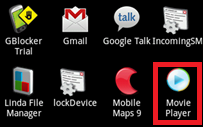
The malware sends SMS messages to two premium rate numbers 3353 and 3354, with each message costing approximately $5. It does this stealthily, without requiring any confirmation from the device owner.
During installation, the user is asked to allow this application to change or delete memory card data, send SMS and read the data about the phone and phone ID. This is a huge red flag – why does a simple media player require permission to send SMS messages? – and anyone who’s paying attention during the installation process will immediately be suspicious.
This flags up an important point: when installing a new program, you really should pay attention to which services the application requests access to. Automatically permitting a new application to access every service it requests means you could end up with malicious or unwanted applications doing all sorts of things without requesting any additional confirmation. And you won’t know anything about it.
Trojan-SMS.AndroidOS.FakePlayer.a is quite a development – yet another popular mobile platform, and one with an ever increasing market share is now being targeted by the bad guys. At the moment, although anyone’s device can be infected, the Trojan only causes losses for Russian users, and as far as we can tell, it’s currently not being spread via Android Marketplace.
In the past, though, we’ve seen plenty of local problems evolve to become global ones. And when we get malware that uses a new infection vector or targets a previously untouched platform, we know that sooner or later, there will be more on the way.
Latest Webinars
Reports
Kaspersky researchers have discovered new Mirage Kitten attacks using previously undocumented malware families: NodeRabbit in Node.js and PollCat in JavaScript.
Our experts discovered a new CoolClient backdoor variant with a kernel-mode rootkit driver that hides malicious processes, files, and network connections from security tools and threat analysts.
Kaspersky experts break down a new Armored Likho campaign that poses as a fundraising efforts and delivers a new Still Toolkit aimed at stealing Telegram data and eavesdropping on victims.
Kaspersky researchers reveal previously undocumented malware attributed to Mirage Kitten (UNC1549, Smoke Sandstorm, Nimbus Manticore): NightLedger backdoor, ArcBridge, and BridgeHead tunneling tools.
Text extracted automatically; images, tables and formatting may be missing. Original: https://securelist.com/first-sms-trojan-for-android/29731/