In issuing 5G recommendations, E.U. spurns U.S. hardline on Huawei
Full article727 words · extracted from cyberscoop.com · click to collapse
Get our latest cybersecurity news first on Google.
Compared to the U.S. hardline on Huawei, the E.U. is taking a middle-of-the-road approach to 5G security.

European Union officials on Tuesday released recommendations for member countries to manage cybersecurity risk stemming from 5G communications networks, declining to embrace a U.S.-led effort to ditch gear made by Chinese telecom giant Huawei.
The EU’s executive body instead asked each member state to conduct a “national risk assessment” of 5G infrastructure by the end of June, and made suggestions “to protect our economies, societies and democratic systems.” The commission wants suppliers and operators of 5G networks to tighten security protocols, and member states to work to develop “EU-wide certification schemes related to 5G.”
5G networks, which Europe has lagged behind the U.S. and China in deploying, promise faster data transfers and greater connectivity. But experts warn they could also introduce greater cybersecurity risk.
“Any vulnerability in 5G networks or a cyber-attack targeting the future networks in one Member State would affect the Union as a whole,” the European Commission said in a statement.
That fact that “democratic processes” increasingly use digital infrastructure and 5G networks make the recommendations all the more important, the commission said. Millions of Europeans are set to participate in the EU parliamentary elections in May.
Huawei, the world’s largest telecom equipment supplier, is expected to play a big role in the deployment of 5G networks.
Washington has exhorted its allies to avoid gear made by Huawei out of concern that the Chinese government could use the equipment for spying or hacking, a charge Huawei vigorously denies. While Australia, for example, has adopted the U.S. hardline against Huawei, other countries, such as India, have opted to embrace the company’s massive market share.
The European Union appears to be taking a middle-of-the-road approach. The European Parliament has passed a resolution noting cybersecurity concerns related to China, but it is up to member countries how they respond to those concerns.
Member states can ban companies from their markets on national security grounds if those companies don’t comply “with the country’s standards and legal framework,” the commission said Tuesday.
More Scoops
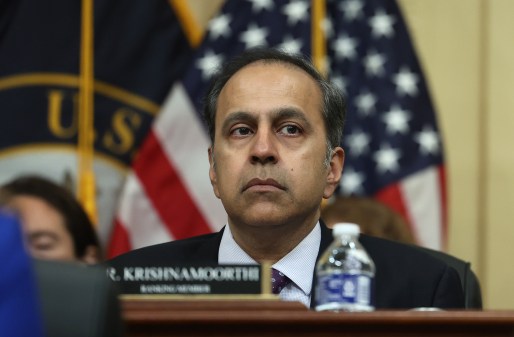
Congressional leaders want an executive branch strategy on China 6G, tech supply chain
In an exclusive, Rep. Raja Krishnamoorthi, D-Ill., told CyberScoop that policymakers must learn from past mistakes around 5G.

A house full of open windows: Why telecoms may never purge their networks of Salt Typhoon

Trio of South Dakota politicians set to have bigger roles on cybersecurity
Latest Podcasts
Government
FBI officials say AI is bolstering adversaries, emphasizing need to focus on cyber basics, patching
Feds accuse China of ‘systematic’ distillation of U.S. AI models
CIA’s Michael Ellis says cyber intelligence is changing how the agency operates
Jail time for Maine child in 764 marks turning point in federal law enforcement
Technology
Threats
Chinese espionage groups swarm to exploit triple-link chain of zero-days
Microsoft discloses two actively exploited zero-days among 974 vulnerabilities
Russian national extradited to US for alleged involvement in bank-account takeover scheme
Attackers exploit zero-days in consistently besieged SonicWall product
Policy
Whistleblower says USPS deploying new, ‘untested’ IT systems governing mail-in ballots
‘Watershed 250’ test program in Texas looks to private sector for water cybersecurity help
Cyber threats nudge Trump to sign executive order on foreign equipment in U.S. energy infrastructure
Election official says Tina Peters would be consultant, won’t have access to election systems
Text extracted automatically; images, tables and formatting may be missing. Original: https://cyberscoop.com/5g-eu-huawei-cybersecurity-recommendations/