No, that wasn't a DDoS attack, just a cellular outage
Full article759 words · extracted from cyberscoop.com · click to collapse
Get our latest cybersecurity news first on Google.
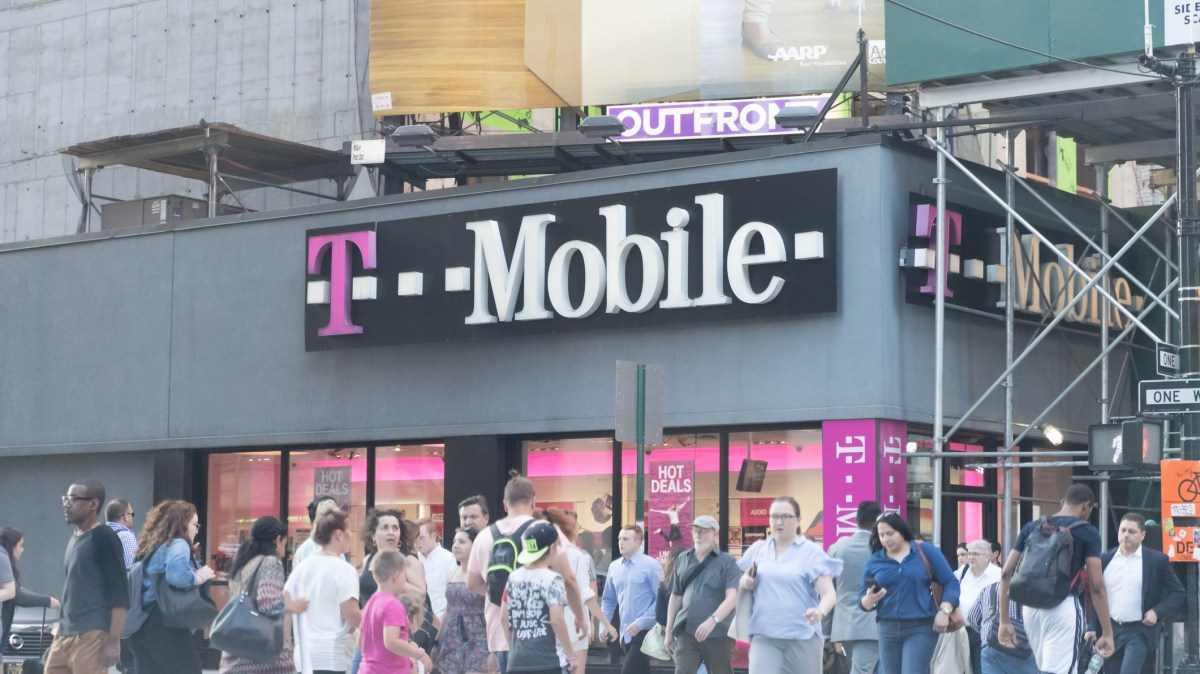
No, the T-mobile outage was not, in fact, a DDoS attack.
If Anonymous actually knows about a cyberattack that knocked telecommunications services throughout the U.S. offline Monday, then its members aren’t saying much.
A Twitter account claiming to be attached to the once formidable hacking group on Monday stated, without evidence, that the U.S. was enduring a distributed denial-of-service attack, perhaps from China. The tweets, sent by the @YourAnonCentral account to its 6.5 million followers, coincided with outages for T-Mobile customers in multiple cities. Two messages claiming a DDoS attack was underway had received more than 17,000 retweets by press time, while other Anonymous accounts also amplified the allegations without providing any additional insight.
Neville Ray, chief technology officer at T-Mobile, said Tuesday that the company had fixed the issues.
Security experts quickly pinned the issue on T-Mobile network configuration issues which resulted in the hours of downtime for customers, rather than a malicious DDoS meant to knock services offline by flooding them with internet traffic. Instead of acknowledging the more complicated reality, Anonymous amplified screenshots of a DDoS attack map that the security firm Arbor Networks uses as marketing to create interest in its product. In another message, Anonymous speculated China may have been the source of an attack, “as the situation between South and North Korea is currently deteriorating.”
The National Capital Region Threat Intelligence Consortium, an information sharing center sanctioned by the U.S. Department of Homeland Security, advised telecommunication firms to avoid unsubstantiated suggestions.
“The NTIC Cyber Center has not received any reputable information regarding any wide scale DDoS attacks impacting mobile carriers within the United States and urges members to verify sources and information before sharing via social media or other platforms,” said a notification sent Monday obtained by CyberScoop.
It was only the latest example of Anonymous aiming to boost its social media presence by capitalizing on unfolding news events, while ignoring the nuance. An offshoot of the famously decentralized group previously claimed to leak email addresses and passwords apparently stolen from a Minneapolis police website as retaliation for the killing of George Floyd. In fact, many of those credentials had been leaked years before in unrelated data breaches.
A range of experienced security practitioners including Marcus Hutchins, the researcher who is known for stopping the WannaCry ransomware outbreak, quickly debunked Anonymous’ claims, taking specific issue with the Digital Attack Map, which “lacks context to make any inferences at all.”
YourAnonCentral did not immediately respond to a message seeking comment.
The NTIC alert is available in full below.
Sean Lyngaas contributed reporting.
[documentcloud url=”http://www.documentcloud.org/documents/6945828-NTIC-Cyber-Alert-US-Mobile-Carrier-Outage-TLP.html” responsive=true]
More Scoops

Officials seize 53 DDoS-for-hire domains in ongoing crackdown
Operation PowerOFF’s latest globally coordinated action identified more than 75,000 alleged cybercriminals. Officials warned each of them to stop jamming up traffic.

Officials gain control of Rapper Bot DDoS botnet, charge lead developer and administrator

Pro-Russian DDoS group NoName057(16) disrupted by international law enforcement operation
Latest Podcasts
Government
FBI officials say AI is bolstering adversaries, emphasizing need to focus on cyber basics, patching
Feds accuse China of ‘systematic’ distillation of U.S. AI models
CIA’s Michael Ellis says cyber intelligence is changing how the agency operates
Jail time for Maine child in 764 marks turning point in federal law enforcement
Technology
Threats
Chinese espionage groups swarm to exploit triple-link chain of zero-days
Microsoft discloses two actively exploited zero-days among 974 vulnerabilities
Russian national extradited to US for alleged involvement in bank-account takeover scheme
Attackers exploit zero-days in consistently besieged SonicWall product
Policy
Whistleblower says USPS deploying new, ‘untested’ IT systems governing mail-in ballots
‘Watershed 250’ test program in Texas looks to private sector for water cybersecurity help
Former sexual abuse victims say Grok used their images, videos to train deepfake capabilities
Cyber threats nudge Trump to sign executive order on foreign equipment in U.S. energy infrastructure
Text extracted automatically; images, tables and formatting may be missing. Original: https://cyberscoop.com/ddos-attack-anonymous-tmobile/