CISA doesn't know how many US federal agencies use firewalls to fend off malicious traffic
Full article744 words · extracted from cyberscoop.com · click to collapse
Get our latest cybersecurity news first on Google.
DHS's top cybersecurity agency doesn't know how many agencies are segmenting their networks from outside traffic.
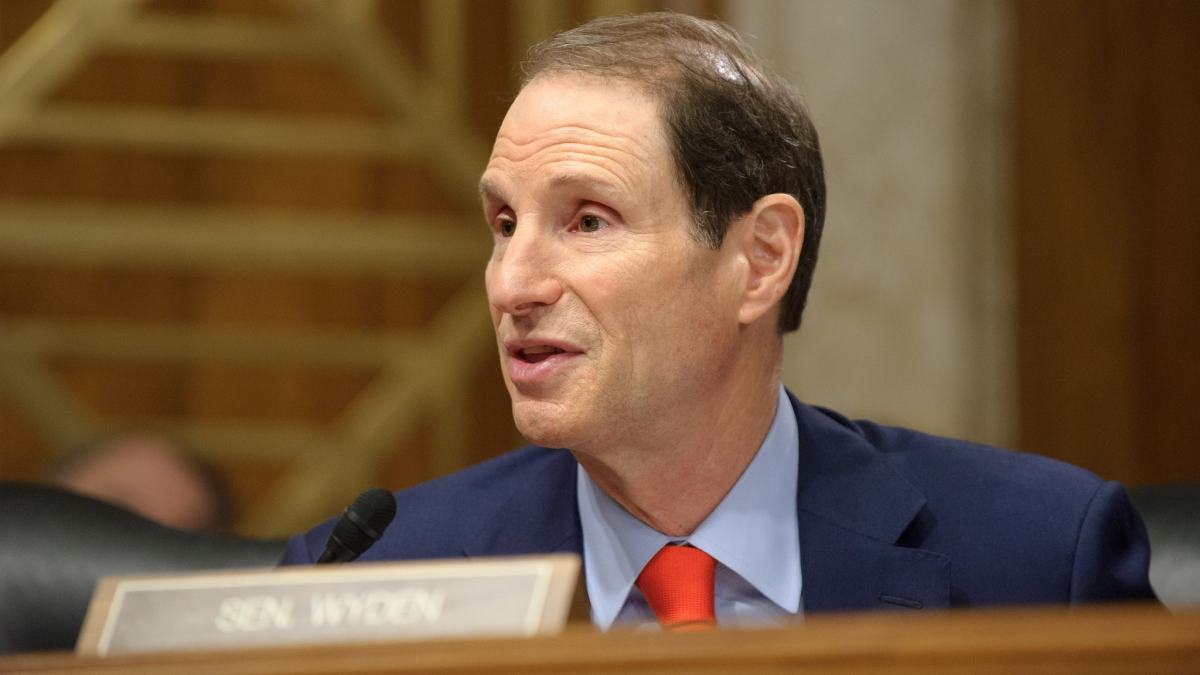
The Department of Homeland Security’s top cybersecurity agency doesn’t know how many agencies are segmenting their networks from unwanted outside traffic, a basic security practice, according to a letter recently sent to the office of Sen. Ron Wyden (D-Ore.) by the agency.
The agency provided the answers in response to a February inquiry from Wyden’s office following a heated Senate Intelligence Committee hearing about the breach at the federal contractor SolarWinds. The suspected Russian espionage campaign used a vulnerability in SolarWinds and other software to infiltrate the systems of at least nine federal agencies and about 100 private companies.
Wyden questioned why agencies did not have properly configured firewalls defending their servers running the SolarWinds software, Orion. Such a measure would have prevented hackers from implementing the second stage of the SolarWinds attack and using the backdoor they had planted, according to an assessment by SolarWinds.
The agency concurred that a firewall blocking outgoing connections “would have neutralized the [SolarWinds] malware.”
“While CISA did observe victim networks with this configuration that successfully blocked connection attempts and had no follow-on exploitation, the effectiveness of this preventative measure is not applicable to all types of intrusions and may not be feasible given operational requirements for some agencies,” acting CISA director Brandon Wales wrote.
Both the National Security Agency and the National Institute of Standards and Technology advise that traffic not related to operational needs should be blocked off from servers. Wales says CISA agrees with these recommendations.
“CISA has now confirmed that organizations with properly configured firewalls – a 1990s technology – successfully neutralized Russia’s SolarWinds malware,” Wyden wrote in a statement to CyberScoop. “Instead of weakening our privacy laws to enable warrantless surveillance of U.S. networks, the government should be mandating that agencies and companies that hold Americans’ sensitive data adopt basic cyber hygiene, which is far more effective.”
CISA also responded to criticism that its $6 billion dollar cyber defense system, EINSTEIN, was not able to detect the SolarWinds malware. The Government Accountability Office has raised concerns about the system’s failure to detect new forms of malware since 2016.
The agency is using $650 million in funding from the American Recovery Act to improve its detection capabilities to focus on activity inside government networks and make agencies and CISA “better situated to identify threat activity within federal networks in near-real-time,” Wales wrote.
Biden last month released a 2022 budget blueprint that would propose $750 million for the government response to the SolarWinds hack.
The agency does not have any immediate plans to direct individual agencies to use firewalls.
“It would be impractical for CISA to direct individual agencies to adopt specific network and device configurations on a broad scale, particularly given the unique operational requirements of each agency,” the agency wrote.
Wales says the agency is “evaluating opportunities” to use its authorities to drive federal agency security, something that could be speeded along by the requirements in Biden’s May executive order mandating improvements to software used across the federal government.
Updated, 6/22/21: This has been updated to include a quote from Sen. Ron Wyden.
Latest Podcasts
Government
FBI officials say AI is bolstering adversaries, emphasizing need to focus on cyber basics, patching
CIA’s Michael Ellis says cyber intelligence is changing how the agency operates
The G7 tells industry to hurry up and prep for post-quantum encryption
Jail time for Maine child in 764 marks turning point in federal law enforcement
Technology
Threats
Chinese espionage groups swarm to exploit triple-link chain of zero-days
Microsoft discloses two actively exploited zero-days among 974 vulnerabilities
Russian national extradited to US for alleged involvement in bank-account takeover scheme
Attackers exploit zero-days in consistently besieged SonicWall product
Policy
Whistleblower says USPS deploying new, ‘untested’ IT systems governing mail-in ballots
‘Watershed 250’ test program in Texas looks to private sector for water cybersecurity help
Former sexual abuse victims say Grok used their images, videos to train deepfake capabilities
Cyber threats nudge Trump to sign executive order on foreign equipment in U.S. energy infrastructure
Text extracted automatically; images, tables and formatting may be missing. Original: https://cyberscoop.com/cisa-solarwinds-firewall-wyden-wales-letter/