Court rules SAVE database illegal, orders it dismantled
Full article1,069 words · extracted from cyberscoop.com · click to collapse
Get our latest cybersecurity news first on Google.
A judge said the administration’s database violates the Privacy Act, the Social Security Act and the Administrative Procedures Act.
Listen to this article
0:00
Learn more.
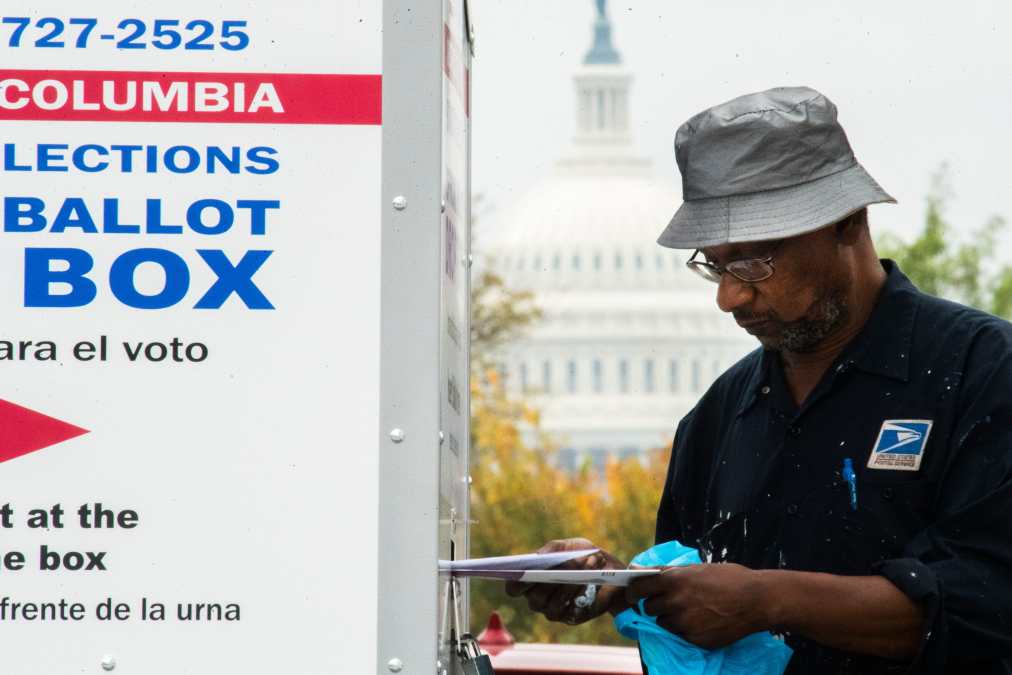
A federal court ruled Monday that the Trump administration’s national voter database violates federal privacy laws, interferes with Americans’ right to vote, and must be dismantled.
In the ruling, Judge Sparkle L. Sooknanan of the District Court of Washington D.C. wrote that records reviewed by the court show federal agencies knew that the SAVE voter database violated federal laws like the Privacy Act, the Social Security Act and the Administrative Procedure Act, but were “scrambling” to comply with President Trump’s executive order to create a system for mass voter verification.
That pressure resulted in agencies “haphazardly” combining and repurposing the personal information of millions of Americans from different government databases, including citizenship data they knew was unreliable.
“The Court therefore sets aside and vacates the 2025 SAVE modified system and the related notices because they were contrary to law, arbitrary and capricious, in excess of statutory authority, and without observance of procedure required by law,” Sooknanan wrote.
The League of Women Voters, its local affiliate groups and the Electronic Privacy Information Center filed the lawsuit last year. They argued the administration violated privacy laws that restrict the government’s ability to collect or combine private data without congressional authorization.
Sooknanan wrote that the SAVE database violates a prohibition in the Social Security Act against the disclosure of Social Security numbers and other related SSA records as well as substantive and procedural protections in the Privacy Act, which prevent the non-consensual disclosure of certain information both by federal agencies and between federal agencies and require notice and comment.
The court also ruled that SAVE violates the Administrative Procedures Act, which governs how the federal government develops regulations and makes official decisions to ensure they’re fair and impartial.
Sooknanan had earlier declined to rule the database illegal under the Administrative Procedures Act, saying the plaintiffs had failed to prove the data would cause irreparable harm. In her final ruling, she changed course, writing that the states have since run their voter rolls through the federal government’s modified SAVE system, and some voters have been wrongfully identified as non-citizens and had their voter registrations canceled.
“All in all, the federal government has knowingly trampled on the privacy rights of American citizens in a manner that threatens the sacred right to vote,” Sooknanan wrote. “This Court cannot stand idly by while that happens.”
The ruling reinforces longstanding objections from former government officials and privacy experts over the past year, who have said Congress has repeatedly passed privacy laws explicitly to prevent the executive branch from using Americans’ data in ways not proscribed through law. That is what DHS did last year when it took SAVE, a database meant to process government benefits for legal immigrants, and combined it with data from the Social Security Administration and other agencies to create a new massive database of American voters and their citizenship status.
John Davisson, deputy director of enforcement at EPIC, celebrated the decision in a statement, saying the ruling “underscores that government agencies must follow the law, defend privacy and remain accountable to the public they serve.”
“Today’s decision is a victory for us all. By halting the illegal consolidation of sensitive personal data across federal agencies, the court has safeguarded not only our privacy rights but also the bedrock of our democracy: the right to vote,” said Davisson.
More Scoops

Election official says Tina Peters would be consultant, won’t have access to election systems
Shasta County registrar Clint Curtis told CyberScoop he needs Peters to help manage the county’s 2026 elections and he’s not concerned about her past conviction.
SCOTUS tosses one of two injunctions against Trump USPS mail-in ballot rules
Postal Service moves to finalize mail ballot regs before SCOTUS ruling
Latest Podcasts
Government
FBI officials say AI is bolstering adversaries, emphasizing need to focus on cyber basics, patching
Feds accuse China of ‘systematic’ distillation of U.S. AI models
CIA’s Michael Ellis says cyber intelligence is changing how the agency operates
The G7 tells industry to hurry up and prep for post-quantum encryption
Technology
Threats
Chinese espionage groups swarm to exploit triple-link chain of zero-days
Microsoft discloses two actively exploited zero-days among 974 vulnerabilities
Russian national extradited to US for alleged involvement in bank-account takeover scheme
Attackers exploit zero-days in consistently besieged SonicWall product
Policy
‘Watershed 250’ test program in Texas looks to private sector for water cybersecurity help
Former sexual abuse victims say Grok used their images, videos to train deepfake capabilities
Cyber threats nudge Trump to sign executive order on foreign equipment in U.S. energy infrastructure
Bipartisan Senate bill aims to prepare energy sector for Q-Day
Text extracted automatically; images, tables and formatting may be missing. Original: https://cyberscoop.com/court-rules-save-database-illegal-orders-dismantling/