DOJ releases legal rationale for nationwide voter data collection
Full article1,279 words · extracted from cyberscoop.com · click to collapse
Get our latest cybersecurity news first on Google.
The memo claims a robust executive branch role vetting voter eligibility. One Secretary of State called it a “fantasy” that “isn’t worth the paper it’s printed on.”
Listen to this article
0:00
Learn more.
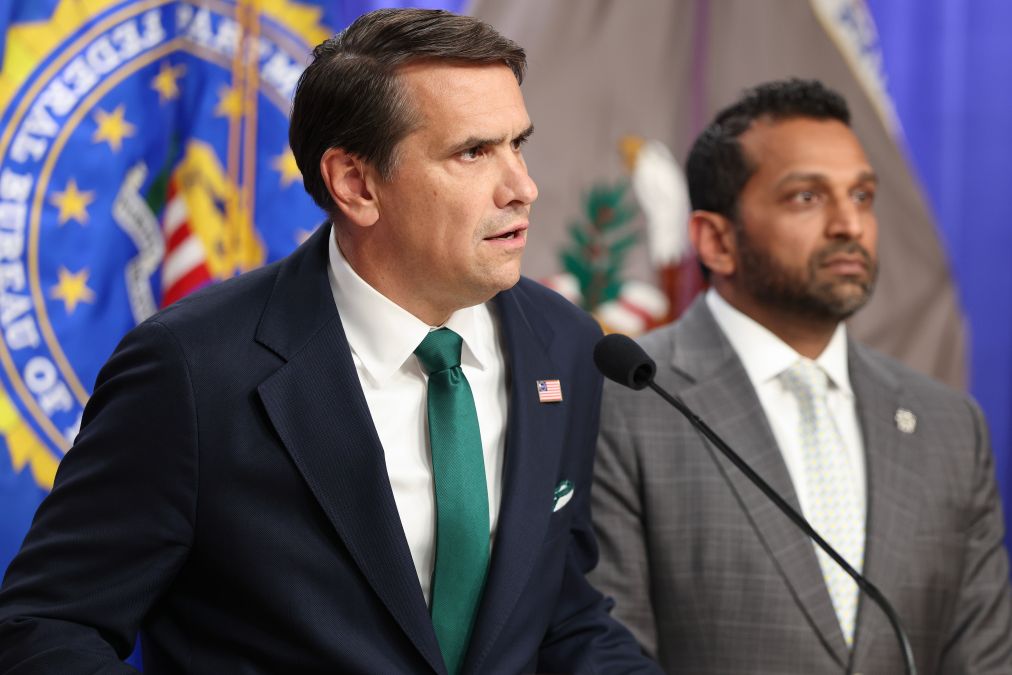
The Trump administration released a legal opinion outlining the legal rationale behind its nationwide voter data collection efforts, justifying an aggressive federal role in vetting voter eligibility, a position courts have repeatedly rejected in related litigation.
The memo, released Tuesday by the Department of Justice Office of Legal Counsel, concedes that while election administration is “primarily the purview of the states,” the administration’s efforts are a lawful exercise of federal oversight.
The Justice Department grounds that rationale in a provision of the 1960 Civil Rights Act, requiring election officials to keep voter records for 22 months after an election so it can investigate potential civil rights violations. Under the memo’s reading, that retention rule also gives the Attorney General authority to obtain copies of those records “upon demand in writing.”
The memo also cites several other federal election laws – like the Help America Vote Act, the National Voter Registration Act and the Voting Rights Act – as support for the executive branch’s efforts. It argues that those statutes have long required states to modernize and secure voting systems (including accessibility upgrades) and maintain accurate voter rolls by removing ineligible voters.
The memo further argues that the potential presence of one or more non-citizens on state voter rolls is enough to trigger the federal government’s nationwide data collection and sharing efforts with immigration authorities.
“Because illegal aliens are ineligible to vote, these generally applicable laws are also implicated by an illegal alien’s presence on a state’s voter rolls,” the memo states.
Multiple federal courts have come to the opposite conclusion, dismissing half a dozen lawsuits from DOJ and the Department of Homeland Security that would force states to comply. Further, states have repeatedly confirmed through recounts, audits, investigations and lawsuits that the number of non-citizens registered to vote (and who end up actually casting ballots) in U.S. elections is infinitesimal.
David Becker, executive director of the Center of Election Innovation and Research, noted in a post on BlueSky that “6 courts, including 2 judges appointed by the current president, think this ‘opinion’ isn’t worth the paper it’s written on.” Becker, a former DOJ senior trial attorney in the voting section of the Civil Rights Division, has consistently argued that the executive branch and White House have no legal or constitutional role to play in vetting state voter registration.
Sarah Copeland Hanzas, Secretary of State for Vermont, gave a similar reaction when CyberScoop reached out for comment.
“It’s not worth the paper it’s printed on,” Hanzas said in a statement. “Or the electrons it takes to store and transmit 41 pages of fantasy.”
Election officials have largely resisted the federal government’s demands. Earlier this year, West Virginia Secretary of State Kris Warner told CyberScoop he had no intentions of handing over more information than is already publicly available.
“If they want it, they can have it: $500 dollars for [anyone to buy] the statewide list, but they’re not getting personal information,” Warner said in a January interview. “State law says we’re not sharing that and my job is to carry out the law laid out by the West Virginia legislature.”
The inability of the federal government to point to serious evidence of mass voter fraud or non-citizen voting has led states to rebuff attempts to collect sensitive data on every voter in their state, including names, social security numbers, home addresses, voter history and other details.
The administration says it intends to cross-check state data against immigration records, share that data with DHS and immigration enforcement agencies and ultimately create its own list of eligible voters. An executive order issued by the White House earlier this year sought to deny federal funding to states that did not accept voter lists from the federal government and directed the Attorney General to investigate state election officials for voter roll discrepancies. Voting groups have challenged the order’s legality, and a previous election-related executive order was largely ruled unconstitutional by the courts.
The administration has sued dozens of states who have refused to hand such data over, though it has yet to convince courts of the merit. One judge called the administration’s efforts “unprecedented and illegal” and accused the administration of twisting the Civil Rights Act and other federal laws that were passed “to protect hard won civil rights victories allowing access to the ballot box” in order to obtain unfettered access to state voter data.
More Scoops

Election official says Tina Peters would be consultant, won’t have access to election systems
Shasta County registrar Clint Curtis told CyberScoop he needs Peters to help manage the county’s 2026 elections and he’s not concerned about her past conviction.
SCOTUS tosses one of two injunctions against Trump USPS mail-in ballot rules
Postal Service moves to finalize mail ballot regs before SCOTUS ruling
Latest Podcasts
Government
FBI officials say AI is bolstering adversaries, emphasizing need to focus on cyber basics, patching
Feds accuse China of ‘systematic’ distillation of U.S. AI models
CIA’s Michael Ellis says cyber intelligence is changing how the agency operates
The G7 tells industry to hurry up and prep for post-quantum encryption
Technology
Threats
Chinese espionage groups swarm to exploit triple-link chain of zero-days
Microsoft discloses two actively exploited zero-days among 974 vulnerabilities
Russian national extradited to US for alleged involvement in bank-account takeover scheme
Attackers exploit zero-days in consistently besieged SonicWall product
Policy
‘Watershed 250’ test program in Texas looks to private sector for water cybersecurity help
Former sexual abuse victims say Grok used their images, videos to train deepfake capabilities
Cyber threats nudge Trump to sign executive order on foreign equipment in U.S. energy infrastructure
Bipartisan Senate bill aims to prepare energy sector for Q-Day
Text extracted automatically; images, tables and formatting may be missing. Original: https://cyberscoop.com/federal-voter-data-collection-doj-legal-memo/