T2’12: Huawei Routers, Pin Pad Terminals Under Security Scrutiny
Full article389 words · extracted from securelist.com · click to collapse




HELSINKI, Finland — The annual T2’12 security conference kicked off here today with several high-quality presentations discussing security weaknesses in Huawei’s Versatile Routing Platform (VRT) and the expanding attack surface in pin pad payment terminals.
Felix FX Lindner of Recurity Labs GmbH started the day off with a close look at Huawei’s security response process and (hint: it’s not close to being adequate) and a technical dissection of the internals of the networking giant’s VRT software that powers routers and hardware around the world.
Lindner’s presentation included an introduction of the VRT architecture, the special properties of configuations and services and a hands-on demo of how to reverse engineer the operating system.
Coming on the heels of the U.S. government’s nervousness about the use of Huawei gear, Lindner’s talk was particularly timely. One thing that stood out what his statement that he was unable to pinpoint any backdoors on VRT-powered routers.
But, as Lindner explains, the combination of easy-to-find vulnerabilities and Huawei’s tenuous approach to security response means that backdoors aren’t really necessary.
The second talk I enjoyed was by Nils of MWR InfoSecurity. Nils, well-known for his Pwn2Own hacks against modern browsers and Android devices, demonstrated several hacks of Pin Pads or payment terminals that are used to accept card payments around the world.
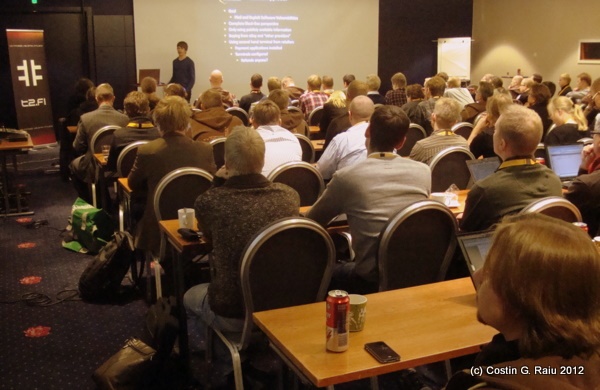
He explained that these handheld devices run payment applications on top of the device-specific firmware and showed how easy it is to launch code execution exploits against memory corruption vulnerabilities.
Tomorrow, my colleague Costin Raiu will do a keynote presentation on how the Flame nation-state malware campaign was discovered and provide a wide-angle look at the state of cyber-war operations.
Latest Webinars
Reports
Kaspersky researchers have discovered new Mirage Kitten attacks using previously undocumented malware families: NodeRabbit in Node.js and PollCat in JavaScript.
Our experts discovered a new CoolClient backdoor variant with a kernel-mode rootkit driver that hides malicious processes, files, and network connections from security tools and threat analysts.
Kaspersky experts break down a new Armored Likho campaign that poses as a fundraising efforts and delivers a new Still Toolkit aimed at stealing Telegram data and eavesdropping on victims.
Kaspersky researchers reveal previously undocumented malware attributed to Mirage Kitten (UNC1549, Smoke Sandstorm, Nimbus Manticore): NightLedger backdoor, ArcBridge, and BridgeHead tunneling tools.
Text extracted automatically; images, tables and formatting may be missing. Original: https://securelist.com/t212-huawei-routers-pin-pad-terminals-under-security-scrutiny/34356/