Supreme Court blocks FTC commissioner Slaughter’s reinstatement
Full article1,050 words · extracted from cyberscoop.com · click to collapse
Get our latest cybersecurity news first on Google.
As some observers predicted, Democratic commissioners are racking up lower court victories, but the highest court in the country appears skeptical.
Listen to this article
0:00
Learn more.
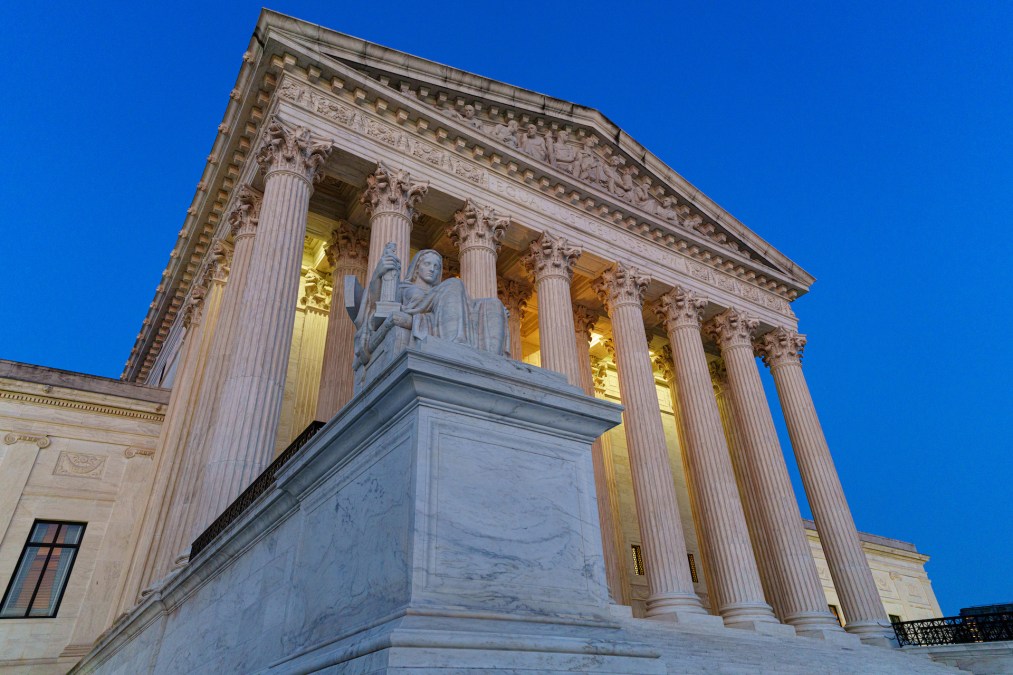
Rebecca Slaughter’s return-to-work orders have been put on hold for the second time this year, after the U.S. Supreme Court stepped in to block a lower court ruling that ordered her reinstatement at the Federal Trade Commission.
Last week a lower court ruled that Slaughter had been illegally fired by President Donald Trump, citing a 90-year-old Supreme Court precedent upholding the FTC’s independence from the executive branch and preventing presidents from firing commissioners for political reasons.
On Monday, Chief Justice John Roberts halted that order while the Supreme Court considers the case. Roberts provided no explanation for the Supreme Court’s reversal, but ordered the parties in the case to respond by Sept. 15.
Slaughter, who has remained vocal on FTC business and last week expressed her eagerness to return, has been through this once already. Earlier this year, she was briefly reinstated to the FTC by a lower court, only to have that order reversed by another court days later.
Alvaro Bedoya, the other Democratic FTC commissioner Trump purported to fire, has since resigned due to the financial difficulties tied to fighting his dismissal. He described the fight as a lose-lose situation: He is no longer receiving a federal salary as commissioner, and is also prohibited by conflict-of-interest rules from accepting other employment in the meantime.
Bedoya has said that beyond the immediate fates of their jobs, the commissioners are ultimately fighting for an FTC that they believe works in the best interests of the public and is supported by Supreme Court precedent. He has argued the agency — which regulates and enforces against unfair or deceptive business practices, technology, data privacy and other issues — must be insulated from political pressure.
In an online post last week, Slaughter said her top priority was reinstating the FTC’s Click to Cancel rule, a Biden-era regulation that would have forced companies to provide a simple and straightforward means to cancel their paid subscriptions.
Roberts’ order does not specify how the Supreme Court intends to rule on the case. Legal experts and former FTC officials have said it’s no secret that the Trump administration is looking for the court’s conservative majority to overturn Humphrey’s Executor v. the United States, which was unanimously upheld by the Supreme Court in 1935.
The high court’s decision this week to reverse the D.C. District Court of Appeals ruling is also notable because the court voted 2-1 that Slaughter — not the government — deserved the benefit of the doubt while the case was being adjudicated, citing unambiguously clear and binding legal precedent that had not yet been overturned.
That the Supreme Court overturned it anyway suggests they may agree with D.C. Appeals court Judge Neomi Rao, who wrote in her dissent that forcing FTC staff to acknowledge Slaughter’s legitimacy in the face of presidential orders “directly interferes with the President’s supervision of the Executive Branch and therefore goes beyond the power of the federal courts.”
If the Supreme Court does ultimately side with the administration, it would track with what observers such as Berin Szóka, a technology lawyer and president of the think tank TechFreedom, predicted earlier this year. Szóka, who has supported Slaughter and Bedoya’s efforts, wrote in March that “the fired Democratic FTC Commissioners may win early battles in their lawsuits but, in all likelihood, will ultimately lose at the Supreme Court — unfortunately.”
Roberts and the Supreme Court’s conservative majority have “made clear it will not apply Humphrey’s, if it remains good law at all, to today’s more powerful FTC,” Szóka wrote.
More Scoops

Arrested man allegedly impersonated NSA elite hacking unit, Supreme Court chief justice
Joshua Culver, aka “Maverick Young,” is accused of imitating the head of the NSA’s Tailored Access Operations unit during a time it wasn’t called that.
SCOTUS tosses one of two injunctions against Trump USPS mail-in ballot rules
Postal Service moves to finalize mail ballot regs before SCOTUS ruling
Latest Podcasts
Government
FBI officials say AI is bolstering adversaries, emphasizing need to focus on cyber basics, patching
Feds accuse China of ‘systematic’ distillation of U.S. AI models
CIA’s Michael Ellis says cyber intelligence is changing how the agency operates
The G7 tells industry to hurry up and prep for post-quantum encryption
Technology
Threats
Chinese espionage groups swarm to exploit triple-link chain of zero-days
Microsoft discloses two actively exploited zero-days among 974 vulnerabilities
Russian national extradited to US for alleged involvement in bank-account takeover scheme
Attackers exploit zero-days in consistently besieged SonicWall product
Policy
‘Watershed 250’ test program in Texas looks to private sector for water cybersecurity help
Former sexual abuse victims say Grok used their images, videos to train deepfake capabilities
Cyber threats nudge Trump to sign executive order on foreign equipment in U.S. energy infrastructure
Election official says Tina Peters would be consultant, won’t have access to election systems
Text extracted automatically; images, tables and formatting may be missing. Original: https://cyberscoop.com/ftc-slaughter-reinstatement-blocked-by-supreme-court/