Adobe Flash Player 0-day and HackingTeam’s Remote Control System
Vulnerabilities mentionedAll →
| CVE | Vulnerability | CVSS | EPSS | Flags | Affected | Exposure | Published |
|---|---|---|---|---|---|---|---|
| CVE-2010-3333 | Stack Buffer Overflow in Microsoft Office RTF Parsing Allows Remote Code Execution CVE-2010-3333 is a stack-based buffer overflow in the way Microsoft Office parses RTF (Rich Text Format) data. An attacker triggers it by convincing a user to open a specially crafted RTF file, including an RTF email that is handed to Office for rendering, with no authentication required beyond the user's action. Successful exploitation allows remote code execution in the context of the logged-on user, giving the attacker a foothold on the workstation. Any Microsoft Office installation within the affected range identified in the December 2012 Microsoft security bulletin is exposed; the source data does not enumerate specific version numbers. The flaw is actively exploited: it is on the CISA Known Exploited Vulnerabilities catalog (added 2022-03-03, ransomware association unknown) and was used in targeted espionage, notably Kaspersky's 'Red October' campaign, with EPSS estimating an 89.5% probability of exploitation within 30 days (100th percentile). Do: Apply the Microsoft updates from the December 2012 security bulletin that fixes this RTF parsing flaw across all Office/Word installations, prioritized given the ~90% EPSS score and CISA KEV listing. As interim mitigation, block or inspect inbound RTF attachments at email gateways and configure Outlook to read email in plain text so RTF content does not open automatically in Office. Inventory legacy or unpatched Office installations that may have missed the 2012 update, since these remain the likely current exposure. | — | 89% | KEV |
| masshundreds of millions of Office users/installations at time of disclosure (current unpatched legacy installs unknown) | |
| CVE-2012-5054 | Remote Code Execution via Integer Overflow in Adobe Flash Player Adobe Flash Player contains an integer overflow weakness (CWE-189 category) that a remote attacker can trigger by having the player process malformed arguments, typically via malicious Flash content. Successful exploitation allows the attacker to execute arbitrary code in the context of the Flash Player process, i.e., potentially with the privileges of the user's account. Anyone running Adobe Flash Player is affected; because Flash is end-of-life (support ended December 31, 2020), current exposure is limited to leftover or unmigrated installations on legacy systems and applications. CISA added this CVE to the Known Exploited Vulnerabilities catalog on 2022-06-08, indicating exploitation in the wild, with ransomware association unknown; EPSS estimates a 21.2% probability of exploitation in the next 30 days (97th percentile), and no public proof-of-concept is known. Do: Uninstall or disable Adobe Flash Player on all systems, per CISA's required action for this end-of-life product; check for residual browser plugins, standalone Flash projectors, and embedded/OEM copies of Flash that lack Adobe's automatic content blocking. Where legacy Flash use is unavoidable, upgrade to the last available release, isolate those hosts from untrusted content, and plan removal, since no new patches will be issued. | — | 21% | KEV |
| masstens of millions of legacy installations remain worldwide (Flash historically shipped on ~99% of PCs, ~1 billion+ devices) |
Indicators of compromiseauto-extracted · verify before use · export allAll →
| Type | Indicator | Context |
|---|---|---|
| ipv4 | 173.255.215.193 | , censored ) 192.168.100.100 / 0000000788 / info . doc2 : ) 173.255.215.193 / napoli / napoli / stage2 The malware installed by these e |
| ipv4 | 176.58.100.37 | tW for ~3 months before patching) – used with C2 at: hxxp://176.58.100.37/0000040037/scandale.doc 5. CVE-2012-1682 : (0-day. Security |
| ipv4 | 76.162.33.13 | , we-ve seen attacks using other C2s as well: 1 2 3 4 5 6 7 76.162.33.13 / stagedocsis www . wiki - islam . info / new / stagedocbn |
| url | http://176.58.100.37/0000040037/scandale.doc | tml . ItW for ~3 months before patching) – used with C2 at: hxxp://176.58.100.37/0000040037/scandale.doc 5. CVE-2012-1682 : (0-day. Security Explorations ~2 months |
| url | http://ar-66.com/installer.jar | y. Security Explorations ~2 months ITW before publishing )- hxxp://ar-66.com/installer.jar 6. CVE-2013-0633 : 0-day, previously unknown Some of these |
| url | http://li565-84.members.linode.com/0000000093/word_document.doc3 | ://li565-84.members.linode.com/0000000093/worddocument.doc3 hxxp://li565-84.members.linode.com/0000000093/word_document.doc3 hxxp://li565-84.members.linode.com/0000000098/worddocuments |
| url | http://li565-84.members.linode.com/0000000093/worddocument.doc3 | ://li565-84.members.linode.com/0000000097/worddocument.doc3 hxxp://li565-84.members.linode.com/0000000093/worddocument.doc3 hxxp://li565-84.members.linode.com/0000000093/word_document |
| url | http://li565-84.members.linode.com/0000000097/worddocument.doc3 | ed in the shellcode used in the second stage of the attack: hxxp://li565-84.members.linode.com/0000000097/worddocument.doc3 hxxp://li565-84.members.linode.com/0000000093/worddocument. |
| url | http://li565-84.members.linode.com/0000000098/worddocuments.doc3 | //li565-84.members.linode.com/0000000093/word_document.doc3 hxxp://li565-84.members.linode.com/0000000098/worddocuments.doc3 (a Linode server in Japan) Previously, we-ve seen attacks u |
| url | http://rcs-demo.hackingteam.it/0000000001/exploit.doc2 | 3 : C2 at hxxps://ar-24.com/0000000031/veryimportant.doc2 + hxxp://rcs-demo.hackingteam.it/0000000001/exploit.doc2 4. CVE-2012-5054 : (0-day Vupen, see http://packetstormsecu |
| url | https://ar-24.com/0000000031/veryimportant.doc2 | www.maile-s.com/yarab/stagedocJord 3. CVE-2010-3333 : C2 at hxxps://ar-24.com/0000000031/veryimportant.doc2 + hxxp://rcs-demo.hackingteam.it/0000000001/exploit.doc2 4. |
| url | https://www.maile-s.com/yarab/stagedocJord | -073.cfm . ~3 months ITW before publishing ). Used with C2: hxxps://www.maile-s.com/yarab/stagedocJord 3. CVE-2010-3333 : C2 at hxxps://ar-24.com/0000000031/veryi |
Full article1,033 words · extracted from securelist.com · click to collapse
Last week, Adobe released a patch for a vulnerability in Flash Player that was being exploited in targeted attacks.
Before reading any further, we recommend you to take a moment make sure you apply this patch. Adobe offers this nifty tool to check that you have the latest version of Flash Player.
If you are running Google Chrome, make sure you have version -24.0.1312.57 m- or later.
Now back to CVE-2013-0633, the critical vulnerability that was discovered and reported to Adobe by Kaspersky Lab researchers Sergey Golovanov and Alexander Polyakov. The exploits for CVE-2013-0633 have been observed while monitoring the so-called -legal- surveillance malware created by the Italian company HackingTeam. In this blog, we will describe some of the attacks and the usage of this 0-day to deploy malware from -HackingTeam- marketed as Remote Control System.
HackingTeam and RCS
We previously wrote about RCS (Remote Control System) and HackingTeam and over the past few months, we-ve closely monitored the usage of the RCS (aka as -DaVinci-) against human rights activists and political dissidents from Africa, South America and the Middle East.
We also presented the findings of this investigation last week at Kaspersky Lab-s SAS 2013 in a presentation named ?Cyber Cosa Nostra , which details the connections between HackingTeam with the shady organization known as -OPM-. An article documenting the findings will be published later this month on Securelist.
During our investigation, we discovered several ways through which the RCS malware was installed onto the victims- computers:
1. Self-signed JAR
2. CVE-2012-4167: (0-day from -Vupen-, see
http://www.dhses.ny.gov/ocs/advisories/2012/2012-073.cfm. ~3 months ITW before publishing ). Used with C2: hxxps://www.maile-s.com/yarab/stagedocJord
3. CVE-2010-3333: C2 at hxxps://ar-24.com/0000000031/veryimportant.doc2 + hxxp://rcs-demo.hackingteam.it/0000000001/exploit.doc2
4. CVE-2012-5054: (0-day Vupen, see
http://packetstormsecurity.com/files/116435/Adobe-Flash-Player-Matrix3D-Integer-Overflow-Code-Execution.html. ItW for ~3 months before patching) – used with C2 at: hxxp://176.58.100.37/0000040037/scandale.doc
5. CVE-2012-1682: (0-day. Security Explorations ~2 months ITW before publishing )- hxxp://ar-66.com/installer.jar
6. CVE-2013-0633: 0-day, previously unknown
Some of these infection vectors were previously described in great detail by Citizen Lab Security Researcher Morgan Marquis-Boire, in relation to RCS and also another malware known as ‘SPY_NET’.
Interestingly, from the list above, two of the 0-days appear to have been created by the French offensive security company Vupen. The link was also previously pointed out by Citizen Lab-s report, which says it-s unclear if the exploits used with HackingTeam-s malware have been purchased from Vupen, or just engineered in parallel.
CVE-2013-0633
We came by CVE-2013-0633 while analysing a number of targeted attacks which appeared to be deploying the malware Backdoor.Win64.Korablin.a, which is the Kaspersky detection name for HackingTeam-s -DaVinci- package for Windows (Mac versions is called ?Backdoor.OSX.Morcut ). The attacks employed Word documents which used multiple stages to deliver the malware to the target system.
Although we do not have the original documents used in the attacks, we-ve identified several locations from which the 2nd and 3rd stage were delivered. Here-s a list of command servers which were used as C2 to deliver the exploits, as hardcoded in the shellcode used in the second stage of the attack:
hxxp://li565-84.members.linode.com/0000000097/worddocument.doc3
hxxp://li565-84.members.linode.com/0000000093/worddocument.doc3
hxxp://li565-84.members.linode.com/0000000093/word_document.doc3
hxxp://li565-84.members.linode.com/0000000098/worddocuments.doc3
(a Linode server in Japan)
Previously, we-ve seen attacks using other C2s as well:
|
1 2 3 4 5 6 7 |
76.162.33.13/stagedocsis www.wiki-islam.info/new/stagedocbn ww.faddeha.com/palestine27/stagedocpal wiki-arab.com/index/stagedocwinword ->>>>close[CENSORED].com/7-2012/stage2(LIVE MALWARE,censored) 192.168.100.100/0000000788/info.doc2:) 173.255.215.193/napoli/napoli/stage2 |
The malware installed by these exploits is signed with a valid certificate from various entities around the world:
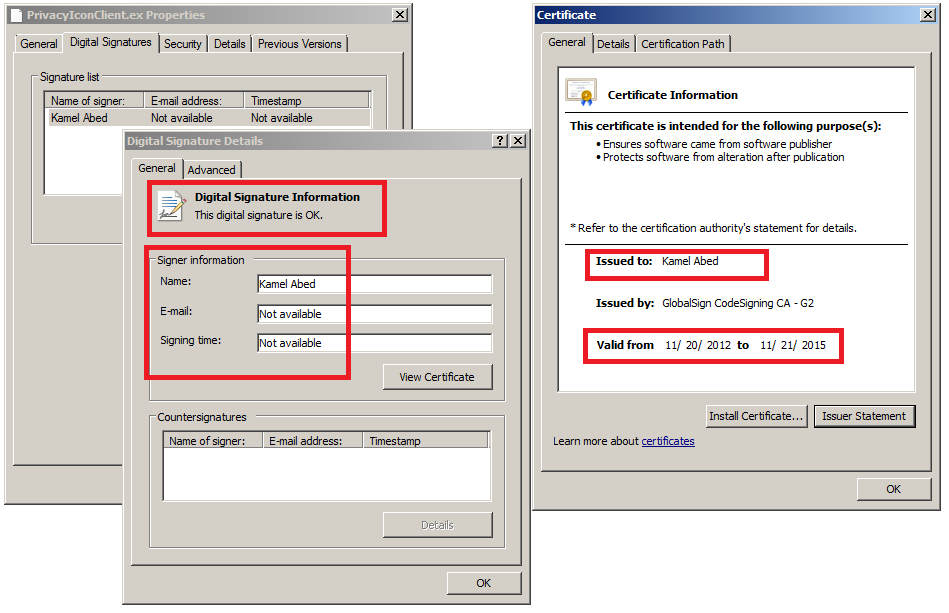
(Digital certificate belonging to ?Kamel Abed used to sign the -RCS- malware dropper)
How widespread are these attacks? Here-s a map of detections for Backdoor.Win32/64.Korablin.a:
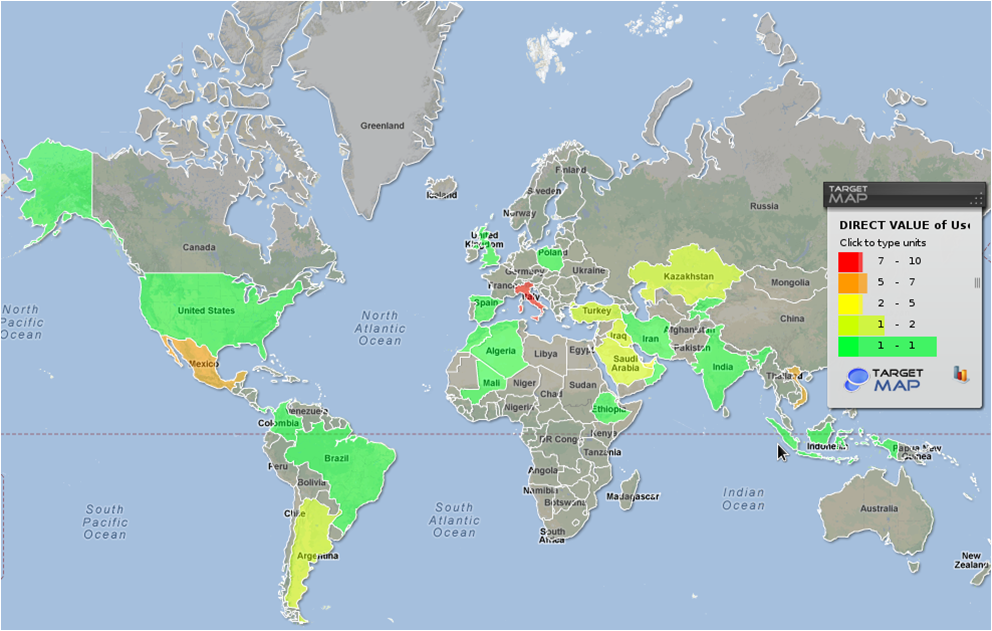
During the monitoring period, we observed about 50 incidents from countries such as Italy, Mexico, Kazakhstan, Saudi Arabia, Turkey, Argentina, Algeria, Mali, Iran, India and Ethiopia.
As it usually happens with such dubious software, it-s impossible to say who uses them and for what purpose. The problem with so-called -legal- spy tools is that any government can purchase them, including governments from countries with a poor human rights records. Additionally, one government can purchase these tools and use them against another country.
The link between HackingTeam and Vupen
During our investigation, we observed at least two 0-days which are credited to Vupen that have been used in attacks with DaVinci/RCS. We do not know if the exploits have been discovered and created in parallel by both teams or if HackingTeam is just one of Vupen-s customers. Nevertheless, it appears there is a link between the two companies in the sense that malware written by HackingTeam is commonly deployed using Vupen 0-days.
The future
Following the publication of Citizen Lab-s blog From Bahrain with Love: FinFisher-s Spykit Exposed, the U.K. government reaffirmed that existing controls restricting the export of cryptographic systems apply to the Gamma Group-s exports of FinSpy.
Although such restrictions exist in the U.K., there is currently little or no information on the regulations in France or Italy regarding the activity of companies that create 0-days and so-called -legal- malware. Even when such regulations exist, the spyware can be easily sold to anyone through umbrella companies in other countries, such as Panama. Based on existing evidence, the victims of such attacks are human rights activists in countries with poor human rights records. It is possible that tools such as FinSpy or RCS lead to the arrest and conviction of people in such countries.
We believe that the ‘legal spy’ industry is the equivalent of a ticking time bomb which can explode at any moment. The lack of regulation, the widespread trading of such dangerous technologies to pretty much anyone who has the money and the fact that they’ve already been in many dubious cases raises a big question about who will be held liable when the bubble finally bursts.
Kaspersky Lab products detect the RCS/DaVinci backdoors as: Backdoor.Win32.Korablin, Backdoor.Win64.Korablin, Backdoor.Multi.Korablin, Rootkit.Win32.Korablin, Rootkit.Win64.Korablin, Rootkit.OSX.Morcut and Trojan.OSX.Morcut.
Text extracted automatically; images, tables and formatting may be missing. Original: https://securelist.com/adobe-flash-player-0-day-and-hackingteams-remote-control-system/64215/