U.S. government sanctions prolific North Korean cyber espionage unit
Full article703 words · extracted from cyberscoop.com · click to collapse
Get our latest cybersecurity news first on Google.
The veteran hacking crew has been at the heart of Pyongyang's efforts to gather intelligence by breaching computer systems.
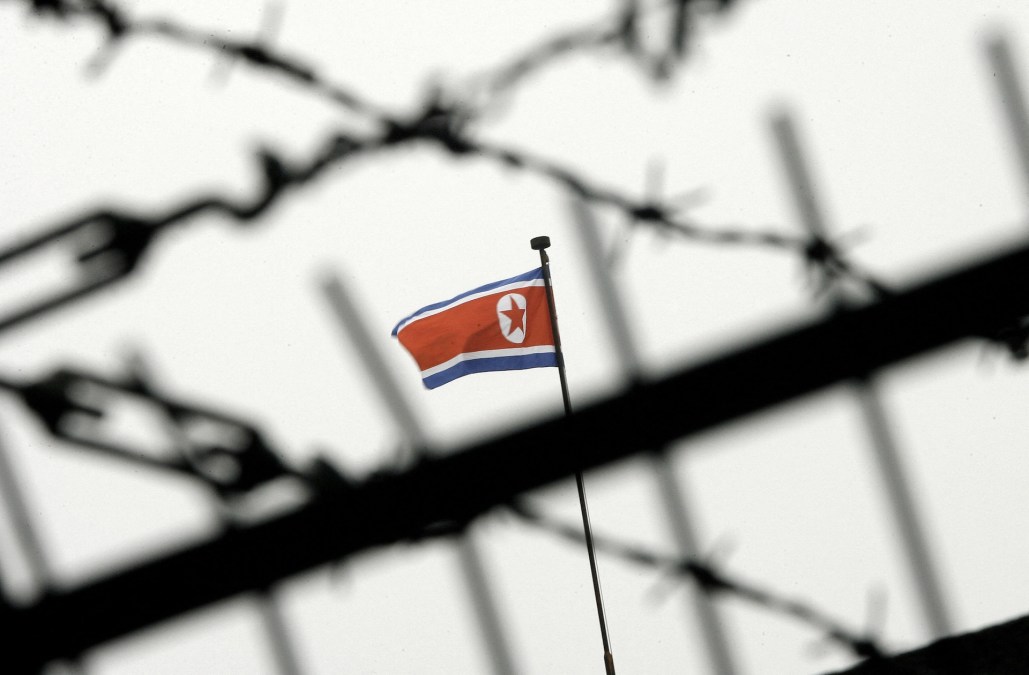
The U.S. government sanctioned one of North Korea’s premier cyber espionage units Thursday, a group known to support Pyongyang’s intelligence collection efforts and which also conducts operations to support its nuclear program, according to a statement from the U.S. Treasury Department.
The group — tracked variously as Kimsuky, APT43, Emerald Sleet, Velvet Chollima, TA406 and Black Banshee — has been operating since at least 2012, according to U.S. government estimates, and works under the umbrella of North Korea’s Reconnaissance General Bureau (RGB), the country’s primary intelligence service.
The RGB was sanctioned by the U.S. government on Aug. 30, 2010, and again on Jan. 2, 2015.
Kimsuky’s operations in recent years have been widely exposed, analyzed and documented by various government and industry researchers. Nevertheless, “APT43 has demonstrated remarkable resilience, continuing to employ sophisticated social engineering tactics to target unsuspecting individuals and organizations,” Michael Barnhart, principal analyst at Mandiant, told CyberScoop in an email.
The group is “a prime example of North Korea’s persistent cyber threat,” Barnhart said, noting that it “operates with the full backing of the North Korean regime, tasked with gathering sensitive information on a wide range of topics, including nuclear technology, sanctions evasion, and unification efforts.”
Kimsuky typically employs spearphishing to target key people in government, research centers, think tanks, academic institutions and news media organizations, according to the Treasury announcement.
Alongside its espionage mandate, the group is also believed to engage in financially motivated cybercrime as a means to fund itself, Mandiant reported in a March 2023 analysis.
“It’s fantastic to see further government action taken against DPRK threat actors,” said Tom Hegel, principal threat researcher with SentinelLabs. “I suspect these actions will play a major role in impacting their success rate and impose some cost on their methods of operating. A welcomed play against such a significant cyber threat.”
Hegel pointed to an August 2020 Kimsuky effort, which targeted nearly a dozen United Nations officials, as emblematic of the group’s work. That operation was one in a string targeting various U.N. officials, ZDNet reported at the time.
In June, a joint advisory from the NSA, FBI, State Department and their counterparts in South Korea warned of Kimsuky efforts to target think tanks, academia and media outlets in the U.S. and South Korea, including by posing as or spoofing real journalists and broadcast writers.
SentinelLabs senior threat researcher Aleksandar Milenkoski analyzed part of the campaign flagged by the international advisory, which relied on spoofed domains, documents and other activities related to NK News, a South Korea-based news and analysis organization focused on North Korean matters.
Hegel, meanwhile, said that Kimsuky’s operations “against media outlets have always showed us their pace of operation and creativity.”
Latest Podcasts
Government
FBI officials say AI is bolstering adversaries, emphasizing need to focus on cyber basics, patching
CIA’s Michael Ellis says cyber intelligence is changing how the agency operates
The G7 tells industry to hurry up and prep for post-quantum encryption
Jail time for Maine child in 764 marks turning point in federal law enforcement
Technology
Threats
Chinese espionage groups swarm to exploit triple-link chain of zero-days
Microsoft discloses two actively exploited zero-days among 974 vulnerabilities
Russian national extradited to US for alleged involvement in bank-account takeover scheme
Attackers exploit zero-days in consistently besieged SonicWall product
Policy
Whistleblower says USPS deploying new, ‘untested’ IT systems governing mail-in ballots
‘Watershed 250’ test program in Texas looks to private sector for water cybersecurity help
Former sexual abuse victims say Grok used their images, videos to train deepfake capabilities
Cyber threats nudge Trump to sign executive order on foreign equipment in U.S. energy infrastructure
Text extracted automatically; images, tables and formatting may be missing. Original: https://cyberscoop.com/u-s-government-sanctions-prolific-north-korean-cyber-espionage-unit/