Offensive attacks and the World Cup 2010
Full article400 words · extracted from securelist.com · click to collapse



The World Cup 2010 is the most popular event running right now. The cyber criminals didn’t want to lose such “good” opportunity for them and already took advantage in some ways like sending spam leading to phishing sites, to spread malware and so on. All that attacks go through the end-point machines stealing personal information of the users. This is the most common “modus operandi” of the cyber criminals.
However today we found an interesting attack apparently not related to money. The attack was on the Indonesian government Web server. The gang behind the attack put a defacement on the hacked Web server clearly related with the World Cup activities:
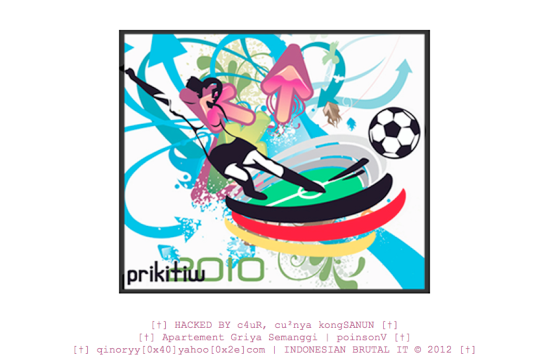
If you visit the hacked Web site you will also be listening an official WorldCup song. In the past we saw a lot of cases when the Web servers were hacked based on political, racial and other motivations. Today we see sport related motivations joined by competitive spirit are also an influence on cyber criminals for launching offensive campaigns.
In the time when the cyber criminal’s activity is higher than usual, please pay special attention to your security. If you
don’t want to be a victim, just use the following basic security tips:
- Keep your Security solution updated
- Don’t click on any Twitts with shortened URLs
- If you get an email related to the World Cup 2010 don’t click on embedded links and don’t open any attachments it may contain.
- If you want to follow World Cup news, use your preferred and trusted News agency Web site. Don’t try to visit unknown sites that you found searching the Internet.
- Don’t click on any links in instant messages you may receive, even from your friends or colleagues.
Stay safe!
Latest Webinars
Reports
Kaspersky researchers have discovered new Mirage Kitten attacks using previously undocumented malware families: NodeRabbit in Node.js and PollCat in JavaScript.
Our experts discovered a new CoolClient backdoor variant with a kernel-mode rootkit driver that hides malicious processes, files, and network connections from security tools and threat analysts.
Kaspersky experts break down a new Armored Likho campaign that poses as a fundraising efforts and delivers a new Still Toolkit aimed at stealing Telegram data and eavesdropping on victims.
Kaspersky researchers reveal previously undocumented malware attributed to Mirage Kitten (UNC1549, Smoke Sandstorm, Nimbus Manticore): NightLedger backdoor, ArcBridge, and BridgeHead tunneling tools.
Text extracted automatically; images, tables and formatting may be missing. Original: https://securelist.com/offensive-attacks-and-the-world-cup-2010/29715/