Russia-affiliated Secret Blizzard conducting ongoing espionage against embassies in Moscow
Full article915 words · extracted from cyberscoop.com · click to collapse
Get our latest cybersecurity news first on Google.
A new Microsoft report finds that the long-running threat group has gained positions on state-aligned ISPs and Russian telecoms, while tricking foreign embassy staff to download custom malware.
Listen to this article
0:00
Learn more.
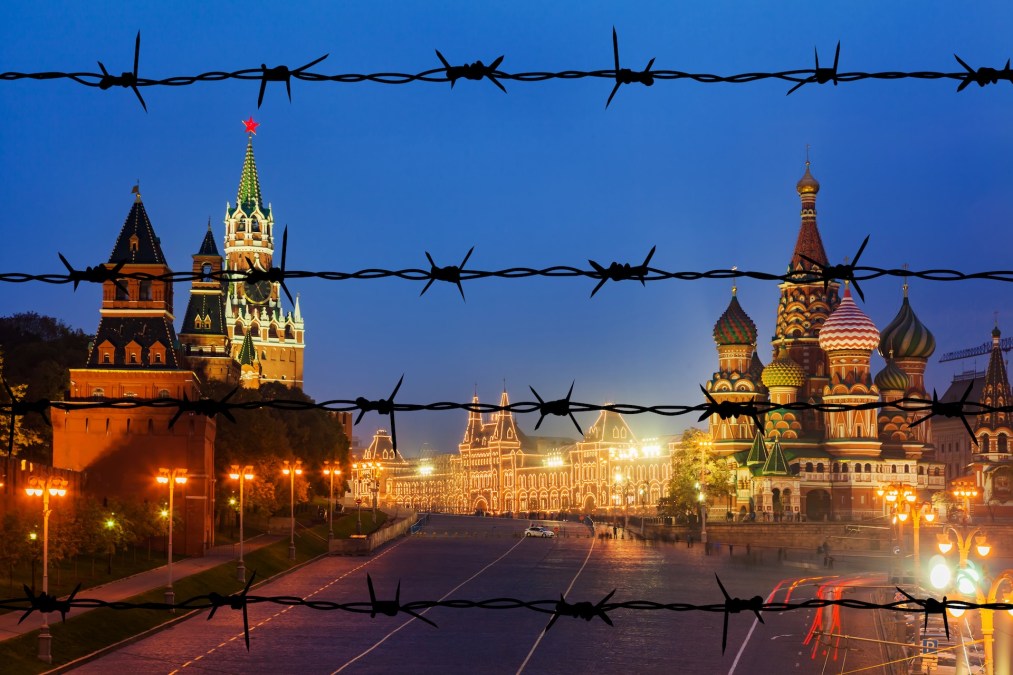
A Russian nation-state threat group has been spying on foreign diplomats, managing continuous access to their communications and data in Moscow since at least 2024, according to Microsoft Threat Intelligence.
Secret Blizzard is gaining “adversary-in-the-middle” positions on Russian internet service providers and telecom networks by likely leveraging surveillance tools and deploying malware on targeted devices, researchers said in a report released Thursday.
Microsoft’s discovery marks the first time its researchers have confirmed with high confidence that Secret Blizzard has capabilities at the ISP level, a degree of access that combines passive surveillance and an active intrusion.
“It’s a shift, or a kind of movement, toward the evolution of simply watching traffic to actively modifying network traffic in order to get into those targeted systems,” Sherrod DeGrippo, director of threat intelligence strategy at Microsoft, told CyberScoop.
Secret Blizzard — also known as Turla, Pensive Ursa or Waterbug — is affiliated with Center 16 of Russia’s Federal Security Service (FSB) and has been active for decades.
The Russian nation-state group is “the classic definition of what you think of when you think of advanced persistent threat: creative, persistent, well resourced, highly organized, able to execute projects, able to execute actions on objectives,” DeGrippo said. “Ultimately, I think that the key word is creative.”
Secret Blizzard is gaining initial access to embassy employee devices by redirecting them to a malicious domain that displays a certificate validation error after targeted victims access a state-aligned network through a captive portal, according to Microsoft.
The error prompts and tricks embassy employees into downloading root certificates falsely branded as Kaspersky Anti-Virus software, which deploy ApolloShadow malware. The custom malware turns off traffic encryption, tricks the devices to recognize malicious sites as legitimate and enables Secret Blizzard to maintain persistent access to diplomatic devices for espionage.
“This is an excellent piece of social engineering because it plays on habit, it plays on urgency, it plays on emotions, which are the three holy trinity of social engineering,” DeGrippo said.
“You see this pop-up that’s telling you you have a security issue, and it’s branded as a security vendor. We’ve been seeing that capability for decades,” she said. “Simply clicking through and not examining and thinking about that, especially when on a state-aligned, state-owned network in one of these surveillance-heavy countries where the government has deep technical and legal controls over those ISPs — that infrastructure is now part of your attack surface.”
Microsoft declined to say how many embassies have been impacted, but noted the group is active. Intrusions linked to this politically motivated espionage campaign allow Secret Blizzard to view the majority of the target’s browsing in plain text, including certain tokens and credentials, researchers said in the report.
“This seems relatively simple, but it’s only made so simple by the likely leveraging of a lawful intercept capability,” DeGrippo said. “Relying on local infrastructure in these high-risk environments — China, Russia, North Korea, Iran — in these surveillance-heavy countries, is of concern.”
Microsoft previously observed Secret Blizzard using tools from other cybercriminal groups to compromise targets in Ukraine, showing how the group uses various attack vectors and means to infiltrate networks of geopolitical interest to Russia.
More Scoops
Europe strikes out against Russia’s Turla over espionage, ‘destructive attacks’
The EU, its members and the U.K. took action against Russian government officials and others while attributing the winter cyberattacks against Poland’s energy grid to the FSB.
Russian-linked Turla caught using Pakistani APT infrastructure for espionage
Latest Podcasts
Government
FBI officials say AI is bolstering adversaries, emphasizing need to focus on cyber basics, patching
Feds accuse China of ‘systematic’ distillation of U.S. AI models
CIA’s Michael Ellis says cyber intelligence is changing how the agency operates
The G7 tells industry to hurry up and prep for post-quantum encryption
Technology
Threats
Policy
Whistleblower says USPS deploying new, ‘untested’ IT systems governing mail-in ballots
‘Watershed 250’ test program in Texas looks to private sector for water cybersecurity help
Former sexual abuse victims say Grok used their images, videos to train deepfake capabilities
Cyber threats nudge Trump to sign executive order on foreign equipment in U.S. energy infrastructure
Text extracted automatically; images, tables and formatting may be missing. Original: https://cyberscoop.com/russia-secret-blizzard-espionage-embassies-moscow/