Commerce setting up new AI export regime to push adoption of ‘American AI’ abroad
Full article1,053 words · extracted from cyberscoop.com · click to collapse
Get our latest cybersecurity news first on Google.
The department is looking to create a “menu of priority AI export packages that the U.S. Government will promote to allies and partners around the world.”
Listen to this article
0:00
Learn more.
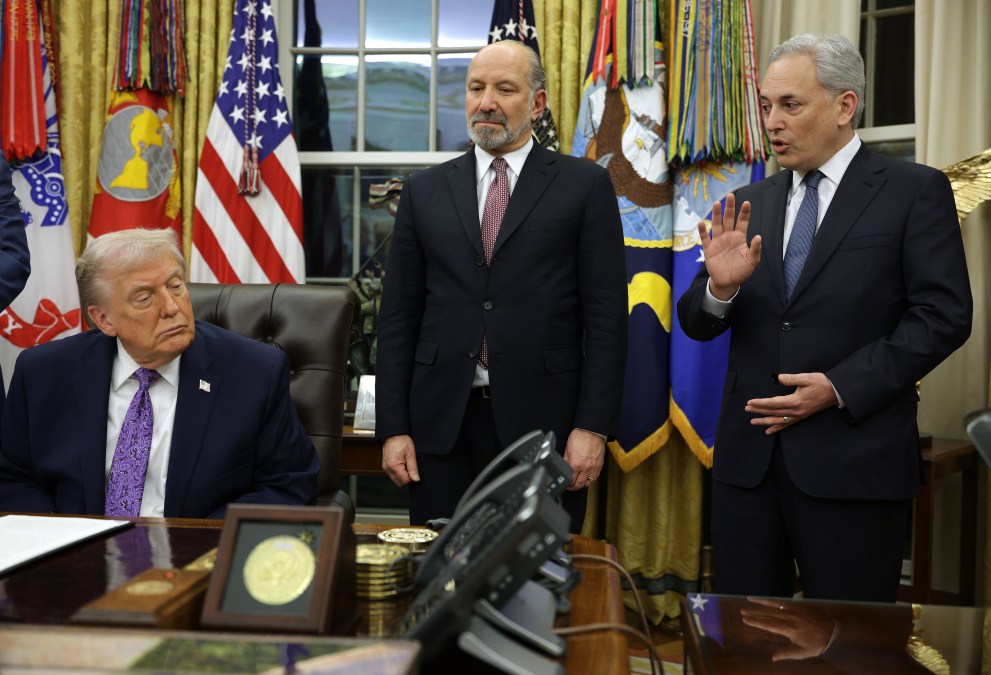
The Department of Commerce is putting together a catalog of AI tools that will be given special export status by the federal government to be sold abroad.
The department issued a call for proposals to participating companies in the Federal Register, looking to create a “menu of priority AI export packages that the U.S. Government will promote to allies and partners around the world.”
The companies and technologies included “will be presented by U.S. Government representatives as a standing, full-stack American AI export package and may receive priority government advocacy, export licensing review and processing, interagency coordination, and financing referrals, subject to applicable law,” the department said in a Federal Register notice Friday.
The export package was mandated through President Donald Trump’s AI executive order last year, which described the export packages as part of a larger effort to “ensure that American AI technologies, standards, and governance models are adopted worldwide” and “secure our continued technological dominance.”
“The American AI Exports Program delivers on President Trump’s directive to ensure that American AI systems – built on trusted hardware, secure data, and world-leading innovation – are deployed at scale around the world,” Secretary of Commerce Howard Lutnick said in a statement earlier this month. “By promoting full-stack American solutions, we are strengthening our economic and national security, deepening ties with allies and partners, and ensuring that the future of AI is led by the United States.”
The executive order called for certain technologies to be included in the package, including AI models and systems but also computer chips, data center storage, cloud services and networking services, along with unspecified “measures” to ensure security and cybersecurity of AI systems.
The Commerce notice envisions offering multiple packages of AI technology from “standing teams of AI companies organized to offer a complete American AI technology stack to foreign markets on an ongoing basis.” There is no limit on the number of companies that participate in a consortium, and Commerce said there isn’t “any particular legal structure” required.
While the proposal at several points refers to these packages as “American AI,” the notice does specify that foreign companies can participate.
In fact, for certain categories like hardware, the total level of U.S.-made content only needs to be 51% or greater. Member companies providing data, software, cybersecurity or application layer services can’t be incorporated or primarily based in countries like China or Russia, where national security laws may compel them to work with foreign governments or hand over sensitive data.
The potential business would be broad, covering foreign public and private sector buyers in global, regional, and country-specific markets. It also includes the potential formation of separate, “on demand” packages of companies and products meant for “specific foreign opportunities.”
But the notice also states that final decisions will be made on the basis of “national interest” by principals at the Departments of Commerce, State, Defense and Energy, as well as the White House Office of Science, Technology and Policy.
Commerce does not intend to formally rank proposals or use fixed scoring formulas to approve packages of technology for the export program, and the language in the notice appears to give wide latitude to federal decisionmakers to determine whether a particular proposal meets the “national interest” threshold.
“A proposal that undertakes reasonable efforts to satisfy the 51 percent hardware U.S.-content presumption is not automatically entitled to designation, and a proposal that does not satisfy that presumption is not automatically disqualified,” the notice said.
More Scoops

The push to designate AI as the next critical infrastructure sector
The designation would unlock a range of federal services, tools and resources for an industry that policymakers view as increasingly tied to national and economic security.

Dem senators criticize Trump administration decisionmaking on AI security risks

Where’s the Trump administration line on AI regulation?
Latest Podcasts
Government
Technology
Threats
Chinese espionage groups swarm to exploit triple-link chain of zero-days
Microsoft discloses two actively exploited zero-days among 974 vulnerabilities
Russian national extradited to US for alleged involvement in bank-account takeover scheme
Attackers exploit zero-days in consistently besieged SonicWall product
Policy
‘Watershed 250’ test program in Texas looks to private sector for water cybersecurity help
Former sexual abuse victims say Grok used their images, videos to train deepfake capabilities
Cyber threats nudge Trump to sign executive order on foreign equipment in U.S. energy infrastructure
Election official says Tina Peters would be consultant, won’t have access to election systems
Text extracted automatically; images, tables and formatting may be missing. Original: https://cyberscoop.com/commerce-ai-export-regime-promotes-american-ai-adoption-abroad/