Coast Guard says Ryuk ransomware hit systems that monitor cargo transfers at maritime facility
Full article631 words · extracted from cyberscoop.com · click to collapse
Get our latest cybersecurity news first on Google.
The attack comes amid growing urgency in the maritime sector over digital threats.
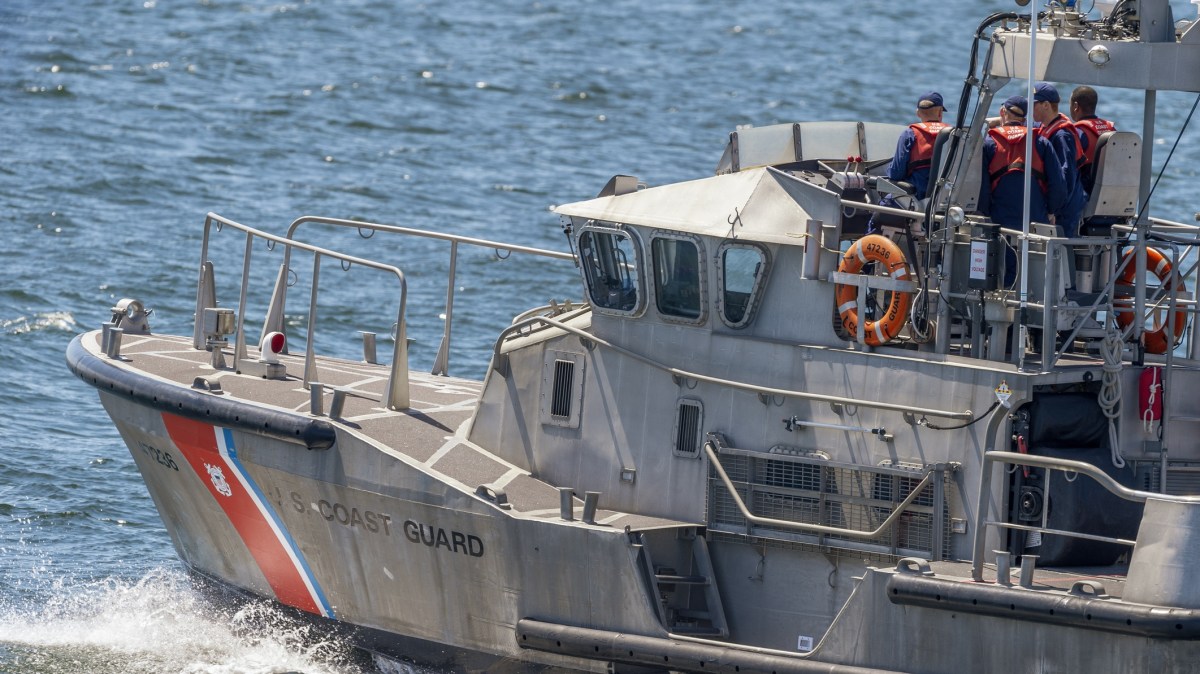
Hackers used Ryuk ransomware to infiltrate computer networks at a marine transportation facility, causing an outage of roughly 30 hours, the U.S. Coast Guard said in a recent security advisory.
The incident resulted in the disruption of “the entire corporate IT network,” and difficulties for camera and physical access controls, among other tasks, according to the advisory. The facility shut down its primary operations for 30 hours while incident responders reacted to the situation.
“Once the embedded malicious link in the email was clicked by an employee, the ransomware allowed for a threat actor to access significant enterprise Information Technology (IT) network files, and encrypt them, preventing the facility’s access to critical files,” the bulletin stated. “The virus burrowed into the industrial control systems that monitor and control cargo transfer and encrypted files critical to process operations.”
This bulletin came five months after the Coast Guard encouraged mariners to focus on basic cybersecurity measures after a ship headed toward the Port of New York and New Jersey endured a “significant” cyber incident. Since then, the Coast Guard has simulated cyberattacks against critical trading hubs, using military personnel to ferret out malware that, if real, could have disabled key functionalities at a seaport.
Ryuk is the same hacking tool suspected in previous attacks against the city of New Orleans, La., New Bedford, Mass. and an array of other targets. While the Coast Guard did not disclose the specific victim or the exact date of infection in its Dec. 16 bulletin, it did suggest hackers used a phishing message to launch the malware onto affected networks.
The wider maritime industry presents a unique target to scammers and state-sponsored hackers alike. Cargo liner shipping undergirds some $4 trillion annually in global trade, while major shipping companies carry goods, including precious commodities, throughout the international economy, creating valuable espionage opportunities.
Meanwhile, hackers have deployed Ryuk to demand digital extortion fees from a range of targets in the public and private sectors. Along with the city of New Orleans, scammers also have targeted health care providers in Texas, logistics companies in Spain and a long list of other organizations.
The U.S. Department of Homeland Security’s Cybersecurity and Infrastructure Security Agency also flagged a National Cyber Security Centre advisory about Ryuk ransomware in June.
The latest Coast Guard bulletin is available in full below.
[documentcloud url=”http://www.documentcloud.org/documents/6594141-MSIB-10-19.html” responsive=true]
Latest Podcasts
Government
FBI officials say AI is bolstering adversaries, emphasizing need to focus on cyber basics, patching
Feds accuse China of ‘systematic’ distillation of U.S. AI models
CIA’s Michael Ellis says cyber intelligence is changing how the agency operates
The G7 tells industry to hurry up and prep for post-quantum encryption
Technology
Threats
Chinese espionage groups swarm to exploit triple-link chain of zero-days
Microsoft discloses two actively exploited zero-days among 974 vulnerabilities
Russian national extradited to US for alleged involvement in bank-account takeover scheme
Attackers exploit zero-days in consistently besieged SonicWall product
Policy
Whistleblower says USPS deploying new, ‘untested’ IT systems governing mail-in ballots
‘Watershed 250’ test program in Texas looks to private sector for water cybersecurity help
Former sexual abuse victims say Grok used their images, videos to train deepfake capabilities
Cyber threats nudge Trump to sign executive order on foreign equipment in U.S. energy infrastructure
Text extracted automatically; images, tables and formatting may be missing. Original: https://cyberscoop.com/ryuk-coast-guard-ransomware/