Scientists Gave ‘Aggressive’ Fish Psychedelic Drugs. A Breakthrough Came Next
Full article263 words · extracted from 404media.co · click to collapse
Move over, coked-up salmon. Fish dosed with psilocybin, the psychoactive component found in magic mushrooms, showed less aggression toward peers compared to their normal behavior in laboratory experiments, according to a study published on Thursday in Frontiers in Behavioral Neuroscience.
Scientists have studied the effects of psilocybin on humans and a variety of other mammals, but fish offer unique insights into the effects of this compound due to their wide varieties of social structures and activity levels. The research is the first to “demonstrate that psilocybin reduces aggression in any animal model,” according to the study, and opens the door to future studies that might pin down the neural mechanisms that underlie these behavioral changes.
Scientists Gave a Bunch of Salmon Cocaine. This Is What Happened Next
Salmon exposed to cocaine and its byproduct swam farther than unexposed fish, raising alarms about drug pollution in aquatic ecosystems.
 404 MediaBecky Ferreira
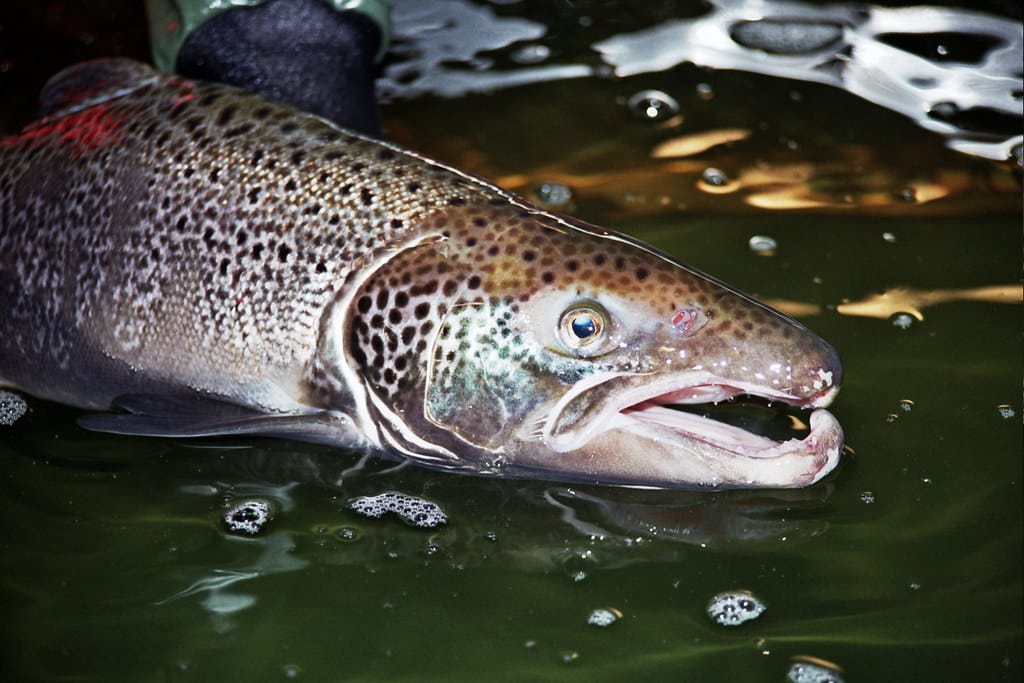
The mangrove rivulus fish (Kryptolebias marmoratus) is particularly intriguing as a highly aggressive fish with incredible adaptations, including the ability to survive out of water for months at a time. It is also a rare hermaphroditic species that reproduces mainly through self-fertilization, producing clones that remove genetic variation as a factor in experiments.
This post is for paid members only
Become a paid member for unlimited ad-free access to articles, bonus podcast content, and more.
Sign up for free access to this post
Free members get access to posts like this one along with an email round-up of our week's stories.
Already have an account? Sign in
Text extracted automatically; images, tables and formatting may be missing. Original: https://www.404media.co/fish-psilocybin-magic-mushrooms-study-psychedelics/