FBI: Zero-days aren't 'scalable' enough for law enforcement
Full article735 words · extracted from cyberscoop.com · click to collapse
Get our latest cybersecurity news first on Google.
FBI Director James Comey explained to a group of lawmakers last week that it would be impractical for the bureau to repetitively rely on contractors to hack into locked smartphones that contain important evidence.
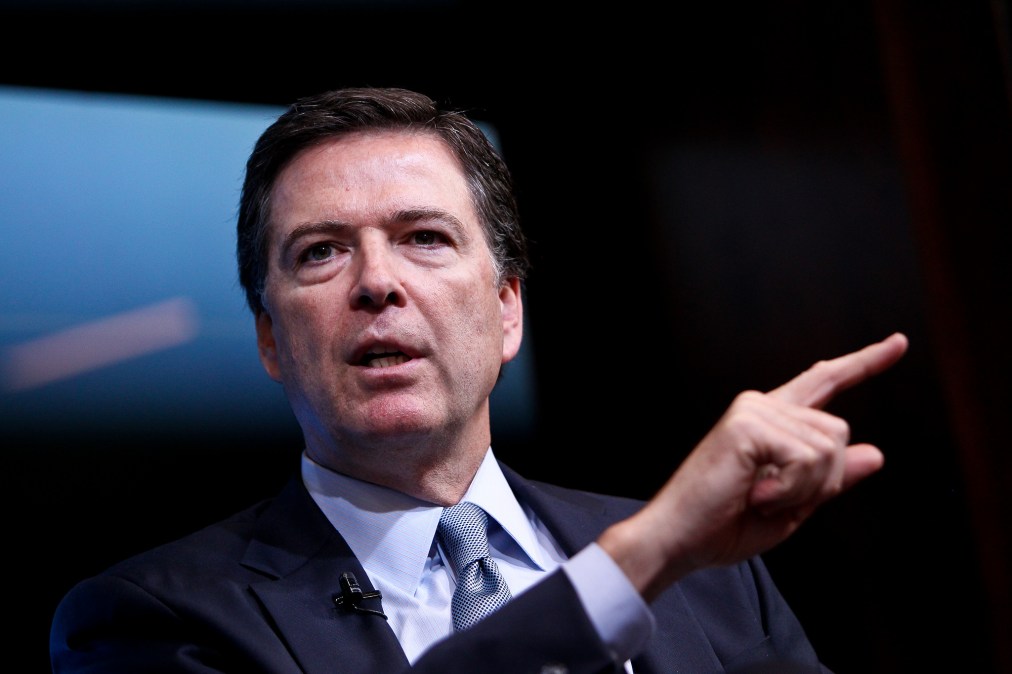
Predicting and preparing for tomorrow’s criminal is a critical component of FBI Director James Comey’s job. In this vein, Comey explained to a group of lawmakers last week that it would be impractical for the bureau to repetitively rely on contractors to hack into locked smartphones that contain important evidence.
Instead, the FBI will need to develop its own capabilities and to work with private sector partners, Comey said during a House Judiciary Committee hearing.
Simply put, the FBI’s high profile solution to access data stored on the San Bernardino shooter’s locked iPhone is not scalable. One could argue, for instance, that the costs are too great for the bureau, the public relations battle is too precarious and the capabilities are too valuable to outsource in the future.
“I’ve asked for more money in the ’17 budget, trying to invest in building those capabilities, so when we really need to be able to get into a device, we can. It’s not scalable, and I’m not sure it would be thrilling to companies like Apple to know we’re investing money to try and figure out how to hack into their stuff,” said Comey.
Prepared testimony shared with the committee prior to the hearing also speaks to some of the broader challenges faced by the FBI in its efforts to seize digital evidence. The growing prevalence of encryption-laden commercial communications products — allowing some criminals “go dark” or operate in hidden, surveillance-deterrent forums — poses a significant obstacle for agents to overcome during the course of an investigation, law enforcement officials say.
“The real challenge is in using those [hacking] techniques in the bulk of our work. Because it becomes public and exposed,” Comey said in response to a question levied by Rep. Darrell Issa, R-Calif.
Privacy and digital rights advocates have long warned that creating and then using exploits to break into popular commercial products effectively degrades the basic security of software used by countless consumers.
Prominent advocacy groups like the Electronic Frontier Foundation and Access Now have also warned that such software exploits could be readily stolen by malicious actors, who may then use the tools for nefarious purposes, including surveillance and blackmail.
“Though the administration has decided not to seek a legislative remedy at this time, we will continue the conversations we are having with private industry, State, local, and tribal law enforcement, our foreign partners, and the American people. The FBI thanks the committee members for their engagement on this crucial issue,” Comey’s written testimony for the committee reads.
Whether the answer to Comey’s encryption hurdle is policy, talent, tools, great collaboration with the private sector or all of the above, remains to be seen.
Recent reports have suggested that the FBI and House Homeland Security Committee are among a group of parties that will urge Congress in early 2017 to pursue a legislative, at least partial, remedy to their encryption issue.
Latest Podcasts
Government
FBI officials say AI is bolstering adversaries, emphasizing need to focus on cyber basics, patching
Feds accuse China of ‘systematic’ distillation of U.S. AI models
CIA’s Michael Ellis says cyber intelligence is changing how the agency operates
The G7 tells industry to hurry up and prep for post-quantum encryption
Technology
Threats
Microsoft discloses two actively exploited zero-days among 974 vulnerabilities
Russian national extradited to US for alleged involvement in bank-account takeover scheme
Attackers exploit zero-days in consistently besieged SonicWall product
Jail time for Maine child in 764 marks turning point in federal law enforcement
Policy
Whistleblower says USPS deploying new, ‘untested’ IT systems governing mail-in ballots
‘Watershed 250’ test program in Texas looks to private sector for water cybersecurity help
Former sexual abuse victims say Grok used their images, videos to train deepfake capabilities
Cyber threats nudge Trump to sign executive order on foreign equipment in U.S. energy infrastructure
Text extracted automatically; images, tables and formatting may be missing. Original: https://cyberscoop.com/james-comey-fbi-zero-days-law-enforcement/