Biden's budget proposal seeks funding boost for cybersecurity
Full article994 words · extracted from cyberscoop.com · click to collapse
Get our latest cybersecurity news first on Google.
The president's budget is unlikely to be passed but offers insights on the administration's priorities ahead of this fall's election.
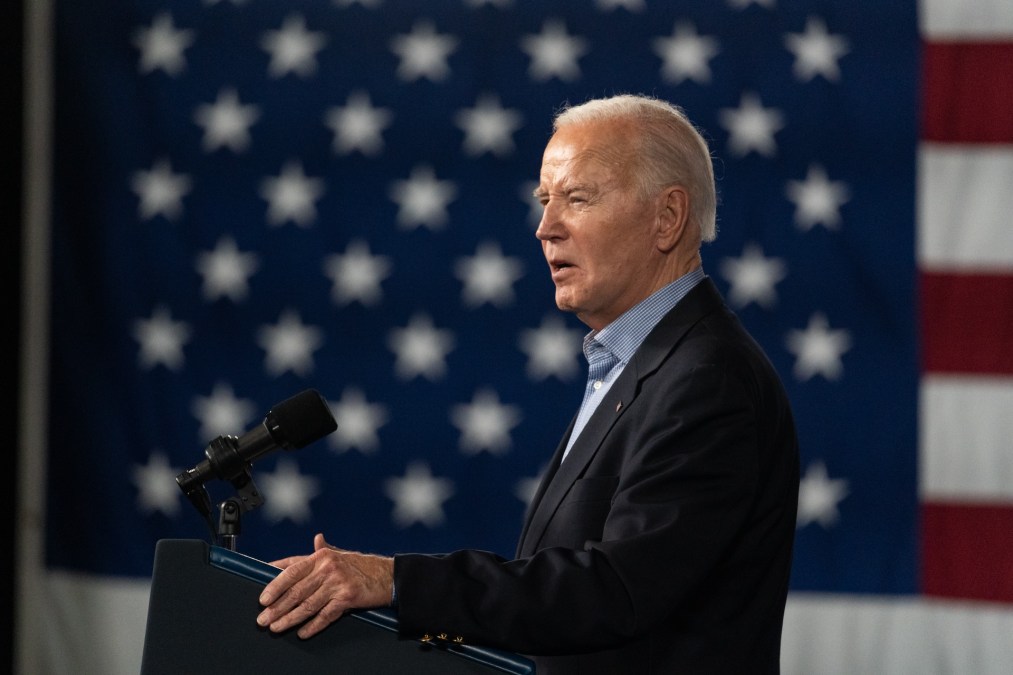
President Joe Biden’s budget proposal for fiscal year 2025 calls for $13 billion in cybersecurity funding for civilian agencies, including additional investments to the Departments of Justice, Homeland Security and Health and Human Services to bolster digital defenses, the White House announced Monday.
While the president’s budget represents a wishlist that requires congressional approval to be enacted, Biden’s budget offers an indication of the administration’s priorities amid a presidential election year and near deadlock in Congress over federal spending levels.
Under Biden’s proposal, the Cybersecurity and Infrastructure Security Agency would receive an additional $103 million to fend off hackers from federal and civilian networks. The agency would get $470 million to deploy network tools like endpoint detection and response capabilities for federal assets.
Additionally, CISA would get $41 million for “critical infrastructure security coordination” and $116 million to oversee the implementation of the Cyber Incident Reporting for Critical Infrastructure Act of 2022. Policymakers are expected to release proposed rules regarding when critical infrastructure entities will be required to report cybersecurity incidents later this month.
Under the proposal, CISA would also receive $394 million for its internal cybersecurity and analytical efforts. The suggestion to bolster CISA’s internal defenses comes on the heels of a report last week that CISA suffered a breach carried out by unknown hackers using vulnerabilities in Ivanti devices that the agency had issued a series of warnings about.
Overall, the Biden administration seeks $3 billion for CISA, which is an increase of $103 million from the enacted budget in fiscal year 2023, according to the proposal.
“This budget invests in our homeland security today and lays the groundwork to protect the American people well into the future. It supports efforts to advance the responsible use of Artificial Intelligence across DHS, as well as our work to protect against malicious cyber threats to Federal networks and critical infrastructure,” DHS Secretary Alejandro Mayorkas said in a statement.
Under the budget proposal, the Justice Department would expand the FBI’s cyber investigative capabilities with $25 million for cyber response and counterintelligence capabilities. The DOJ’s National Security Division would see a $5 million boost to its work on cybersecurity threats and $2 million to support secure use of artificial intelligence.
Biden’s proposal also seeks additional funding for healthcare cybersecurity efforts at a time when the nation’s hospitals are reeling from a ransomware attack. An attack on Change Healthcare has crippled segments of the U.S. health care industry, and Monday’s budget includes a series of proposals to bolster the sector’s defenses.
The budget would add $800 million to help “high need, low-resourced hospitals” cover the initial costs of implementing basic cybersecurity practices and includes a $500 million incentive program for more robust digital defenses. The proposal would add funds to the Department of Health and Human Services’ Administration for Strategic Preparedness and Response to assist with the agency’s cybersecurity efforts. Meanwhile, the budget would also add to HHS’s own security with $141 million, which includes $11 million to better protect health information.
The budget includes a smattering of other proposals aimed at improving cybersecurity.
The proposal would provide funding to the Department of Agriculture to “ensure adequate staffing and critical information technology upgrades” and to expand authority to access funding to projects that mitigate vulnerabilities.
The National Highway Traffic Safety Administration’s Office of Automation Safety would also see more funds to “address vehicle cyber security risks,” as well as AI risks.
The Department of Energy, meanwhile, would see $455 million “to extend the frontiers of AI” by investing in test beds for energy security, national security and climate resilience, in addition to cybersecurity efforts.
The State Department would receive $800 million, a 17% increase, in funding for information technology and cybersecurity. The Treasury Department would also see a $50 million increase for digital security. The Treasury would also see funding to improve the defenses of “core” federal financial systems by transitioning “all mainframe applications to the secure cloud.”
The budget would also add additional funding to address workforce challenges via minority-serving institutions.
“Under the President and Vice President’s leadership, the Administration has secured tens of billions of dollars in funding for [historically Black colleges and universities] and Minority-Serving Institutions to prepare students to contribute to the future in high-demand and high-income fields, like cybersecurity, engineering, biochemistry, and healthcare,” the budget reads.
Additionally, the budget would add $10 million in funding to support Violence Against Women Act programs that address cybercrimes, such as stalkerware.
Latest Podcasts
Government
FBI officials say AI is bolstering adversaries, emphasizing need to focus on cyber basics, patching
Feds accuse China of ‘systematic’ distillation of U.S. AI models
CIA’s Michael Ellis says cyber intelligence is changing how the agency operates
The G7 tells industry to hurry up and prep for post-quantum encryption
Technology
Threats
Microsoft discloses two actively exploited zero-days among 974 vulnerabilities
Russian national extradited to US for alleged involvement in bank-account takeover scheme
Attackers exploit zero-days in consistently besieged SonicWall product
Jail time for Maine child in 764 marks turning point in federal law enforcement
Policy
Whistleblower says USPS deploying new, ‘untested’ IT systems governing mail-in ballots
‘Watershed 250’ test program in Texas looks to private sector for water cybersecurity help
Former sexual abuse victims say Grok used their images, videos to train deepfake capabilities
Cyber threats nudge Trump to sign executive order on foreign equipment in U.S. energy infrastructure
Text extracted automatically; images, tables and formatting may be missing. Original: https://cyberscoop.com/biden-budget-cyber-2025/