Ransomware gang exploited a zero-day in Microsoft security feature, Google says
Vulnerabilities mentionedAll →
| CVE | Vulnerability | CVSS | EPSS | Flags | Affected | Exposure | Published |
|---|---|---|---|---|---|---|---|
| CVE-2021-34527 | PrintNightmare: Remote Code Execution in Microsoft Windows Print Spooler CVE-2021-34527, widely known as 'PrintNightmare', is a remote code execution flaw in the Microsoft Windows Print Spooler service, which improperly performs privileged file operations such as loading printer driver DLLs. An attacker with low-level access who can reach a machine's spooler, for example a domain user able to add a printer connection via Point and Print, can induce the SYSTEM-privileged service to load an attacker-controlled DLL with no user interaction required (CVSS:3.1 vector AV:N/AC:L/PR:L/UI:N). Successful exploitation yields arbitrary code execution as SYSTEM, letting the attacker install programs, view, change or delete data, and create new accounts with full user rights, effectively achieving complete host compromise. The flaw affects all supported Windows client and server releases in the CISA data, Windows 10 from 1507 through 22H2, Windows 11, Windows RT 8.1, and Windows Server 2008, 2012 and 2016, wherever the Print Spooler service is running. Exploitation is confirmed in the wild: the bug was added to CISA's Known Exploited Vulnerabilities catalog on 2021-11-03 with known ransomware use, the FBI and CISA have warned of Russian actors exploiting it, and EPSS places the 30-day exploitation probability at 99.8%. Do: Install the July 2021 security updates immediately, released July 6, 2021 with additional updates on July 7 for Windows Server 2012, Windows Server 2016 and Windows 10 version 1607, and review KB5005010 for restricting installation of new printer drivers after applying the July 6 updates. Where patching is delayed, disable the Print Spooler service on hosts that do not need printing or restrict Point and Print, and verify that NoWarningNoElevationOnInstall and UpdatePromptSettings under HKLM\SOFTWARE\Policies\Microsoft\Windows NT\Printers\PointAndPrint are set to 0 or not defined (these keys do not exist by default, which is the secure state; NoWarningNoElevationOnInstall = 1 makes the system vulnerable by design). Prioritize domain controllers and servers with exposed spoolers, and hunt… | 8.8 | 100% | KEV ransomware PoC ×3 |
| masshundreds of millions of Windows systems (order of magnitude 10^8) | |
| CVE-2022-41091 | Windows Mark of the Web (MOTW) Security Feature Bypass, Actively Exploited CVE-2022-41091 is a security feature bypass (CWE-863, incorrect authorization) in Microsoft Windows' Mark of the Web (MOTW) mechanism, which tags files downloaded from the internet so Windows can apply protective warnings such as SmartScreen prompts before the content runs. An attacker delivers a crafted file — typically a script or JavaScript payload — that fails to receive or retain the MOTW designation, so Windows treats it as locally created and the usual user warnings are skipped; exploitation requires user interaction (opening or running the file), per the CVSS vector. The bypass lets malware execute with fewer prompts, and Google's Threat Analysis Group reported that the Magniber ransomware gang used this flaw as a zero-day to launch JavaScript-delivered ransomware without MOTW-based warnings. Anyone running the affected Windows 10 builds (1507 through 22H2), Windows 11 (21H2 and 22H2), or Windows Server 2016/2019/2022 is affected. The flaw was actively exploited and added to CISA's Known Exploited Vulnerabilities catalog on 2022-11-08 with known ransomware use; Microsoft patched it in the November 2022 Patch Tuesday release (68 vulnerabilities, six zero-days), and no public PoC is known. Do: Apply the November 2022 Windows security updates (released 2022-11-08) to all affected Windows 10, Windows 11, and Windows Server systems; this flaw is in CISA KEV with known ransomware use, so treat patching as urgent. Because Magniber exploited the bypass via JavaScript-delivered payloads that lacked the MOTW flag, review endpoints for JavaScript droppers or ransomware indicators and scrutinize downloaded script files. Until patched, treat internet-downloaded files and scripts with extra suspicion since they may run without the usual warnings. | 5.4 | 2% | KEV ransomware |
| mass≈1B+ Windows client devices plus millions of Windows Server instances (Windows 10/11 dominate Microsoft's ~1.4B-device Windows install base) | |
| CVE-2022-44698 | SmartScreen Security Feature Bypass in Windows 10/11 and Windows Server CVE-2022-44698 is a security feature bypass in Microsoft Defender SmartScreen in which specially crafted files do not properly trigger the SmartScreen Mark-of-the-Web warning prompt. The flaw is triggered over the network but requires user interaction: an attacker typically delivers a crafted file via a malicious link or phishing email, and when the user clicks or opens it, SmartScreen fails to show its usual warning. An attacker gains the ability to run malicious content on a user's machine without the standard SmartScreen prompt, making the flaw an effective delivery and initial-access aid — it has documented use in ransomware campaigns. Anyone running the affected Windows releases is exposed: Windows 10 versions 1607 through 22H2, Windows 11 21H2, and Windows Server 2016, 2019, and 2022. The vulnerability was exploited as a zero-day before patching, was added to CISA's Known Exploited Vulnerabilities catalog on 2022-12-13 with known ransomware use, and Google reported a ransomware gang abusing it in the wild. Do: Apply Microsoft's December 2022 security updates (or any later cumulative updates) for Windows 10, Windows 11, and Windows Server, prioritizing user workstations and systems exposed to phishing or web downloads, per the CISA KEV required action. Until patched, reinforce user awareness that downloaded files may not trigger the usual SmartScreen warning, and consider restricting download or execution of risky file types. Confirm remediation against CISA KEV guidance and treat this as high-priority given known ransomware exploitation. | 5.4 | 76% | KEV ransomware |
| masshundreds of millions of Windows endpoints (SmartScreen is built into every affected Windows 10/11 and Windows Server installation) | |
| CVE-2023-24880 | SmartScreen Security Feature Bypass in Windows 10/11 and Windows Server CVE-2023-24880 is a security feature bypass (incorrect authorization, CWE-863) in Windows SmartScreen: when a user opens a file carrying Mark-of-the-Web — such as an email attachment or a downloaded file — Windows fails to display the SmartScreen 'Open File – Security Warning' prompt that normally precedes execution. An attacker who can get a user to open a crafted malicious file therefore gains the ability to run attacker-chosen code on that machine without the SmartScreen warning, defeating a core client-side defense; the bypass was typically chained with a lure or another flaw to deliver malware, including loaders feeding ransomware operations. Any user or organization running the affected Windows 10, Windows 11, or Windows Server builds is affected, though exploitation requires local access and user interaction (CVSS 4.4, local attack vector). The flaw was a zero-day exploited in the wild before Microsoft patched it in the March 2023 Patch Tuesday release — one of two actively exploited flaws fixed that month — and Google researchers reported a ransomware gang exploited it; CISA added it to the Known Exploited Vulnerabilities Catalog on 2023-03-14 with known ransomware use, and EPSS rates the probability of exploitation within 30 days at 78.2% (100th percentile). No public proof-of-concept is known, but confirmed in-the-wild exploitation means defenders should treat it as actively targeted. Do: Apply the March 2023 Windows security updates to all affected Windows 10 (1607, 1809, 20H2, 21H2, 22H2), Windows 11 (21H2, 22H2), and Windows Server 2016/2019/2022 systems via Windows Update, WSUS, or your patch-management tooling, and verify coverage in your inventory — this is CISA's required action for KEV. Until patched, treat any host whose users open untrusted email attachments or downloads as exposed, since the bypass silently skips the SmartScreen warning; updating is the only complete fix, with no published configuration workaround. | 4.4 | 78% | KEV ransomware |
| masshundreds of millions of Windows endpoints and servers |
Full article625 words · extracted from therecord.media · click to collapse
Financially motivated hackers are using a previously undocumented bug in Microsoft’s SmartScreen security feature to spread the Magniber ransomware, according to a new report. The cybercriminals have been able to exploit the zero-day vulnerability in SmartScreen since December, researchers from Google’s Threat Analysis Group (TAG) said. The Google team reported its findings about the bug and the ransomware group’s exploitation of it to Microsoft on February 15. Microsoft released a patch for the bug — CVE-2023-24880 — on Tuesday. SmartScreen is intended to catch phishing attempts and malware as part of Windows versions 10 and 11, as well as the company’s Edge web browser. A Microsoft spokesperson said customers who have applied the most recent patch are protected. TAG analysts said they have seen over 100,000 downloads of malicious MSI files used in the ransomware campaign since January 2023, with 80% of those downloads by users in Europe. MSI files are similar to the familiar .EXE files, in that both types are used to install and launch Windows programs. The researchers noted that typically the Magniber ransomware has been aimed at organizations in South Korea and Taiwan. Cybersecurity companies began tracking it about six years ago. TAG’s discovery marks the second time in about six months that the operators of Magniber have used zero-days to dodge SmartScreen and trick computer users into downloading the disguised ransomware from infected websites. The Google team’s research builds on previous work done by experts at HP, which found in October that Magniber campaigns involved the exploitation of CVE-2022-44698 — a separate vulnerability affecting SmartScreen. Other hackers began to exploit that bug before Microsoft released a patch in December 2022. During that campaign, the Magniber actors used JScript files with a malformed signature to force SmartScreen to return an error, eventually allowing the hackers to bypass a security warning and send their malware. When Microsoft blocked that avenue, the Magniber group found a similar way to disrupt SmartScreen. The TAG researchers found that the infected MSI files caused SmartScreen to behave the way the JScript files did: The Microsoft feature returned an error, allowing attackers to bypass a security warning. In this case, it was a dialog box that displays when a file runs afoul of Mark-of-the-Web (MotW), another browser feature that guards against malicious files. “Because the root cause behind the SmartScreen security bypass was not addressed, the attackers were able to quickly identify a different variant of the original bug,” the Google researchers said. The goal, they said, should be to “correctly and comprehensively” fix such problems. “This security bypass is an example of a larger trend Project Zero has highlighted previously: vendors often release narrow patches, creating an opportunity for attackers to iterate and discover new variants,” the researchers said. “When patching a security issue, there is tension between a localized, reliable fix, and a potentially harder fix of the underlying root cause issue.” First spotted in late 2017, the Magniber ransomware was exclusively active in South Korea for many years before expanding to Taiwan. The cybercriminals were previously implicated in attacks exploiting several other Microsoft bugs, including CVE-2022-41091, which was also a MotW bug, as well as the infamous PrintNightmare vulnerability, CVE-2021-34527. The Magniber group has previously used the Magnitude exploit kit — a web-based app designed to infect users by exploiting browser vulnerabilities — to distribute malicious payloads since at least 2018.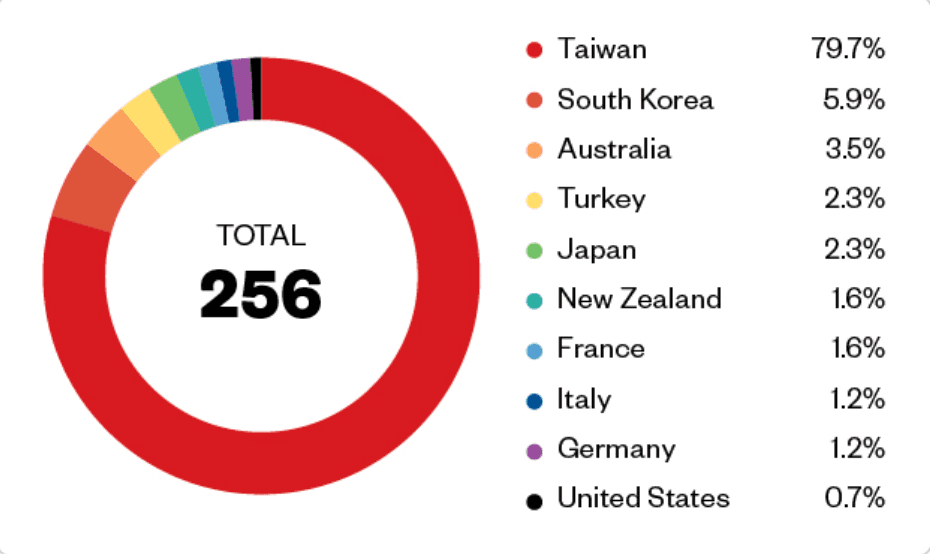 Magniber victims Image: Trend Micro
No previous article
No new articles
Jonathan Greig
is a Breaking News Reporter at Recorded Future News. Jonathan has worked across the globe as a journalist since 2014. Before moving back to New York City, he worked for news outlets in South Africa, Jordan and Cambodia. He previously covered cybersecurity at ZDNet and TechRepublic.
Text extracted automatically; images, tables and formatting may be missing. Original: https://therecord.media/ransomware-zero-day-microsoft-google