Spy agency officials say job loss anxiety, moving fast ‘safely’ among top challenges in AI workforce overhaul
Full article855 words · extracted from cyberscoop.com · click to collapse
Get our latest cybersecurity news first on Google.
While tech leaders think about how to strategically deploy AI tools to support human intelligence needs, rank and filers express concerns about their livelihoods.
Listen to this article
0:00
Learn more.
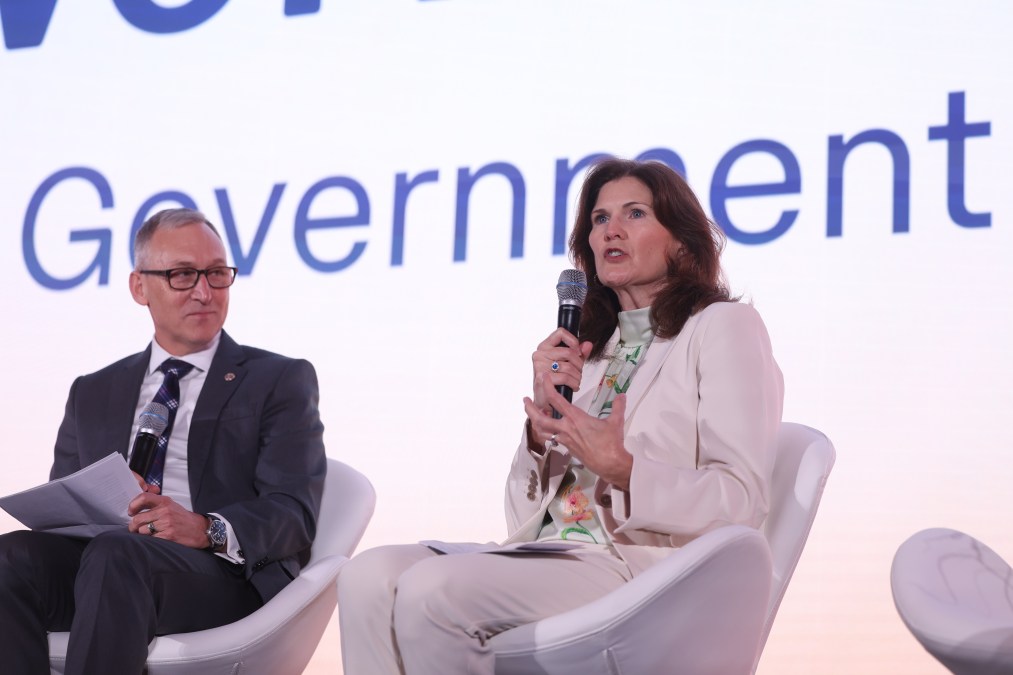
Like many organizations, the National Geospatial Intelligence Agency is moving to integrate AI tools into their business operations.
Jay Harless, director of human development at NGA, said the agency is trying to strike a balance: move fast enough to keep pace in what U.S. national security officials increasingly view as an AI arms race with adversarial countries like Russia, China, but not so fast that it disrupts proven intelligence-gathering methods.
“One of our primary drivers is that our adversaries were investing heavily, and so there is the pressure to keep ahead of and do that safely,” Harless said Tuesday at the Workday Federal Forum, presented by Scoop News Group. “We also realize that some of our adversaries may not have the same legal and ethical boundaries that us and our partners all need.”
Harless said the agency and others in the intelligence community are working to build systems with agentic AI that operates that can accelerate decision making “within secure boundaries.” That means building new IT infrastructure, validation protocols, monitoring for bias or rogue behavior, and putting accountability mechanisms in place.
“We’re moving fast, and moving fast safely by distinguishing what should be automated, what should be augmented and what should be kept purely human, because there are some things that will always be [human-operated],” he said.
A key piece is figuring out exactly how AI should fit into the work. Sasha Muth, NGA’s deputy director of human development, said the agency envisions a three-to-five-year effort to transform its workforce and IT infrastructure for the AI age. This year will be spent largely putting “structural things in place” for when and how analysts use AI, and reassessing what qualifications the agency should require for entry-level jobs.
But that effort is also causing tensions within the workforce, and Muth acknowledged that part of the challenge is convincing rank-and-file employees that the technology is going to help them – not replace them. The agency hired its first Chief AI Officer in 2024, and its upcoming three-year strategic plan will focus on change management, professional development and updating employees’ job skills.
Muth said they are focused on evolving their human capital needs because one of her biggest fears is that over that five-year transition “we‘re going to lose a lot of our expertise” by automating functions and not doing enough to modernize job requirements.
“We do see it as a big transformation, not only for just utilizing the technology, but moving our workforce along with us, having them excited about the changes and not fearful, because there’s a lot of fear…that their job is going away, that they won’t have a job,” she said.
More Scoops

Where’s the Trump administration line on AI regulation?
The messy approach to U.S. AI regulation reflects both the rapid speed of model cyber capabilities and the White House’s “education” over the past two years, experts…

Found fast, fixed slow: The gap the AI clearinghouse must close

CISA is rethinking how it prioritizes risks and vulnerabilities for feds, private sector
Latest Podcasts
Government
Technology
Threats
Policy
Whistleblower says USPS deploying new, ‘untested’ IT systems governing mail-in ballots
‘Watershed 250’ test program in Texas looks to private sector for water cybersecurity help
Former sexual abuse victims say Grok used their images, videos to train deepfake capabilities
Cyber threats nudge Trump to sign executive order on foreign equipment in U.S. energy infrastructure
Text extracted automatically; images, tables and formatting may be missing. Original: https://cyberscoop.com/national-geospatial-intelligence-ai-agency-leaders-say-job-loss-safety-top-concerns/