Java 0day Mass Exploit Distribution
Vulnerabilities mentionedAll →
| CVE | Vulnerability | CVSS | EPSS | Flags | Affected | Exposure | Published |
|---|---|---|---|---|---|---|---|
| CVE-2013-0422 | Java Applet Permission-Restriction Flaw Enables Remote Code Execution in Oracle JRE CVE-2013-0422 is a flaw in how Oracle's Java Runtime Environment restricts the permissions of Java applets (CWE-264), allowing an applet to run with privileges beyond its intended security sandbox. It is triggered when a user loads a web page that delivers a malicious Java applet, such as via a drive-by visit or a phishing link pointing to an attacker-controlled site. Successful exploitation lets the attacker execute commands in the context of the current user on the client system, which in the 2013 campaigns was used to deliver malware families tracked in exploit kits and APT activity (e.g., Whitehole, Miniduke, Icefog) and is recorded by CISA as being used in ransomware. Any system with Oracle JRE installed—especially workstations and browsers with the Java applet plug-in enabled—is affected. Exploitation is confirmed in the wild: the flaw was mass-exploited by exploit kits at the time of disclosure, it carries a 97.6% EPSS probability of exploitation (100th percentile), and it was added to CISA KEV on 2022-05-25, so patching remains an active requirement. Do: Apply Oracle's Java updates per vendor instructions — at disclosure this meant the emergency Java 7 Update 11 or later, and today the current supported Java release. As interim mitigation, disable the Java browser plug-in (or Java in browsers) and uninstall JRE where it is no longer needed. Given known in-the-wild use by exploit kits and ransomware, prioritize KEV remediation and check endpoints for drive-by web-borne infections delivered via malicious applets. | — | 98% | KEV ransomware |
| masshundreds of millions of Java installs (Java was near-ubiquitous on enterprise desktops and servers in 2013) |
Indicators of compromiseauto-extracted · verify before use · export allAll →
| Type | Indicator | Context |
|---|---|---|
| md5 | 7550ce423b2981ad5d3aaa5691832aa6 | st instance of the particular 0day jar file contents ITW is 7550ce423b2981ad5d3aaa5691832aa6. Filenames for the class files remain the same until recent |
Full article734 words · extracted from securelist.com · click to collapse



Just a quick note, it’s only the second week of January, but early 2013 brings with it the first Java 0day mass exploit distribution of the year.
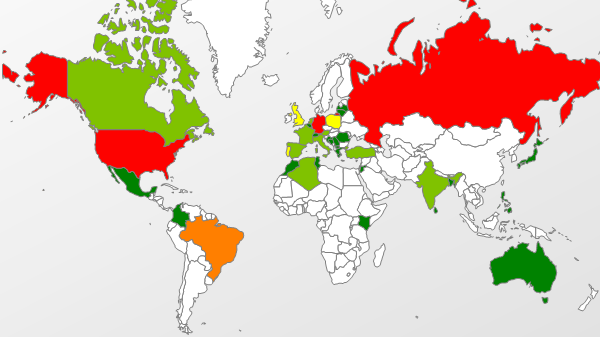
There appears to be multiple ad networks redirecting to Blackhole sites, amplifying the mass exploitation problem. We have seen ads from legitimate sites, especially in the UK, Brazil, and Russia, redirecting to domains hosting the current Blackhole implementation delivering the Java 0day. These sites include weather sites, news sites, and of course, adult sites. A few obfuscated files are being delivered to victim systems with names like Stretch.jar, Edit.jar, UTTER-OFFEND.JAR, and more. The first appearance of the exploit’s prevention in our KSN community seemed to be January 6th. But as we dig back further, we find related samples from mid-December. So, we have been preventing this 0day in particular for quite some time. At this point, it seems that the first instance of the particular 0day jar file contents ITW is 7550ce423b2981ad5d3aaa5691832aa6. Filenames for the class files remain the same until recently. It would be interesting to see an earlier instance.

As for Kaspersky users, our automatic exploit prevention (AEP) is generically preventing the 0day. Surprisingly, while there doesn’t appear to be a high level of server-side polymorphic obfuscation in the class files themselves, the hosted exploit files are being updated and changing since yesterday. Instead, the Blackhole developers and operators put a lot of effort behind shifting domain names.
Update (2012.01.10 3:30 p.m. MT) – Metasploit developers have added an exploit module targeting this vulnerability CVE-2013-0422.
Well, the cat is out of the bag. Not only was the 0day circulating in the more prevalent exploit kits like Blackhole, Nuclear, and Red Kit, but now everyone is armed with the metaploit version. On that note, here is a bit more data…The filenames of the exploit as it was originally released and subsequently prevented by our AEP on December 17th (Moscow time) included ewjvaiwebvhtuai124a.class, hw.class, and test.class. This is interesting because previous Java exploits in Blackhole simply distributed mac.class, hw.class and test.class in their jar archives. So it was a simple switch, perhaps intended to fly under the radar. Perhaps it is interesting that the first known victim system executing the exploit retrieved the malcode with a Firefox browser, demonstrating the robustness of Java exploits. Also, in December 2012, the 0day was used to distributed TDSS and ZeroAccess malware.
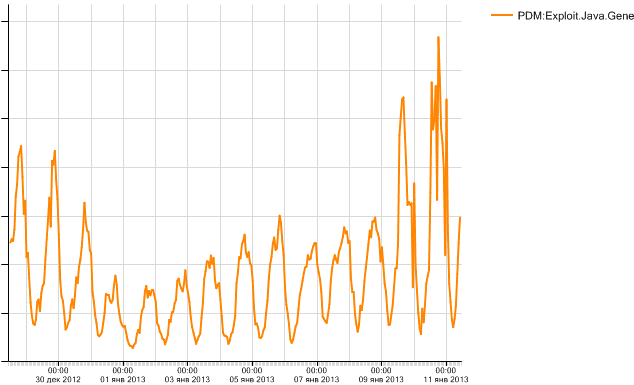
Here is a chart of our Java 0day detections from late December through early Jan 2013. Notice the spike on January 9th. It’s great to see our technology working effectively:
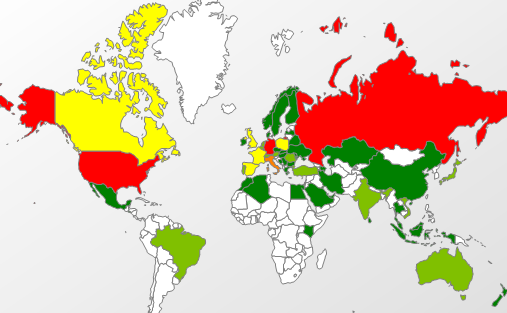
For those of you that want to see detections on virustotal before you believe “AV” prevents a threat, you may also see HEUR:Exploit.Java.CVE-2013-0422.gen, Exploit.Java.Agent.ic, Exploit.Java.Agent.id, Exploit.Java.Agent.ie, Exploit.Java.Agent.if and others for file scanning purposes. An updated heat map of the HEUR:Exploit.Java.CVE-2013-0422.gen detections shows a more widespread distribution of the exploit in the thousands, the time range here is January 6th – January 11th:
One of the best statements that I have seen in regards to the fairly impractical “just uninstall it” approach was presented by one of the handlers at the ISC Storm Center in today’s issue of SANS NewsBites: “Editor’s Note ([Mat] Honan): It seems each time a zero day exploit is found in software, be that Java or otherwise, the industry pundits recommend that people stop using that software. New vulnerabilities will always be discovered in the software we use. If our best defence to a threat is to cause a denial-of-service on ourselves then this in the long term is a no-win strategy for us as an industry. We need to look at better ways to defend our systems and data, one good place to start is the 20 Critical Security Controls. Cheers to that.
Latest Webinars
Reports
Kaspersky researchers have discovered new Mirage Kitten attacks using previously undocumented malware families: NodeRabbit in Node.js and PollCat in JavaScript.
Our experts discovered a new CoolClient backdoor variant with a kernel-mode rootkit driver that hides malicious processes, files, and network connections from security tools and threat analysts.
Kaspersky experts break down a new Armored Likho campaign that poses as a fundraising efforts and delivers a new Still Toolkit aimed at stealing Telegram data and eavesdropping on victims.
Kaspersky researchers reveal previously undocumented malware attributed to Mirage Kitten (UNC1549, Smoke Sandstorm, Nimbus Manticore): NightLedger backdoor, ArcBridge, and BridgeHead tunneling tools.
Text extracted automatically; images, tables and formatting may be missing. Original: https://securelist.com/java-0day-mass-exploit-distribution/31874/