Bipartisan Senate bill would strengthen cybercrime penalties
Full article549 words · extracted from cyberscoop.com · click to collapse
Get our latest cybersecurity news first on Google.
The legislation from Sens. Rounds and Gillibrand would amend federal criminal code on computer fraud and stiffen punishments.
Listen to this article
0:00
Learn more.
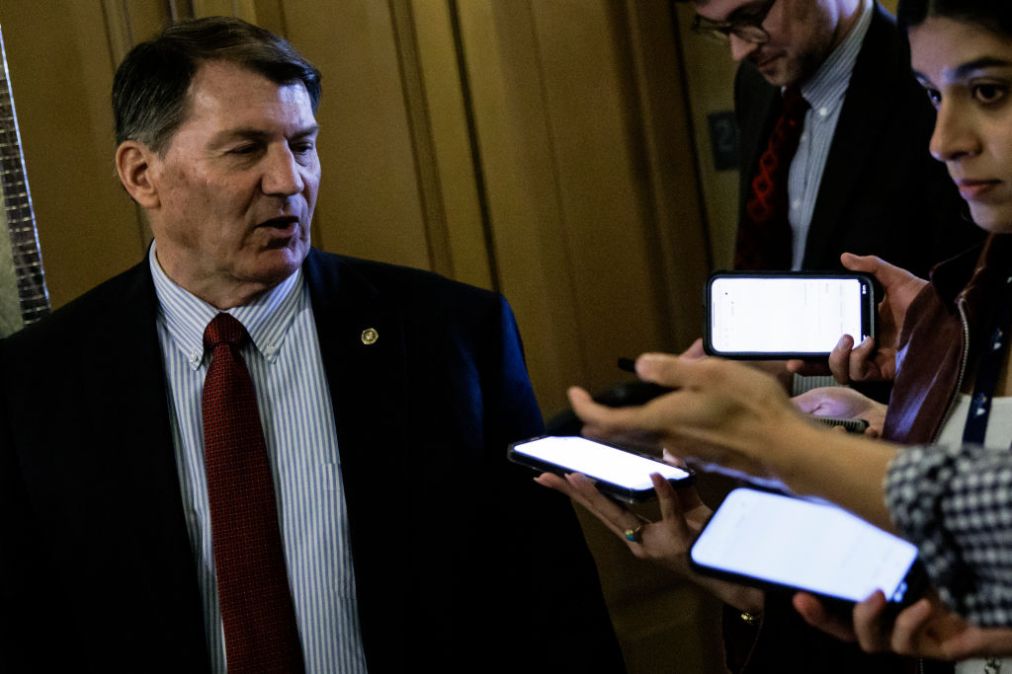
Cybercrimes could be punished more harshly under a new bill from a pair of senators that seeks to amend U.S. criminal code on computer fraud.
The Cyber Conspiracy Modernization Act from Sens. Mike Rounds, R-S.D., and Kirsten Gillibrand, D-N.Y., would modify the Computer Fraud and Abuse Act (CFAA) to establish a specific penalty for conspiracy and boost penalties for violators.
“As cyber technologies continue to rapidly evolve, we need more people working to secure cyberspace as well as harsher penalties for those perpetrating these crimes,” Rounds said in a statement. “As chairman of the Senate Armed Services Committee’s Subcommittee on Cybersecurity, I am committed to working on policies that strengthen the United States’ ability to respond quickly and decisively to cyberattacks which have been on the rise.”
Under current law, the Department of Justice can only charge conspiracy to commit cybercrimes through a general statute unrelated to the CFAA. Individuals charged under the general conspiracy statute face a maximum five-year penalty.
The legislation from Rounds and Gillibrand would allow the DOJ to issue charges under a technology-specific CFAA, elevating the penalties from a decade to life in prison, depending on the severity of the crime.
Rounds, the first senator to serve as chairman of the Senate Armed Services’ cybersecurity subcommittee, is one of a trio of cyber-focused South Dakota Republicans with expanding profiles this Congress, along with Department of Homeland Security Secretary Kristi Noem and Senate Majority Leader John Thune.
Rounds, who also introduced a bill this week to create a scholarship program for cybersecurity students at two-year technical schools, has typically framed cyber as a national security issue, emphasizing the threats posed to the United States by Russia and China.
Latest Podcasts
Government
FBI officials say AI is bolstering adversaries, emphasizing need to focus on cyber basics, patching
Feds accuse China of ‘systematic’ distillation of U.S. AI models
CIA’s Michael Ellis says cyber intelligence is changing how the agency operates
The G7 tells industry to hurry up and prep for post-quantum encryption
Technology
Threats
Policy
Whistleblower says USPS deploying new, ‘untested’ IT systems governing mail-in ballots
‘Watershed 250’ test program in Texas looks to private sector for water cybersecurity help
Former sexual abuse victims say Grok used their images, videos to train deepfake capabilities
Cyber threats nudge Trump to sign executive order on foreign equipment in U.S. energy infrastructure
Text extracted automatically; images, tables and formatting may be missing. Original: https://cyberscoop.com/cybercrime-computer-fraud-bill-senate/