New FBI Director will build on Comey's cybercrime fighting efforts
Full article971 words · extracted from cyberscoop.com · click to collapse
Get our latest cybersecurity news first on Google.
Associates of Christopher Wray who spoke to him in recent weeks say they expect him to build on many of the same priorities that James Comey was known for.
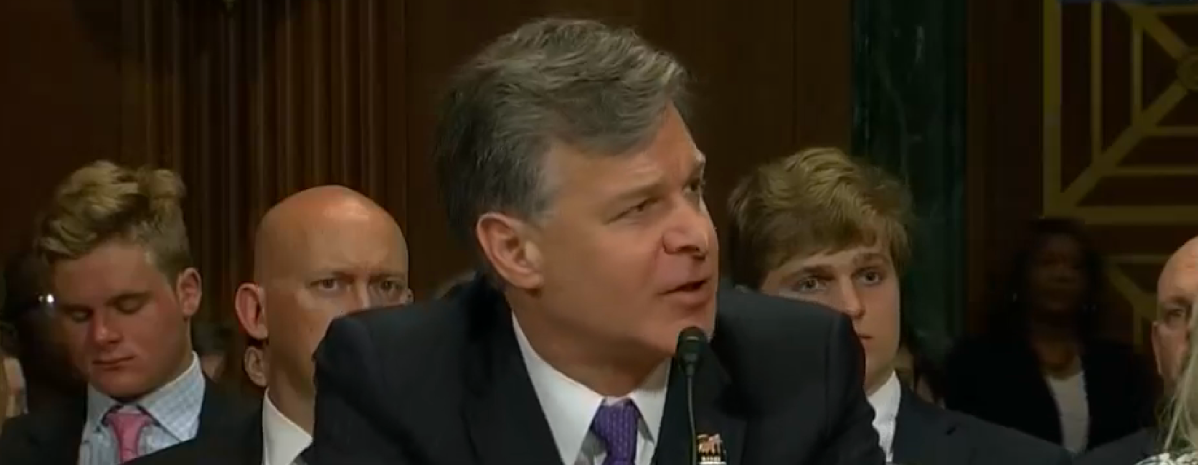
With Christopher Wray being sworn into his new position, the immediate question facing the FBI director is whether he will follow the path created by his predecessor or forge a new one by implementing drastically different initiatives.
Associates of Wray who spoke to him in recent weeks say they expect him to build on many of the same priorities that James Comey was known for, including efforts to strengthen the FBI’s cybercrime fighting mission.
“I think what you’ll see, and this will play out eventually in [Appropriations committees] too, is that Chris understands that [cybersecurity] is important and that it’s part of everything,” said Joe Whitley, a former senior Justice Department official. “Chris I think respects and admires a lot of what [Comey] did, especially with him building up the FBI’s Cybercrime Division. He’ll build on that.”
Whitley doesn’t expect Wray to take the bureau in a drastically different direction in terms of the organization’s efforts to chase down hackers.
“I don’t foresee any major changes to the way the Bureau is currently approaching this issue, given what I know,” he said. “Chris, with his background and expertise, will collaborate with DHS and CIA and companies. He’ll work closely with foreign law enforcement and the [Justice Department’s] National Security Division … because of the threat of Russia and China and other countries.”
During his four year reign, Comey spoke at length about the mission to combat cybercrime. Beyond the limelight, he reorganized how the FBI approached such cases and made it clear it was a personal and necessary priority to improve capacity.
“In 2017, cyber in many ways permeates every aspect of national security, of the intelligence community, of every type of criminal conduct we deal with,” Wray previously said. “It’s become part of the fabric both of our security but also the threats to our security.”
Under Comey’s leadership, the bureau noticeably invested significant resources into developing both a cyber workforce and network of international law enforcement partnerships, which are now used by the U.S. government to apply pressure on hackers acting overseas.
Improving the level of dialogue and coordination between the FBI and private sector was another key talking point for Comey, who was fired by President Donald Trump on May 9 due to what the White House described as a “mishandling” of an investigation into Hillary Clinton’s use of a private email server.
The Senate on Tuesday night overwhelmingly confirmed Wray to be the next FBI Director.
Wray takes the top seat at a time when the bureau is attempting to improve its public image after Trump repeatedly trashed the former director and agency writ large via social media. Additionally, Wray must manage an increasingly complex relationship that exists between an erratic White House and a group of investigators, led by a former colleague in Robert Mueller, who are looking into the possibility of collusion between the Trump administration and Russian government.
Although Wray was confirmed in a landslide decision, some have hesitated to voice their support.
Sen. Ron Wyden, D-Ore., was one of four Senators to vote against Wray’s appointment. Wyden did so, according to a statement, because Wray “failed to oppose government backdoors into Americans’ personal devices, or to acknowledge the facts about encryption.”
On the topic of encryption, Wray explained to lawmakers during his confirmation hearing on July 12: “There’s a balance, obviously, that has to be struck between the importance of encryption — which we can all respect when there are so many threats to our systems — and the importance of giving law enforcement the tools that they lawfully need to keep us all safe.”
Security experts have cast doubt on the FBI’s ability to negotiate with technology firms to acquire confidential data in a manner that respects user privacy and security.
The FBI Agents Association (FBIAA), a membership-based organization that represents the interests of current and former FBI agents, at first withheld its support for Wray’s nomination but later endorsed him after FBIAA representatives met with Wray privately.
According to FBIAA outside counsel Joshua Zive, the organization spoke with Wray about a number of different topics, including the FBI’s cybercrime fighting mission.
“We have every indication that he fully understands the scope of cyber related issues. And we expect him to follow many of the same initiatives that Comey took on,” said Zine. “He understands the importance of cyber … especially with the everyday work of agents.”
Latest Podcasts
Government
FBI officials say AI is bolstering adversaries, emphasizing need to focus on cyber basics, patching
Feds accuse China of ‘systematic’ distillation of U.S. AI models
CIA’s Michael Ellis says cyber intelligence is changing how the agency operates
The G7 tells industry to hurry up and prep for post-quantum encryption
Technology
Threats
Chinese espionage groups swarm to exploit triple-link chain of zero-days
Microsoft discloses two actively exploited zero-days among 974 vulnerabilities
Russian national extradited to US for alleged involvement in bank-account takeover scheme
Attackers exploit zero-days in consistently besieged SonicWall product
Policy
Whistleblower says USPS deploying new, ‘untested’ IT systems governing mail-in ballots
‘Watershed 250’ test program in Texas looks to private sector for water cybersecurity help
Former sexual abuse victims say Grok used their images, videos to train deepfake capabilities
Election official says Tina Peters would be consultant, won’t have access to election systems
Text extracted automatically; images, tables and formatting may be missing. Original: https://cyberscoop.com/christopher-wray-fbi-cyber-crime-james-comey/