Facebook admits 'false news' is a problem, pledges to curb 'information operations'
Full article788 words · extracted from cyberscoop.com · click to collapse
Get our latest cybersecurity news first on Google.
More than six months after its founder first claimed that digital propaganda on social media had no discernible impact on the U.S. presidential election, Facebook finally publicly acknowledged such threats Thursday and announced plans to counter disinformation campaigns evident on the global social network.
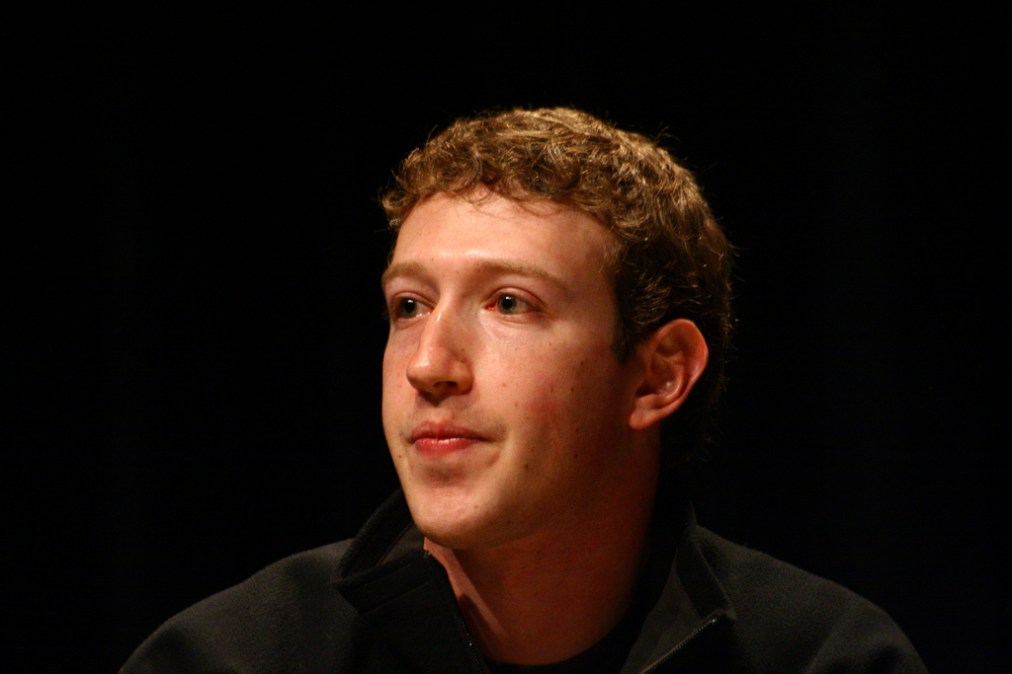
More than six months after its founder first claimed that digital propaganda on social media had no discernible impact on the U.S. presidential election, Facebook publicly acknowledged such threats Thursday and announced plans to counter disinformation campaigns evident on the global social network.
In a 13-page report released Thursday, Facebook outlined a series of sophisticated, well-funded and expansive campaigns it identified as being undertaken by governments and other organizations to spread misleading and sometimes false narratives to accomplish specific geopolitical goals. Facebook found that perpetrators often leveraged a complex network of fake accounts and amplification techniques to proliferate distinctive, time-sensitive messages to target audiences.
The Office of the Director of National Intelligence, or ODNI, published a historic, declassified report in January accusing Russian intelligence services of hacking into the Democratic National Committee and using damaging internal documents to specifically discredit democratic presidential candidate Hillary Clinton. Leaked communications were widely circulated on social media by both legitimate users and armies of bots, otherwise known as automated accounts masquerading as real people.
On Wednesday, James Clapper, former director of national intelligence under President Barack Obama, told an audience that the U.S. government is not positioned to fight information wars in cyberspace due to a lack of policy and structure. The intelligence community, Clapper explained while speaking at a cybersecurity conference in D.C., should not be involved in responding or countering propaganda.
Disinformation and fake news pose a unique challenge “for any society that values freedom of speech and a free press,” Sen. Michael Rounds, R-SD., said Thursday during a congressional hearing on information warfare.
“Our adversaries aim to leverage our distaste for censorship against us to delegitimize our democracy,” Rounds said. “Ultimately, we will continue to struggle with cyber-enabled information operations campaign until we address the policy and strategy deficiencies that undermine our overall cyber posture.”
Facebook’s report called last year’s election a “case study” in how malicious actors can use “conventional and social media to share information stolen from other sources, such as email accounts, with the intent of harming the reputation of specific political targets.”
The technology behemoth says it will develop and implement a series of new security and analysis tools to counter what it describes as a rise in “information operations,” a term that encompasses but also supersedes the issue of so-called “fake news.”
Facebook’s newly published report was authored by three of the company’s most senior cybersecurity experts, including former FireEye strategic analyst Jen Weedon, former Dell SecureWorks researcher William Nuland and Chief Information Security Officer Alex Stamos.
News of Facebook’s ambitious plan comes shortly after the Silicon Valley brand quickly suspended upwards of 30,000 French accounts ahead of last Sunday’s first-round presidential election. The rapid response was possible due to Facebook’s investments in “preventing fake-account creation and identifying and removing fake accounts,” the report notes.
The social network has faced mounting pressure in recent months to provide features that both effectively warn users about and suppress purposely erroneous news stories. Some users have begun to see, for example, notifications telling them about suspected hoax stories on their news feeds; an early attempt by Facebook to audit truth and fiction.
Latest Podcasts
Government
FBI officials say AI is bolstering adversaries, emphasizing need to focus on cyber basics, patching
Feds accuse China of ‘systematic’ distillation of U.S. AI models
CIA’s Michael Ellis says cyber intelligence is changing how the agency operates
The G7 tells industry to hurry up and prep for post-quantum encryption
Technology
Threats
Microsoft discloses two actively exploited zero-days among 974 vulnerabilities
Russian national extradited to US for alleged involvement in bank-account takeover scheme
Attackers exploit zero-days in consistently besieged SonicWall product
Jail time for Maine child in 764 marks turning point in federal law enforcement
Policy
Whistleblower says USPS deploying new, ‘untested’ IT systems governing mail-in ballots
‘Watershed 250’ test program in Texas looks to private sector for water cybersecurity help
Former sexual abuse victims say Grok used their images, videos to train deepfake capabilities
Cyber threats nudge Trump to sign executive order on foreign equipment in U.S. energy infrastructure
Text extracted automatically; images, tables and formatting may be missing. Original: https://cyberscoop.com/facebook-admits-fake-news-problem-pledges-curb-information-operations/