CISA completed its election security review. It won’t make the results public
Full article1,370 words · extracted from cyberscoop.com · click to collapse
Get our latest cybersecurity news first on Google.
Critics said the decision creates broad uncertainty among other stakeholders who work to protect elections.
Listen to this article
0:00
Learn more.
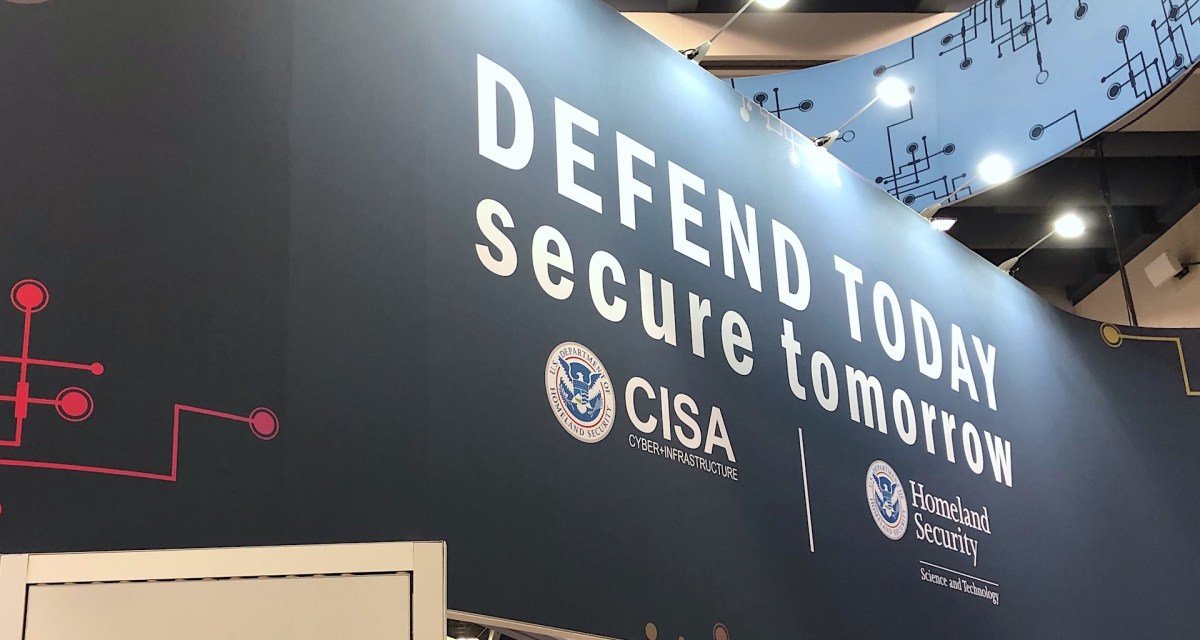
When the Trump administration began sidelining and laying off personnel at the Cybersecurity and Infrastructure Security Agency, it started by targeting employees who worked on election security and disinformation. At the same time, the Department Homeland Security announced it would conduct a comprehensive review of CISA’s election security mission.
This week, the agency confirmed that it has completed the review, but said that its findings won’t be released to the public.
“The assessment that CISA has undertaken is internal and will help inform how the agency moves forward to best support critical infrastructure,” a CISA spokesperson said. “This is an internal document that is not planned to be released publicly.”
A DHS spokesperson told CyberScoop in an email that the department had nothing else to share at this time.
Critics argue that withholding the review and its conclusions creates broad uncertainty among election security stakeholders and jeopardizes the collaboration between the federal government, states and local governments, which relies on CISA’s resources and technical expertise.
Every year, CISA provides hundreds of vulnerability assessments and technology improvements to financially strained election jurisdictions. It also oversees sensors that can detect malicious attacks, trains thousands of state and local election workers, and shares the latest threat information. As the threats to election workers have increased over the past four years, CISA has also helped state and local officials shore up physical security at polling places and election offices and expanded de-escalation training.
Meanwhile, the nonprofit Center for Internet Security, which manages the federally funded Election Infrastructure Information Sharing and Analysis Center, stated this week that “due to the termination of funding by the Department of Homeland Security, the Center for Internet Security no longer supports the EI-ISAC.”
The move was expected, as a Feb. 14 DHS memo obtained by StateScoop indicated the department intended to “partially” terminate its cooperative agreement with CIS, with the White House saying the EI-ISAC no longer aligns with DHS’ mission.
The order technically leaves the New York nonprofit free to provide services to state and local governments, but without its prior designation, a majority of states are now legally barred from accepting its services.
Local election officials told CyberScoop they’ve relied heavily on the EI-ISAC’s services. Scott McDonell, county clerk for Dane County, Wis., which contains Madison, said he doesn’t know what will happen to his Albert sensor, a device provided by CIS that helps monitor his network during off hours.
McDonell said he’s also unsure how to proceed because DHS hasn’t shared its plans.
“I don’t have a plan right now,” he said. “It would be nice to know what I’m dealing with, so even if there’s not a memo, they need to explain what services are going to change so we can adjust to that. For example, if I can’t rely on that Albert sensor, we’re going to have to contract with a private vendor at a significantly larger cost to cover what that does.”
Some analysts have suggested that local election administrators may need to turn to their state governments to replace critical security services. McDonell said that isn’t an option for him because Wisconsin’s secretary of state is not involved in administering elections.
“The thing that’s crazy to me is how could they possibly expect some smaller county in Michigan or Wisconsin or Pennsylvania to be matched up against foreign intelligence services?” McDonell said. “Also, there can be multiple attacks at the same time. It doesn’t make any sense to do it any other way than at a national level where there are other resources and intelligence.”
Wesley Wilcox, supervisor of elections for Marion County, Fla., remembered when the EI-ISAC was adopted and matured more quickly than any of the other ISACs after its creation in 2018. He said it was especially useful for providing a “situation room” that gave election officials breaking intelligence and for providing “extremely technical” support services that filled a skills gap in most election offices.
“I think if I were an adversary, I’d certainly be looking at what I can do in ‘26 now that there’s this known hole,” he said.
Tim Harper, a senior policy analyst for elections and democracy at the Center for Democracy and Technology, called on CISA to make its review public, noting that “without transparency about the scope of CISA’s decisions, election officials won’t even know what options are available to them.”
“Without transparency on the agency’s plans, [states] are left scrambling to prepare for upcoming elections,” Harper told CyberScoop. “If CISA is abandoning them, election officials deserve to know — keeping them in the dark only helps bad actors.”
Last month, the National Association of Secretaries of State wrote to DHS Secretary Kristi Noem outlining a list of vital resources and assistance that states have relied on CISA to provide in order to help secure their elections.
“We favor continuity of the core resources above and welcome the opportunity as Chief Election Officials to discuss any potential changes or impacts to election security-related services before making a final decision,” the officials wrote.
This story was updated March 7 with comments from local election officials. It was updated March 10 to note that Wisconsin does have a secretary state, but that person does not administer elections.
More Scoops

Election official says Tina Peters would be consultant, won’t have access to election systems
Shasta County registrar Clint Curtis told CyberScoop he needs Peters to help manage the county’s 2026 elections and he’s not concerned about her past conviction.
SCOTUS tosses one of two injunctions against Trump USPS mail-in ballot rules

Trump blames Minnesota for cyberattacks on water sector, drawing pushback from cyber world
Latest Podcasts
Government
FBI officials say AI is bolstering adversaries, emphasizing need to focus on cyber basics, patching
CIA’s Michael Ellis says cyber intelligence is changing how the agency operates
The G7 tells industry to hurry up and prep for post-quantum encryption
Jail time for Maine child in 764 marks turning point in federal law enforcement
Technology
Threats
Chinese espionage groups swarm to exploit triple-link chain of zero-days
Microsoft discloses two actively exploited zero-days among 974 vulnerabilities
Russian national extradited to US for alleged involvement in bank-account takeover scheme
Attackers exploit zero-days in consistently besieged SonicWall product
Policy
Whistleblower says USPS deploying new, ‘untested’ IT systems governing mail-in ballots
‘Watershed 250’ test program in Texas looks to private sector for water cybersecurity help
Former sexual abuse victims say Grok used their images, videos to train deepfake capabilities
Cyber threats nudge Trump to sign executive order on foreign equipment in U.S. energy infrastructure
Text extracted automatically; images, tables and formatting may be missing. Original: https://cyberscoop.com/cisa-election-security-review-lacks-transparency/