Supreme Court declines to hear Wikimedia case against NSA surveillance program
Full article802 words · extracted from cyberscoop.com · click to collapse
Get our latest cybersecurity news first on Google.
Critics of the high court's decision not to hear the case say the justices have struck a blow against civil liberties.
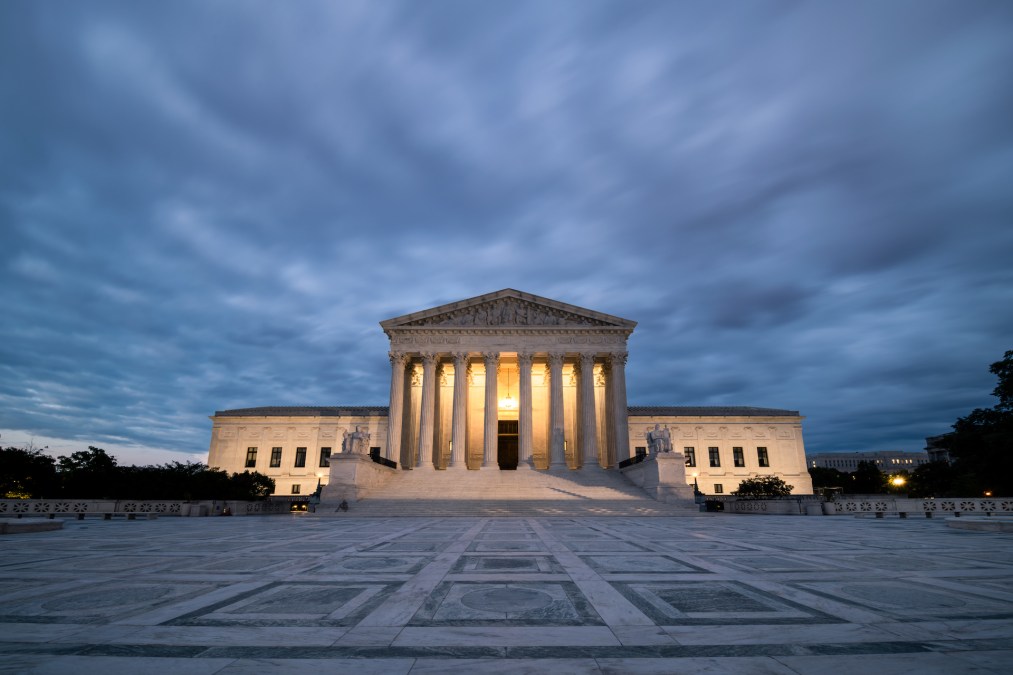
The Supreme Court declined to hear a rare case challenging the NSA’s secretive “upstream surveillance” program that gathers a massive amount of data on online communications, according to the court’s decision released Tuesday.
The American Civil Liberties Union and Knight First Amendment Institute filed a petition for the high court to hear the case on behalf of the Wikimedia Foundation after the U.S. Court of Appeals for the Fourth Circuit sided with the NSA’s defense that proceeding with the trial would reveal sensitive state secrets. By denying to hear the case, the court leaves that judgment in place.
“It’s very disappointing. This surveillance program is one of the most sweeping ever enacted and it has yet to be subject to judicial review in a court. That’s a real problem for the rule of law,” Alex Abdo, litigation director at the Knight First Amendment Institute, told CyberScoop.
Wikimedia first challenged the NSA’s use of upstream surveillance, the agency’s warrantless interception of online communications data as it moves through telecom infrastructure such as undersea cables, in 2015. The Fourth Circuit reversed the decision of a lower court and ruled that Wikimedia had sufficient standing to bring the case. The case came to a halt after the same appeals court later sided with the NSA when it involved the state secrets privilege.
That ruling gave the NSA a trump card to shut down any secretive surveillance case with the state secrets privilege, critics say. “We depend on the courts to hold the government to account, especially when it wields powerful new technologies to peer into our lives like never before,” Patrick Toomey, deputy director of the ACLU’s National Security Project, said in a statement. “But the Supreme Court has again allowed the executive branch to hide abuses behind unjustifiable claims of secrecy.”
Cases challenging NSA surveillance are rare since the bar for proving standing is so high. However, the question of how state secrets privilege applies to surveillance cases could get another spotlight in April when the Court of Appeals for the Ninth Circuit reviews a case that challenged the FBI’s surveillance under FISA. The Supreme Court ruled last year against the plaintiff’s argument that a provision of FISA review superseded the state secrets privilege but it left the question of if the evidence was actually privileged to the Ninth Circuit.
Section 702 of the Foreign Intelligence Surveillance Act, the authority that allows the NSA to compel electronic communications providers to provide the communications of targeted foreign persons, is up for renewal this year. The program has attracted scrutiny from both parties due to widely documented abuses of the program. Members from both parties are expected to introduce legislation reforming the authority, including potentially requiring the use of a warrant to obtain information from the program.
The Supreme Court’s decision not to take up the case adds to the urgency of Congress reforming the statute, critics of the Supreme Court’s decision say.
“The Supreme Court’s refusal to grant our petition strikes a blow against an individual’s right to privacy and freedom of expression — two cornerstones of our society and the building blocks of Wikipedia,” James Buatti, legal director at the Wikimedia Foundation, said in a press release. “We will continue to champion everyone’s right to free knowledge, and urge Congress to take on the issue of mass surveillance as it evaluates whether to reauthorize Section 702 later this year.”
Latest Podcasts
Government
FBI officials say AI is bolstering adversaries, emphasizing need to focus on cyber basics, patching
CIA’s Michael Ellis says cyber intelligence is changing how the agency operates
The G7 tells industry to hurry up and prep for post-quantum encryption
Jail time for Maine child in 764 marks turning point in federal law enforcement
Technology
Threats
Chinese espionage groups swarm to exploit triple-link chain of zero-days
Microsoft discloses two actively exploited zero-days among 974 vulnerabilities
Russian national extradited to US for alleged involvement in bank-account takeover scheme
Attackers exploit zero-days in consistently besieged SonicWall product
Policy
Whistleblower says USPS deploying new, ‘untested’ IT systems governing mail-in ballots
‘Watershed 250’ test program in Texas looks to private sector for water cybersecurity help
Former sexual abuse victims say Grok used their images, videos to train deepfake capabilities
Cyber threats nudge Trump to sign executive order on foreign equipment in U.S. energy infrastructure
Text extracted automatically; images, tables and formatting may be missing. Original: https://cyberscoop.com/supreme-court-wikimedia-aclu-nsa/