April’s Patch Tuesday Brings Record Number of Fixes
Vulnerabilities mentionedAll →
| CVE | Vulnerability | CVSS | EPSS | Flags | Affected | Exposure | Published |
|---|---|---|---|---|---|---|---|
| CVE-2024-20670 | Outlook for Windows Spoofing Vulnerability Outlook for Windows Spoofing Vulnerability NVD description · AI analysis pending | 8.1 | 2% |
| — | ||
| CVE-2024-21412 | CVE-2024-21412: Security Feature Bypass in Microsoft Windows Internet Shortcut Files CVE-2024-21412 is a security feature bypass (CWE-693) in how Microsoft Windows handles Internet Shortcut files: a crafted shortcut can make Windows skip the security warning prompt that normally appears before untrusted internet content is opened or downloaded. Triggering it requires user interaction — an attacker must deliver a malicious shortcut file, typically via email or a malicious website, and convince the user to open it, which is reflected in the CVSS vector's UI:R component. An attacker who succeeds gains a bypass of those prompts, making it easier to retrieve and execute malicious remote content with fewer warnings; the DarkGate malware operators used exactly this technique in zero-day campaigns to distribute their loader. Anyone running the affected Windows 10 (1809, 21H2, 22H2), Windows 11 (21H2, 22H2, 23H2), Windows Server 2019, or Windows Server 2022 (including 23H2) builds was exposed. The flaw was patched in Microsoft's February 2024 Patch Tuesday release (2024-02-13), the same day CISA added it to the KEV catalog, and it is under active exploitation with known ransomware association and a 95.4% EPSS score. Do: Apply the February 2024 Windows cumulative security update (released 2024-02-13) or any later monthly cumulative update to every affected Windows 10, Windows 11, Windows Server 2019, and Windows Server 2022 build, and verify patch levels through your endpoint inventory. Because exploitation requires user interaction, as an interim control flag or block .url/Internet Shortcut attachments at email gateways and remind users not to open shortcuts from untrusted sources. Prioritize internet-facing and shared endpoints given the KEV listing and known ransomware use. | 8.1 | 95% | KEV ransomware |
| mass≈1 billion Windows 10/11/Server installations potentially affected worldwide (pre-patch installed base) | |
| CVE-2024-26234 | Proxy Driver Spoofing Vulnerability Proxy Driver Spoofing Vulnerability NVD description · AI analysis pending | 6.7 | 5% |
| — | ||
| CVE-2024-29063 | Azure AI Search Information Disclosure Vulnerability Azure AI Search Information Disclosure Vulnerability NVD description · AI analysis pending | 5.5 | <1% |
| — | ||
| CVE-2024-29988 | Mark of the Web Security Feature Bypass in Microsoft SmartScreen Prompt CVE-2024-29988 is a security feature bypass in Microsoft SmartScreen Prompt that allows an attacker to defeat the Mark of the Web (MotW) mechanism, which normally flags internet-downloaded files so SmartScreen shows a warning before they run. An attacker triggers it by delivering a crafted file that Windows processes without the expected SmartScreen prompt, often as part of an exploit chain with CVE-2023-38831 (WinRAR) or the related SmartScreen bypass CVE-2024-21412. Successful exploitation strips away a key browser/download defense layer, letting a malicious file execute with no user warning. Any Windows system that relies on SmartScreen to vet internet-delivered content is affected; the available data does not specify affected version ranges. The flaw is confirmed to be exploited in the wild — CISA added it to the Known Exploited Vulnerabilities catalog on 2024-04-30 — and EPSS estimates a 45.2% chance of exploitation in the next 30 days (99th percentile), though no public PoC is known. Do: Apply Microsoft's update for CVE-2024-29988 as soon as possible via Windows Update, per CISA's KEV required action to apply vendor mitigations; verify patch status across Windows endpoints. Until patched, scrutinize internet-delivered archives and installers, and ensure the chain components are also remediated — update WinRAR for CVE-2023-38831 and patch the related SmartScreen bypass CVE-2024-21412. | 8.8 | 45% | KEV |
| masshundreds of millions of Windows devices (SmartScreen is built into and enabled by default on Windows 10/11) |
Full article881 words · extracted from krebsonsecurity.com · click to collapse
If only Patch Tuesdays came around infrequently — like total solar eclipse rare — instead of just creeping up on us each month like The Man in the Moon. Although to be fair, it would be tough for Microsoft to eclipse the number of vulnerabilities fixed in this month’s patch batch — a record 147 flaws in Windows and related software.
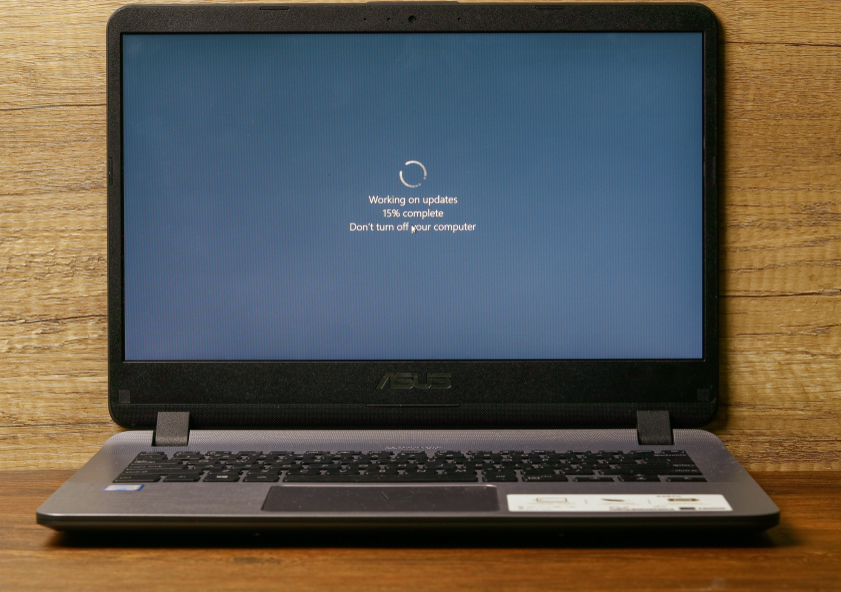
Yes, you read that right. Microsoft today released updates to address 147 security holes in Windows, Office, Azure, .NET Framework, Visual Studio, SQL Server, DNS Server, Windows Defender, Bitlocker, and Windows Secure Boot.
“This is the largest release from Microsoft this year and the largest since at least 2017,” said Dustin Childs, from Trend Micro’s Zero Day Initiative (ZDI). “As far as I can tell, it’s the largest Patch Tuesday release from Microsoft of all time.”
Tempering the sheer volume of this month’s patches is the middling severity of many of the bugs. Only three of April’s vulnerabilities earned Microsoft’s most-dire “critical” rating, meaning they can be abused by malware or malcontents to take remote control over unpatched systems with no help from users.
Most of the flaws that Microsoft deems “more likely to be exploited” this month are marked as “important,” which usually involve bugs that require a bit more user interaction (social engineering) but which nevertheless can result in system security bypass, compromise, and the theft of critical assets.
Ben McCarthy, lead cyber security engineer at Immersive Labs called attention to CVE-2024-20670, an Outlook for Windows spoofing vulnerability described as being easy to exploit. It involves convincing a user to click on a malicious link in an email, which can then steal the user’s password hash and authenticate as the user in another Microsoft service.
Another interesting bug McCarthy pointed to is CVE-2024-29063, which involves hard-coded credentials in Azure’s search backend infrastructure that could be gleaned by taking advantage of Azure AI search.
“This along with many other AI attacks in recent news shows a potential new attack surface that we are just learning how to mitigate against,” McCarthy said. “Microsoft has updated their backend and notified any customers who have been affected by the credential leakage.”
CVE-2024-29988 is a weakness that allows attackers to bypass Windows SmartScreen, a technology Microsoft designed to provide additional protections for end users against phishing and malware attacks. Childs said one of ZDI’s researchers found this vulnerability being exploited in the wild, although Microsoft doesn’t currently list CVE-2024-29988 as being exploited.
“I would treat this as in the wild until Microsoft clarifies,” Childs said. “The bug itself acts much like CVE-2024-21412 – a [zero-day threat from February] that bypassed the Mark of the Web feature and allows malware to execute on a target system. Threat actors are sending exploits in a zipped file to evade EDR/NDR detection and then using this bug (and others) to bypass Mark of the Web.”
Update, 7:46 p.m. ET: A previous version of this story said there were no zero-day vulnerabilities fixed this month. BleepingComputer reports that Microsoft has since confirmed that there are actually two zero-days. One is the flaw Childs just mentioned (CVE-2024-21412), and the other is CVE-2024-26234, described as a “proxy driver spoofing” weakness.
Satnam Narang at Tenable notes that this month’s release includes fixes for two dozen flaws in Windows Secure Boot, the majority of which are considered “Exploitation Less Likely” according to Microsoft.
“However, the last time Microsoft patched a flaw in Windows Secure Boot in May 2023 had a notable impact as it was exploited in the wild and linked to the BlackLotus UEFI bootkit, which was sold on dark web forums for $5,000,” Narang said. “BlackLotus can bypass functionality called secure boot, which is designed to block malware from being able to load when booting up. While none of these Secure Boot vulnerabilities addressed this month were exploited in the wild, they serve as a reminder that flaws in Secure Boot persist, and we could see more malicious activity related to Secure Boot in the future.”
For links to individual security advisories indexed by severity, check out ZDI’s blog and the Patch Tuesday post from the SANS Internet Storm Center. Please consider backing up your data or your drive before updating, and drop a note in the comments here if you experience any issues applying these fixes.
Adobe today released nine patches tackling at least two dozen vulnerabilities in a range of software products, including Adobe After Effects, Photoshop, Commerce, InDesign, Experience Manager, Media Encoder, Bridge, Illustrator, and Adobe Animate.
KrebsOnSecurity needs to correct the record on a point mentioned at the end of March’s “Fat Patch Tuesday” post, which looked at new AI capabilities built into Adobe Acrobat that are turned on by default. Adobe has since clarified that its apps won’t use AI to auto-scan your documents, as the original language in its FAQ suggested.
“In practice, no document scanning or analysis occurs unless a user actively engages with the AI features by agreeing to the terms, opening a document, and selecting the AI Assistant or generative summary buttons for that specific document,” Adobe said earlier this month.
Text extracted automatically; images, tables and formatting may be missing. Original: https://krebsonsecurity.com/2024/04/aprils-patch-tuesday-brings-record-number-of-fixes/