Judge in trial of alleged LinkedIn hacker admits doubt in evidence
Full article715 words · extracted from cyberscoop.com · click to collapse
Get our latest cybersecurity news first on Google.
Judge William Alsup doesn't seem convinced that the government had proved its case against the alleged Russian hacker.
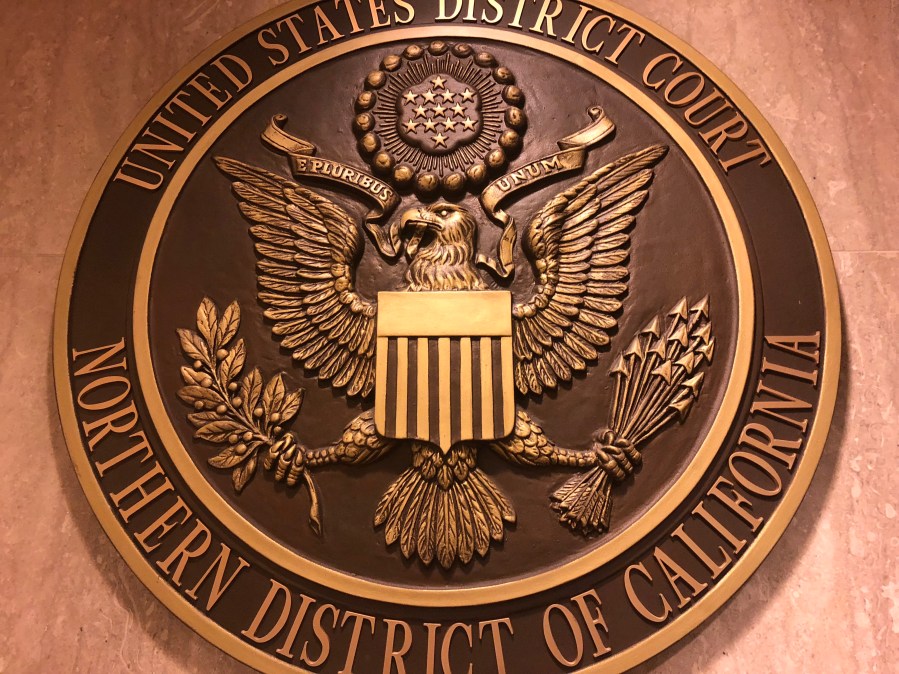
Just when U.S. attorneys may have thought they were free of obstacles in their case against an alleged Russian hacker, a new one has emerged: the judge presiding over the trial.
Judge William Alsup openly criticized U.S. Attorney Michelle Kane on Tuesday, as the trial of Yevgeniy Nikulin resumed amid the coronavirus pandemic. Nikulin is charged with an array of hacking-related crimes in connection with 2012 breaches at LinkedIn, Formspring and Dropbox, in which he allegedly stole 117 million usernames and passwords, then tried to sell them to others.
Through the trial, Alsup has questioned the government’s evidence against Nikulin. In March, after prosecutors questioned a witness about how Nikulin allegedly accessed stolen usernames and passwords to infiltrate the Formspring site, Alsup told prosecutors they risked boring the jury with “excruciating detail that seems irrelevant.” He went on to wonder whether the Department of Justice “had some magic witness” who would provide a smoking gun.
After a months-long pause in the trial due to the pandemic, arguments continued this week, with attorneys and witnesses wearing masks and jurors seated six feet apart. The public is able to view the proceedings by a Zoom livestream. Closing arguments are expected this week.
While the jury was outside the courtroom, Alsup has continued to wonder aloud whether the government had proved its case.
“There is an issue in this case of whodunnit,” the judge said Tuesday.
Alsup’s latest complaint came in response to prosecutor Michelle Kane’s suggestion that phone records collected from Nikulin’s time behind bars were evidence of guilt. The records suggest Nikulin said he previously breached websites “24/7,” and that he wished to hack the jail where he was incarcerated because he disagreed with the rules.
“If that is evidence of guilt, then God help us in this country,” Alsup said in comments first reported by Courthouse News.
“I don’t see a lot of evidence this particular defendant did this,” the judge went on. “Maybe the scales will fall from my eyes when I hear your brilliant summation.”
The skepticism comes as the end of a years-long international legal drama nears. Nikulin was arrested in 2016 in the Czech Republic at the behest of the U.S. He was extradited to California in 2018, only after the Russian government sought to bring him home on lesser fraud charges.
Since then, the court has deemed Nikulin fit to stand trial following a psychological test. The Justice Department also has detailed Nikulin’s alleged links to a number of other accused Russian hackers, intelligence agents and data brokers, such as an alleged cybercriminals who prosecutors say hacked the Securities and Exchange Commission, as well as a man who ultimately would become an executive at Group-IB, a security vendor with offices in Moscow.
“Russia is full of hackers,” Alsup said, adding that much of the cybercrime affecting American firms originates in Eastern Europe. “It’s like ‘Hack City’ over there.”
Latest Podcasts
Government
FBI officials say AI is bolstering adversaries, emphasizing need to focus on cyber basics, patching
Feds accuse China of ‘systematic’ distillation of U.S. AI models
CIA’s Michael Ellis says cyber intelligence is changing how the agency operates
Jail time for Maine child in 764 marks turning point in federal law enforcement
Technology
Threats
Chinese espionage groups swarm to exploit triple-link chain of zero-days
Microsoft discloses two actively exploited zero-days among 974 vulnerabilities
Russian national extradited to US for alleged involvement in bank-account takeover scheme
Attackers exploit zero-days in consistently besieged SonicWall product
Policy
Whistleblower says USPS deploying new, ‘untested’ IT systems governing mail-in ballots
‘Watershed 250’ test program in Texas looks to private sector for water cybersecurity help
Former sexual abuse victims say Grok used their images, videos to train deepfake capabilities
Cyber threats nudge Trump to sign executive order on foreign equipment in U.S. energy infrastructure
Text extracted automatically; images, tables and formatting may be missing. Original: https://cyberscoop.com/yevgeniy-nikulin-trial-linkedin-verdict-hack/