Capitol Hill wants no part of a U.S.
Full article957 words · extracted from cyberscoop.com · click to collapse
Get our latest cybersecurity news first on Google.
Capitol Hill wants no part of President Trump's plan to create a cybersecurity working group with the Russian government.
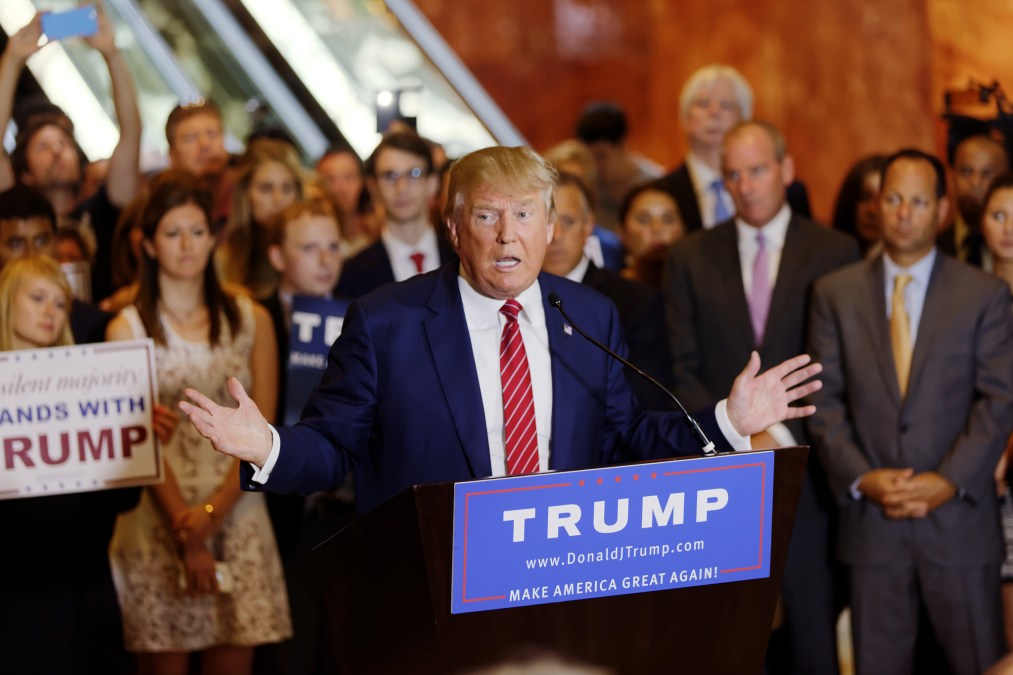
Capitol Hill wants no part of President Donald Trump’s plan to create a cybersecurity working group with the Russian government; an idea that was first revealed following a private meeting with Russian President Vladimir Putin at the 2017 G20 Summit.
The backlash comes following Trump’s participation in the G20 summit last week, where he met with Putin on a number of issues. Sunday morning, Trump tweeted that the two countries discussed forming an “impenetrable Cyber Security unit.”
Putin & I discussed forming an impenetrable Cyber Security unit so that election hacking, & many other negative things, will be guarded..
— Donald J. Trump (@realDonaldTrump) July 9, 2017
Rep. Don Beyer, D-Va., filed an amendment to the National Defense Authorization Act Monday that would block Trump from creating such a diplomatic unit. Separately, Rep. Brendan Boyle, D-Pa., introduced a standalone bill Monday that “prohibit[s] the United States from participating in any type of joint working group with Russia on cybersecurity efforts.”
https://twitter.com/HowellONeill/status/884473562517471232
Several other Democratic congressmen are expected to introduce similar legislation if the White House chooses to pursue the idea in the coming weeks.
Multiple Republican congressional offices declined to comment on whether the U.S.-Russia cybersecurity working group was sound policy because of doubts that the plan would ever come to fruition. One spokesperson, who chose to speak on condition of anonymity, told CyberScoop, “You’re going to have a hard time finding people to comment on something that will never exist.”
Rep. Adam Schiff, D-Calif., the top democrat on the House Intelligence Committee, said in an interview Sunday with CNN, “I don’t think we can expect the Russians to be any kind of credible partner in some cybersecurity unit, I think that would be dangerously naive for this country if that’s our best election defense.”
The Office of the Director of National Intelligence published a declassified report in January stating that the Russian government had interfered in the 2016 U.S. election by hacking political organizations, leaking sensitive documents and using digital propaganda against U.S. citizens.
“Donald Trump’s proposal to form a ‘cyber security unit’ with Putin is a terrible idea that would immediately jeopardize American cybersecurity,” Beyer told CyberScoop. “Trump must acknowledge that Russia interfered in the 2016 election and take strong, meaningful action to prevent it from happening again in future elections.”
After attracting mainstream backlash and then subsequent criticism from influential senators like Marco Rubio, R-Fla., and Lindsey Graham, R-S.C., the future of Trump’s diplomatic unit is uncertain.
Partnering with Putin on a "Cyber Security Unit" is akin to partnering with Assad on a "Chemical Weapons Unit". 2/3
— Marco Rubio (@marcorubio) July 9, 2017
In an interview with Reuters, a Kremlin spokesperson said the plan had been first proposed by Putin and that it remained only a possibility rather than a definitive partnership. Trump himself seemed to walk back the initiative in a tweet posted Sunday, writing “the fact that President Putin and I discussed a Cyber Security unit doesn’t mean I think it can happen. It can’t-but a ceasefire can,& did.”
The fact that President Putin and I discussed a Cyber Security unit doesn't mean I think it can happen. It can't-but a ceasefire can,& did!
— Donald J. Trump (@realDonaldTrump) July 10, 2017
When asked if the plan had been killed off already, White House Deputy Press Secretary Sarah Huckabee Sanders said Monday that “discussions may still take place, but that’s as far as it is right now.”
“You can already see that this administration is walking back those plans. And it makes sense why,” Rep. Will Hurd, R-Texas., told CyberScoop. “I don’t have evidence that Russia has agreed to any cybersecurity norms or international laws … it doesn’t benefit them to do so.”
“Past administrations have also tried to reset the relationship with Russia, but each time Russia eventually showed its true colors,” said Hurd. “I don’t think this is much different.”
Details concerning the structure and underlying purpose of the proposed U.S.-Russia cybersecurity unit remain scarce.
According to comments made by Secretary of State Rex Tillerson, the working group would help the two countries collaboratively “fight against organized crime and hacker activities.” In addition, the unit would be involved in discussions concerning how “[cyber] tools are used to interfere with the internal affairs of countries, but also how the tools are used to threaten infrastructure,” said Tillerson.
Latest Podcasts
Government
FBI officials say AI is bolstering adversaries, emphasizing need to focus on cyber basics, patching
Feds accuse China of ‘systematic’ distillation of U.S. AI models
CIA’s Michael Ellis says cyber intelligence is changing how the agency operates
The G7 tells industry to hurry up and prep for post-quantum encryption
Technology
Threats
Microsoft discloses two actively exploited zero-days among 974 vulnerabilities
Russian national extradited to US for alleged involvement in bank-account takeover scheme
Attackers exploit zero-days in consistently besieged SonicWall product
Jail time for Maine child in 764 marks turning point in federal law enforcement
Policy
Whistleblower says USPS deploying new, ‘untested’ IT systems governing mail-in ballots
‘Watershed 250’ test program in Texas looks to private sector for water cybersecurity help
Former sexual abuse victims say Grok used their images, videos to train deepfake capabilities
Cyber threats nudge Trump to sign executive order on foreign equipment in U.S. energy infrastructure
Text extracted automatically; images, tables and formatting may be missing. Original: https://cyberscoop.com/donald-trump-vladimir-putin-cybersecurity-unit-lol-no/