Lawmakers offer Illinois election work as blueprint to secure 2020
Full article820 words · extracted from cyberscoop.com · click to collapse
Get our latest cybersecurity news first on Google.
Building on progress made in Illinois and elsewhere requires more federal money, experts say.
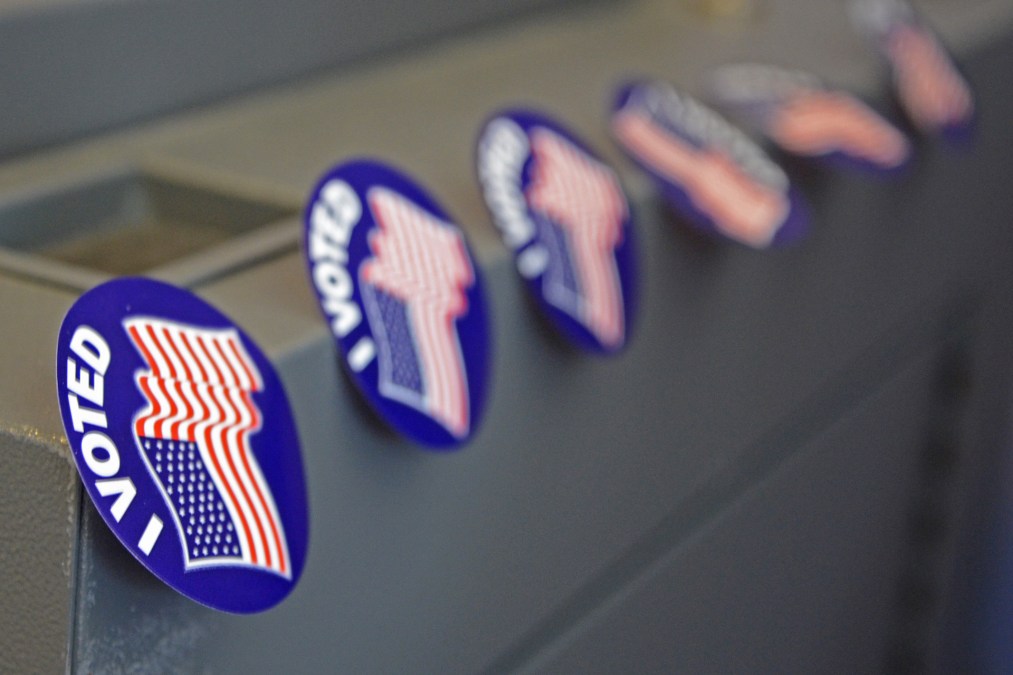
U.S. lawmakers on Tuesday heard from Illinois officials who were on the front lines of Russia’s interference in the 2016 election in a hearing that held the state up as a model for election security.
Since Russian hackers breached Illinois’ voter registration database in 2016, Illinois officials have set up an internal computer network to better protect voter data, established a “Cyber Navigator” program that embeds IT specialists in local election offices, and used the Illinois National Guard to protect the 2018 midterm vote.
“It’s my hope that programs such as this can serve as models for other states,” said Rep. Lauren Underwood, D-Illinois, vice chairwoman of the House Homeland Security Committee, which held the hearing. She was referring to the Cyber Navigator program, to which Illinois has dedicated roughly $6.9 million, the great majority of it federal grant money.
To build on progress in Illinois and elsewhere, election security experts have called for larger and more consistent tranches of federal funding. The annual cost of replicating the Cyber Navigator program nationwide, for example, would be around $55 million, according to New York University’s Brennan Center for Justice.
That is one chunk of the $2.2 billion that the Brennan Center says is needed to implement a suite of security measures across states, including replacing old voting machines, upgrading voter registration systems, and providing cybersecurity support to cash-strapped election jurisdictions.
“Congress should pay its fair share of the ongoing cost to protect our democracy,” Liz Howard, counsel for the Democracy Program at the Brennan Center, said at the hearing.
After repeatedly blocking election-security legislation, Senate Majority Leader Mitch McConnell, R-Kentucky, last month expressed support for an additional $250 million in funding for states. The Senate has yet to vote on the bill, however. If and when that funding is authorized, there will be security programs in place in states like Illinois that are increasingly poised to capitalize on it.
At the hearing, Illinois Board of Elections Director Steve Sandvoss discussed a penetration-testing program put in place after Russian hackers compromised the voter registration database in 2016. Illinois election personnel are now testing for SQL injection attacks, like the one the Russians used, and other means of compromising the database, he said.
As state and local officials look to institutionalize such programs, they are regularly reminded of the interest foreign powers have shown in interfere in the electoral process. Last month, the FBI and Department of Homeland Security warned states that the Russian government could use voter suppression tactics, as it did in 2016, to try to interfere in the 2020 election.
“2020 is absolutely a target for nation-state actors and others to explore vulnerabilities not just in the systems, but [to] create disinformation campaigns in and around the elections process,” Matt Masterson, DHS’s top election-security official, said at the hearing.
More Scoops
House intel bill includes provisions on state and local threat intelligence, election security, AI
The House Intelligence Committee advanced its fiscal 2027 authorization legislation Monday.
States are building their own election defense networks as federal support evaporates
Federal court rules Trump election-focused executive order illegal
Latest Podcasts
Government
FBI officials say AI is bolstering adversaries, emphasizing need to focus on cyber basics, patching
Feds accuse China of ‘systematic’ distillation of U.S. AI models
CIA’s Michael Ellis says cyber intelligence is changing how the agency operates
The G7 tells industry to hurry up and prep for post-quantum encryption
Technology
Threats
Chinese espionage groups swarm to exploit triple-link chain of zero-days
Microsoft discloses two actively exploited zero-days among 974 vulnerabilities
Russian national extradited to US for alleged involvement in bank-account takeover scheme
Attackers exploit zero-days in consistently besieged SonicWall product
Policy
Whistleblower says USPS deploying new, ‘untested’ IT systems governing mail-in ballots
‘Watershed 250’ test program in Texas looks to private sector for water cybersecurity help
Former sexual abuse victims say Grok used their images, videos to train deepfake capabilities
Cyber threats nudge Trump to sign executive order on foreign equipment in U.S. energy infrastructure
Text extracted automatically; images, tables and formatting may be missing. Original: https://cyberscoop.com/illinois-election-security-2020/